

How To Repel Carpenter Bees With A Ground Cover Herb
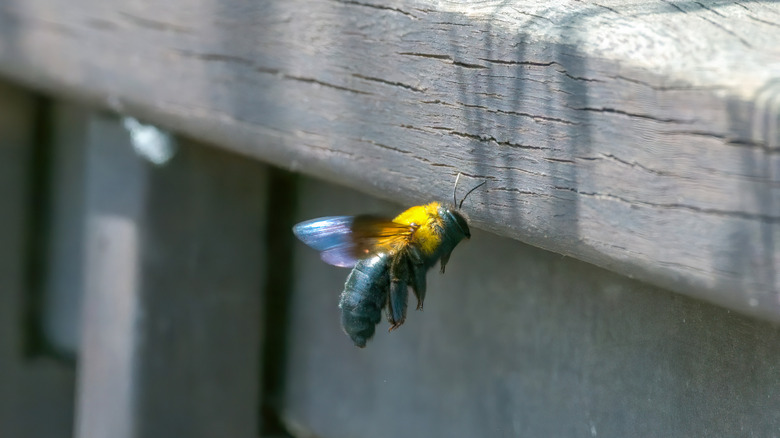
There are a variety of beneficial bee species that anyone would be lucky to see buzzing around their yard, but carpenter bees are not one of them. Carpenter bees are pollinators and can help your garden flourish, but unlike other species, they come at the cost of potential damage to your home. These bees make their homes by carving nests into untreated wood. Over time, these nests can grow into larger networks of tunnels, which reduces the wood's structural integrity as the insides are bored away. Aside from the issues they can cause to wooden structures around your property, carpenter bees can also invite a troublesome bird to your yard, so it's best to prevent these tenacious insects from coming around in the first place. Fortunately, you can repel carpenter bees and beautify your home in the garden by growing a fragrant, low-maintenance ground cover: Thyme.
Thyme (Thymus) is a large genus of over 300 different plants that are hardy in USDA zones 5 to 9. It grows well in a variety of soil conditions, prefers full sun, and only needs watering every few days when the weather is warm. Another trait thyme species share across the genus is the ability to repel troublesome insects, including carpenter bees, mosquitoes, and even wasps. This is thanks to thymol, a compound produced by thyme plants that is often used in essential oils. Carpenter bees are put off by the scent, but other, less obtrusive pollinators don't mind it and will not be deterred from visiting your garden.
Thyme is a versatile ground cover

The large number of thyme species and cultivars makes it easy to find one that fits your gardening style. For those who want to ensure pollinators flock to their yard, choose one of these fast-growing thyme varieties. Or, if you're looking to expand your herb garden, common thyme (Thymus vulgaris) is a perfect addition. The herb grows to be rather large — over a foot across and tall — making it great for filling large gaps in garden beds or flower pots. Plus, its spiky green leaves and delicate white flowers are just as attractive to the eyes as they are to the nose.
If you have more space to cover, you can try Thymus praecox, or creeping thyme. This perennial is a classic choice for ground cover, in part due to its durability. Like most other thyme species, creeping thyme is extremely easy to care for, especially if you live in a dry climate. When the plant is able to thrive, it will grow rather rapidly across the ground and eventually create dense patches of thyme. These patches, along with forming vibrant swaths of pink flowers and soft green leaves, can also withstand being stepped on. This strong, fast-growing pattern also makes creeping thyme a good option for covering up bare patches of lawn. Whatever thyme type you opt for, just be sure to avoid the mistakes gardeners commonly make when growing thyme, and you'll be on your way to a garden full of a beautiful, fragrant ground cover and a home free of carpenter bee damage.