

Reusing An Old Pot Lid? Check This First

We may receive a commission on purchases made from links.
There may, indeed, be a lid for every pot. But that doesn't mean they all belong in your kitchen. Because while there are many reasons to never toss an old pot lid that can be upcycled into a unique decor element or serving piece, you need to confirm you can do so safely. Before the 1970s, when the FDA began setting limits, it was common for lead and cadmium to be used in ceramic glazes and enamel coatings to make them more durable and brightly hued. Which means that older dishes could potentially leach those harmful metals. And though we all encounter trace amounts of lead, you should be worried about the metal being in your cookware. Excessive lead exposure can cause a whole host of health problems, including neurological issues and mood disorders.
Unfortunately, it can be tricky to tell on sight if that lid that's been lingering in your cupboard contains lead. Even pieces that were made using a lead-free glaze could have trace amounts if they're being fired in an older kiln. For those reasons, the FDA recommends being particularly wary of antique pieces, dishes that are handmade with an irregularly shaped appearance, anything that appears particularly worn down or damaged, and cookware purchased from a street vendor or flea market with an unclear origin. Pottery that was manufactured in a commercial factory, however, is less likely to contain lead.
How to Check if Your Pot Lid Has Lead
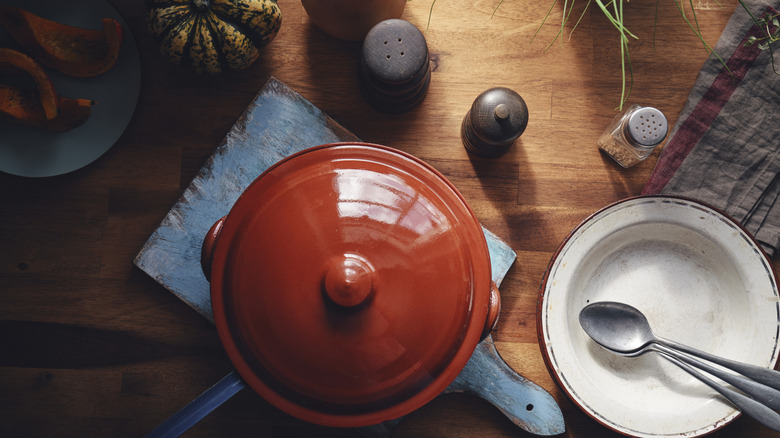
Since this isn't an area where you want to hazard your best guess, there are plenty of ways to tell if your cookware is toxic. A good first stop is the FDA's website, as they regularly update their recalls, market withdrawals, and safety alerts database. It's also smart to scan your cookware for a warning label that notes it's meant to be a decorative piece and not safe to use with food.
Finally, consider using a lead-testing kit. Most versions, such as the NewPos Lead Test Kit on Amazon, work by rubbing a swab on the cookware. If the lid contains lead, the swab will change colors. In that case, if you still want to use the piece for a crafting project that requires minimal contact — perhaps as budget-friendly art — that should be fine. But, per the FDA, you'll want to avoid using it for cooking or storing food. And, as the administration stresses on its site, even the most vigorous scrubbing or hours of boiling will not rid the piece of lead.