

Are Lawn Mower Blades Universal?
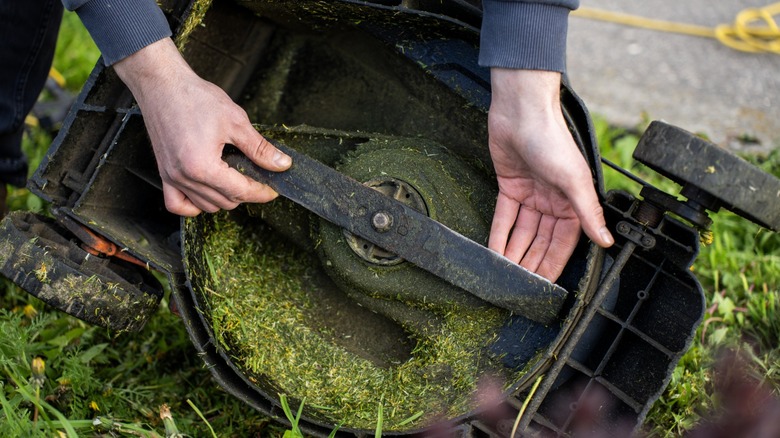
If you're trying to save money by replacing your lawn mower blade yourself, you've probably noticed there are several options available online and in stores. They come in a wide range of sizes, shapes, and designs, and each one is built around a specific mower's deck size and cutting requirements. A blade that fits a 42-inch riding mower is not going to work on a 21-inch push mower, and even two mowers with the same deck size can require completely different blades depending on the model.
There's also the matter of blade type. High-lift blades, standard blades, and mulching blades are all designed for different cutting jobs and grass conditions. If you want to prevent your lawn mower from damage, you have to pair it with the right blade.
That said, some universal options do exist. Certain blades feature elongated slots instead of standard round holes, which allows them to fit a wider range of mower models. You'll also find blades that come with adapter kits for extra flexibility. But just because a blade can technically fit doesn't mean you should use it. A blade spinning at high speeds needs to be seated perfectly. An important lawn mower safety tip you should know is that if the blade is even slightly off, it puts serious stress on the mower, and it can come loose while running. It's simply not worth the risk. You need the right match, and here's how to find it.
What to check before you buy a replacement blade
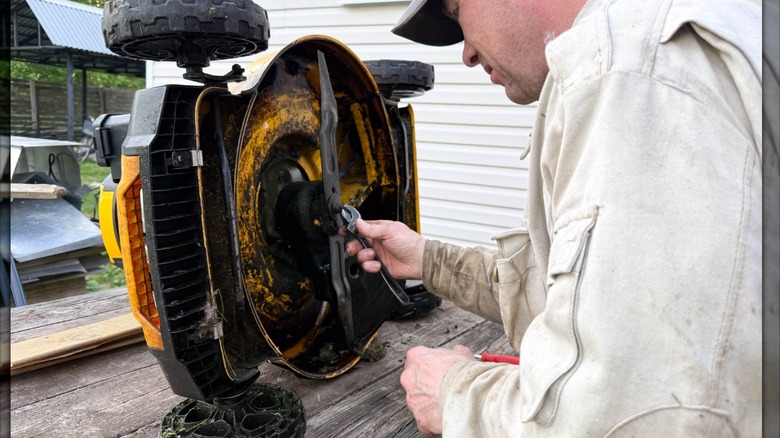
Before you order a new blade or grab one off the shelf, there are a few things you need to confirm. Start with your mower's model number. This is usually on a sticker underneath the deck or on the side of the engine housing. With that number in hand, you can cross-reference the manufacturer's blade specifications, which tells you exactly what length, center hole size, and thickness you need.
If you don't have the model number handy, you can measure the blade currently on your mower. Length and center hole diameter are the two important measurements. Start by measuring the blade diagonally through both cutting tips. This is the most important step people get wrong, as measuring straight across will give an inaccurate result. Also, keep in mind that a new replacement may be a little longer than your current one, since sharpening wears away the metal over time.
Next, measure the diameter of the center hole. If your blade has three holes, focus on the center one. Some blades don't have a circular center hole at all; instead, they feature a star-shaped opening, so you'll need to identify the shape before shopping. If your blade also has outer holes on either side of the center, measure their diameters as well. With those three measurements in hand, you'll have everything you need to find a blade that fits your mower correctly and help you mow your lawn efficiently.