

Everyone Had It In The '60s — Now It's The Rare Teak Kitchenware Worth Hunting For
We may receive a commission on purchases made from links.
Have you ever spotted a beautiful decorative piece in someone's home, only to realize that it also served a useful purpose? Well, if you'd like to have something like that in your house too, you may just want to look back in time. The 1960s was an era particularly focused on hosting. Because of this, the Danish company Digsmed became incredibly popular during that decade because their products not only served important purposes in the home and kitchen — such as serving appetizers, storing spices, and even cracking nuts — but also looked incredibly stylish while doing it.
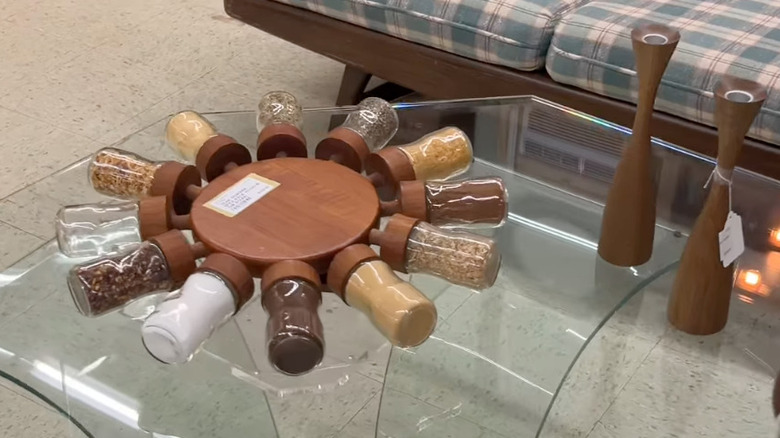
Having items in your home that are both decorative and functional can help you reduce visual clutter and make your home look more organized. So, it may just be worth the effort to hunt for some of these now-rare Digsmed pieces for yourself. This company specialized in teak — a hardy, solid wood known for its beautiful texture and impressive durability — and glass. As such, many of their products combine these two elements in ingenious ways. For example, they created a spice rack that rotates on a center wheel and has glass jars attached to the outside by their lids, forming a kind of starburst pattern. This allows you to access the glass jar of whatever spice you want by spinning it into the 6 o'clock position at the bottom. They also created lazy Susans, which came with charming glass bowls that fit into the tray itself as well as various serving bowls and trays. So, whether you like hosting or spending time cooking in the kitchen, there is likely a charming 1960s Digsmed piece that is perfect for you — you just have to find one first.
Finding original Digsmed kitchenware
Items from this company, while rare, can be hunted down in a few different places. First, online — from Facebook Marketplace and eBay (where you can hunt for deals) to dedicated marketplaces like 1stDibs and Chairish, which have catalogues of items from Digsmed that you can scroll through. The prices on each piece vary, with some smaller pieces listed for under $100, while other items can reach prices of well over $1,000. If you prefer to look in person, rather than online, some Digsmed pieces can be found at thrift stores or antique shops. Buying vintage or treasured antique items is often about having the patience to regularly check local shops until you are able to hunt one down. It can be helpful, too, to know how to accurately identify the pieces so you know when you've successfully hunted down an authentic one.
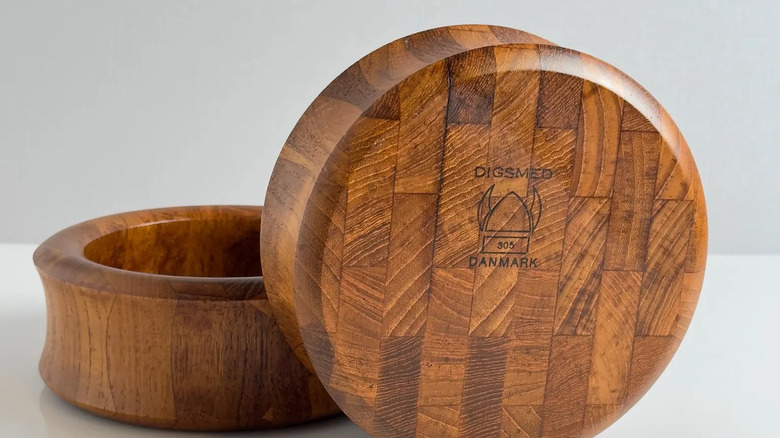
One of the best ways to identify authentic vintage or secondhand items from a specific company is by looking for a maker's mark or stamp. These are typically found on the underside of the piece and will often include some combination of the name of the company, the year it was manufactured, and the company's logo. For Digsmed pieces, there are a few different marks you can keep an eye out for. Some examples say "Digsmed Denmark", while others say "DIGSMED DESIGN denmark." The piece will also generally list the year it was produced — which will be no later than 1975, as that is when the factory closed — and a logo which resembles a Viking helmet.
Utilizing '60s Digsmed products in your home
The height of Digsmed's popularity was in the 1960s, meaning a lot of what rare pieces do survive have a charming midcentury look with sleek, crisp lines. If you have managed to nab some small 1960s Digsmed bowls, these can be great for serving chips, nuts, or other finger foods when guests arrive. If you don't tend to do much hosting, however, there are plenty of other ways to style these bowls in your home so that they work as functional decor. For example, you could place one or two in your entryway to hold keys, spare coins, or anything else you tend to drop as soon as you enter the house. Try adding some geometric wall art or a funky '60s lamp to help you nail the midcentury modern look.
Other Digsmed pieces can be given alternative purposes, too. If you don't like cooking or don't buy many spices, you could repurpose one of their spinning spice racks to hold other small items such as toothpicks, cocktail sticks, or stirrers. Keep in mind that some items may have missing pieces, such as a lazy Susan missing the glass bowls it originally came with. However, these may be sold for a lower price than a complete specimen, and can still be used without the original glass bowls. For example, you could source some small brass bowls instead to emphasize the 1960s vibe and give the lazy Susan a sense of shine and elegance. These can be used to serve food on the dining table or even repurposed to hold jewelry on a vanity or dresser.