

Skip The Coffee Grounds And Beer: There's Another Kitchen Scrap To Trap Slugs
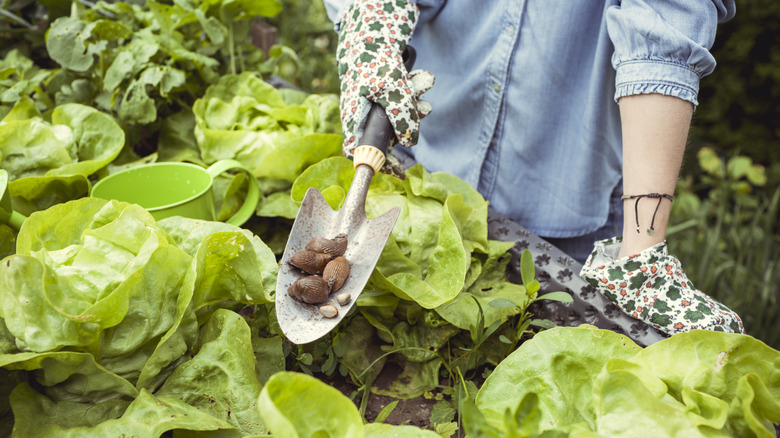
Slugs can certainly be an unwelcome guest in a garden due to their tendency to munch through seedlings, fruits, vegetables, and even the leaves and stems of larger plants, affecting their ability to grow. Sprinkling coffee grounds around the garden is a commonly suggested solution because the texture and acidity can help keep slugs at bay. However, using too much can cause your soil to become overly acidic. Similarly, beer is often suggested as a way to drown slugs because they are attracted to the sweet taste of the liquid. If you don't want to kill the slugs — they are beneficial for decomposition processes and feeding other wildlife, after all — there is another kitchen scrap that can work to keep gross slugs off plants by trapping and relocating them.
This alternative solution involves utilizing the shells of coconuts to create enticing places for the slugs to hide. Slugs, by nature, are drawn to dark, damp places that help them avoid drying out in the sun. By placing a few coconut shells around the areas where you tend to see slug damage, you can tempt them — they offer a place to get out of the sun and stay nice and moist. Once they have been lured into the shell, you can simply gather them up and put them in a location where they will still benefit the ecosystem without doing damage to your beloved plants. If you're ready to say goodbye to slugs chewing on your plants, then let's take a moment to learn how to go about employing this trick for the best results.
How to use coconut shells to trap slugs
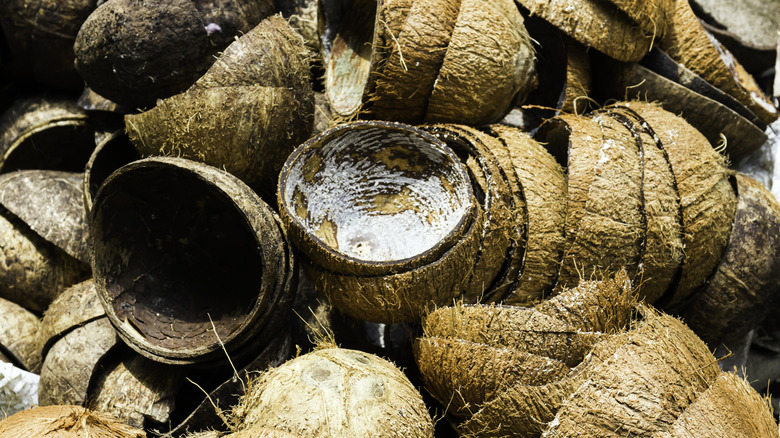
To do this, you will need to halve and empty some coconuts — avoid waste by using the coconut water and flesh in the kitchen. Place the shells near where you have seen the most damage to your plants. It can be helpful to put the coconut shells in spots the slugs might naturally retreat to in the day, such as the corners of plant beds that tend to be more shaded and moist. It makes sense to situate the shells on their sides so that the top creates a little shaded area for them to crawl into, but some also recommend placing the shells in an upturned position. This could be dependent on the overall conditions in your yard, so it may be helpful to try both and see what is most effective for you.
Slugs are more active at night, so make sure to leave the shells out overnight to give the creatures a chance to find them. Then, in the morning, check the shells for any slugs that have decided to pitch up inside to wait out the heat of the day. You can then collect up the slugs and relocate them to your compost heap or to a nearby wilderness area that they are likely to be beneficial in. Coconut shells decompose more slowly than fruit skins, allowing you to reuse them as slug traps over and over. Once they do finally begin to break down, simply shred the husks and toss them in your compost to give it a serious carbon boost.