

Not Coneflowers Or Zinnias: The Bright Fresh-Smelling Flower Butterflies Can't Resist
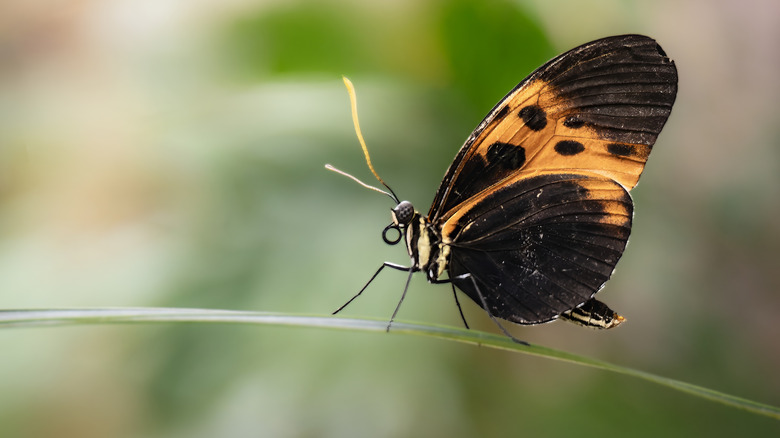
There's nothing quite like the tranquil environment created by a stunning flower garden filled with butterflies. From improved pollination to adding peace and beauty to your backyard garden, there are countless reasons you may want to bring these pretty insects into your yard. Planting native plants is one of the best ways to attract and keep monarch butterflies in the garden, and adding plants that have sweet-smelling flowers can bring in even more butterflies and help to enhance the serene atmosphere. But sometimes going with the most popular plants like coneflowers or zinnias feels overdone. If you're looking for an alternative addition to your flower garden that both smells fresh and is irresistible to pollinators, consider the Carolina lily (Lilium michauxii). In fact, it's one of the best fragrant plants to include in your butterfly garden.
Carolina lilies are herbaceous perennials that thrive in USDA Hardiness Zones 6 to 9. Unlike most lily varieties, Carolina lilies do best when grown in partial shade rather than full sun. While butterflies will generally feed in the sunlight, they also need protection from the wind, which can be provided by the same source as your shade. In addition, the bright colors and sweet nectar of Carolina lily flower are particularly attractive to butterflies.
Setting up your Carolina lily garden bed to attract butterflies
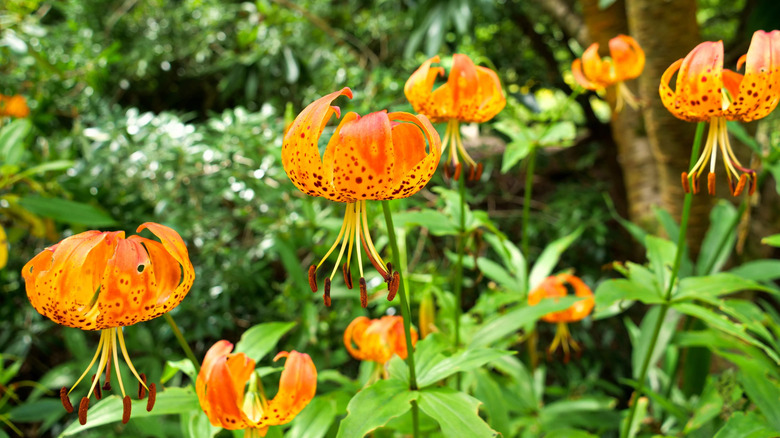
Butterflies love orange flowers with sweet nectar, so by choosing Carolina lilies, you've already won half the battle. Color and food options aren't the only things to consider, however. Sunlight, wind, water sources, and warming areas are all important things to think about if you want to keep butterflies coming back to your Carolina lilies. If you don't have a bird bath or natural water features, you can add a DIY water feature for pollinators made from a saucer and natural items like stones and shells by using a garden safe adhesive to secure the items and cover them partially with water. This option takes care of the water source and warming spot.
Carolina lilies grow best with 2 to 6 hours of sunlight per day, but if you want more butterflies, it is best to plant them in a location that gets closer to 6 hours of sunlight per day. Butterflies usually only feed in the sunlight because they need warmth. Some butterfly habitats claim that butterflies are more active in the morning, but that could be due to the lighting in the enclosed domes.
Protection from the wind is also important, and barriers such as fences or buildings can double as a shade source. Avoid using pesticides on your Carolina lilies, as they can harm butterflies as much as they harm undesirable insects. Finally, be careful when it is time to prune your Carolina lilies in the early to late spring. Butterflies are most active in summer when your Carolina lilies are in full bloom, but in the spring, there could be chrysalides hiding among the stems.