

The 5 Best All-Natural Mosquito Repellents That Aren't Citronella

We may receive a commission on purchases made from links.
Warm weather brings many opportunities to enjoy your favorite outdoor activities. From dinners al fresco to long days at the beach to adventurous hikes, there are a lot of reasons to spend time outside. But when the weather gets particularly hot and muggy, you may notice that you're not the only one enjoying the spike in temperatures. Mosquitos thrive in hot weather, and unfortunately, are attracted to the carbon dioxide that you breathe out. Natural repellants like citronella have long been a remedy for keeping mosquitoes at bay, but if you're fresh out of citronella or find that it's not working well, there are other options. Some of the best include oil of lemon eucalyptus, neem oil, catnip oil, fresh herbs, and thyme oil.
Finding natural mosquito repellents that will keep your outdoor space bug-free can be a challenge. You might find a combination of remedies to be the best fit, such as applying mosquito-repelling essential oil blends to your body while planting plenty of fragrant herbs in the outdoor spaces where you spend most of your time. Whichever strategy works for you, you can rest assured that you won't be exposing yourself to any dangerous chemicals in the process.
Oil of lemon eucalyptus (OLE)
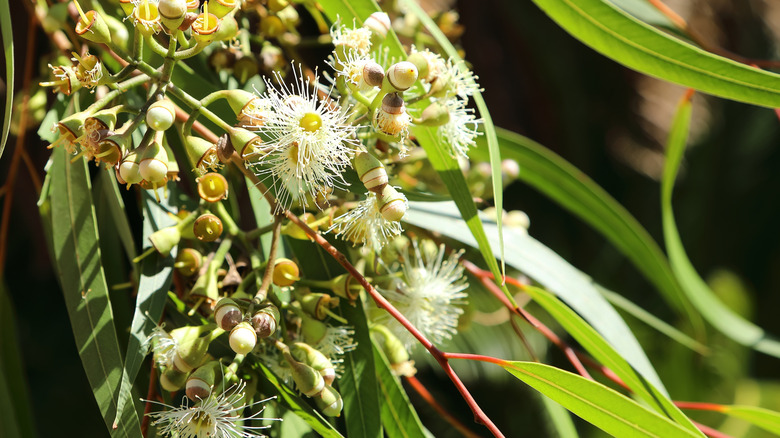
Oil of lemon eucalyptus, also known as OLE, is one of the best scientifically proven natural mosquito repellents. In fact, even the Centers for Disease Control and Prevention (CDC) and the Environmental Protection Agency (EPA) recommend it. This potent oil is extracted from the Corymbia citriodora, commonly known as the lemon-scented gum tree. Its primary active ingredient is para-menthane-3,8-diol (PMD) and is what you'll find listed in many over-the-counter OLE mosquito and tick repellents.
If you want to give OLE a try, there are two easy ways to do so. First, you can grab a pre-made spray like Cutter Lemon Eucalyptus Mosquito and Insect Repellent Bug Spray, which is EPA-registered. Or, you can make your own natural all-purpose insect repellent that actually smells good. To DIY, you'll need to properly dilute the oil of lemon eucalyptus with witch hazel, which you can do by adding one part OLE to 10 parts witch hazel in a spray bottle.
Neem oil
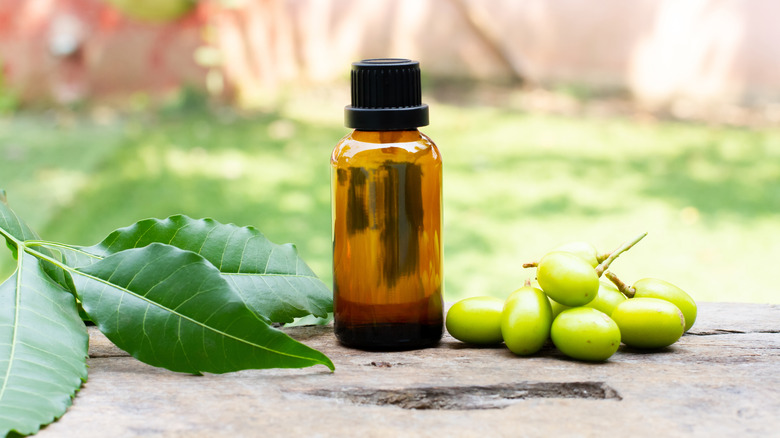
Azadirachta indica, also known as the neem tree, is an evergreen native to India that's prized for its medicinal uses and its pesticidal and insecticidal purposes. Neem oil is extracted from the tree's seeds and is used in a wide variety of applications, including repelling pesky mosquitoes. A field study published in the Southeast Asian Journal of Tropical Medical Public Health that evaluated this potent oil's use mixed 2% neem oil with 98% coconut oil and found it to be 37.5 to 100% effective at repelling mosquitoes, depending on the species.
A range of neem oil products are available, including everything from plant sprays that can act as fungicides, miticides, and insecticides to cold-pressed neem oil concentrates you can use for your own insect-repelling recipes. The good news is that a little bit of neem oil goes pretty far. You only need one part pure neem oil to 49 parts coconut oil to create a combo that mosquitoes will steer clear of. To make the math simple, this would look like about ⅓ fluid ounce of neem oil added to a 16-ounce tub of coconut oil.
Catnip oil

You may think of catnip (Nepeta cataria) as a fun treat for your favorite furry friend, but the oil of this fragrant herb packs in some serious mosquito-repelling power. The active ingredient responsible for this phenomenon is nepetalactone, which is believed to irritate mosquito receptors, keeping these ankle biters away. Catnip oil was shown to repel up to 95% of mosquitoes in a study published in Scientific Reports, but there is a small catch: It only lasts for about 2 to 4 hours. So as long as you're okay with reapplying every so often, catnip oil can be a great natural mosquito repellent.
While you may be able to find some off-the-shelf sprays using catnip oil as its active ingredient, you can also make your own. Simply fill a spray bottle with 1 cup of isopropyl alcohol, 1 cup of distilled water, and ½ teaspoon of catnip oil. Shake well, and, like any new herbal repellent, test it on a small patch of skin before spraying your entire body.
Select fresh herbs

While topicals and sprays can make you less attractive to biting insects, planting herbs around the outdoor areas you spend most of your time is also a useful natural remedy, especially if you want to avoid applying repellents to your skin. There are many easy-to-grow herbs that keep mosquitoes out of the yard and garden, so you have a lot of leeway regarding the types you'd like to plant.
Some top options that aren't citronella include rosemary, lavender, peppermint, lemongrass, bee balm, and catnip. Herbs can be planted directly into the ground in a contained herb garden or grown in pots. One advantage of using pots is that you can transport them freely, keeping them near you while you move around your outdoor space. Depending on the number of mosquitoes in your area, you may need to experiment with which herbs and how many are needed to be effective. As an added bonus, you can use many of these herbs for cooking or in other natural remedies.
Thyme oil
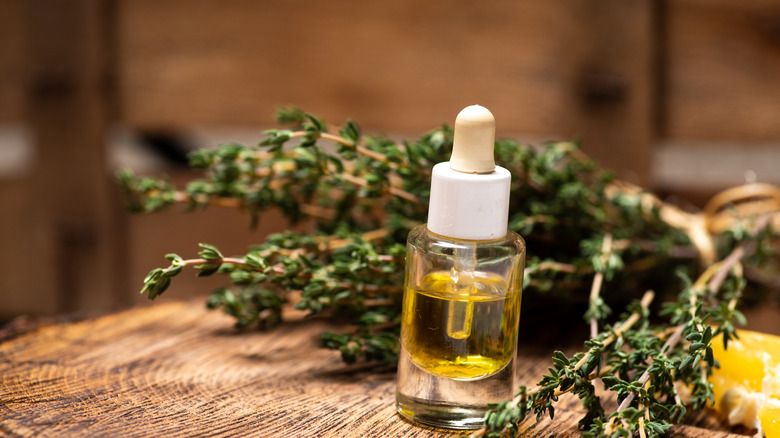
You may be familiar with Thymus vulgaris, better known as thyme, as a fragrant herb used in your favorite soups and stews, but the oil of this plant also has promising insect-repelling effects. For example, a study published in the Journal of the American Mosquito Control Association examining the efficacy of various essential oils in repelling mosquitoes in hairless mice found thyme oil to be 91% effective. This is because thyme contains five compounds that can repel mosquitoes, including carvacrol, p-cymene, linalool, alpha-terpinene, and thymol. Another study from the same journal found that two of those compounds, alpha-terpinene and carvacrol, did a better job at repelling mosquitoes than commercially formulated DEET.
You can find some pre-made natural mosquito sprays that contain thyme, or make your own using thyme essential oil, heavily diluted in a carrier oil to prevent skin sensitivity. An easy recipe to try is 4 drops of thyme essential oil with 2 teaspoons of a carrier oil such as jojoba, coconut, grapeseed, or olive oil.