

Use A Plastic Bottle & Empty Detergent Container To DIY A Self-Watering Planter
We may receive a commission on purchases made from links.
Self-watering planters give gardeners a chance to breathe by providing a built-in water reservoir to keep plant roots and soil adequately moist. The result? Happy, stress-free plants that can fruit and flower for your enjoyment — plus, you don't have to hand water as often. It may sound like a dream, but when you start to look online and realize that store-bought products can cost anywhere from $10 up to hundreds of dollars per planter, you have to decide if it's worth the money. The good news is that you don't have to take out precious funds from your budget in order to experiment with hands-off ways to water plants. In fact, there might be a completely free solution waiting in your laundry room.
While using detergent containers as repurposed planters isn't anything new, internet and social media gardeners have come up with an intriguing self-watering design that's worth a closer look — all you need is a large laundry detergent bottle with a top-oriented screw-on cap, an empty plastic water bottle, and a box cutter or another tool to cut out shapes and drainage holes. This is a genius idea to repurpose plastic in the garden and to make your laundry detergent container go the extra mile. You might even start saving them once you realize their potential as a vegetable, herb, or flower pot.
How to DIY a self-watering planter from a plastic bottle and a detergent container
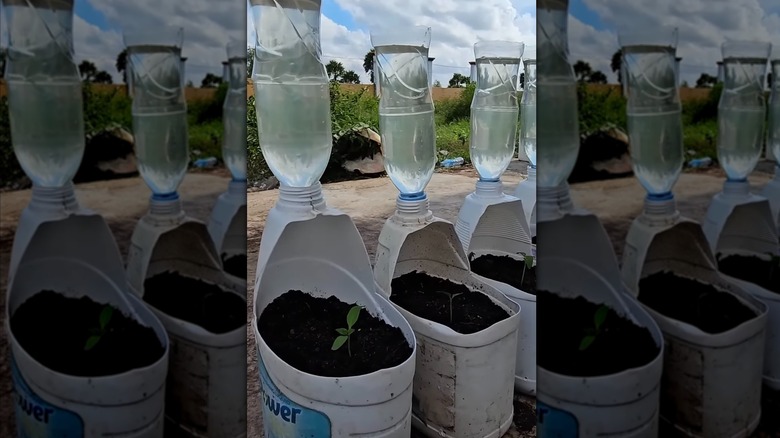
YouTube creator @JOLYJOKE-oh7gb details the process of turning a detergent container and plastic bottle into a functioning self-watering planter. If you already have the proper tools, you can complete this project for $0 and relatively quickly.
Start by using a box cutter to cut out the handle portion of the detergent bottle and remove the cap. If you don't have one, you can snag a 2-pack of box cutters by DIYSELF for under $8 on Amazon. Make drainage holes on the bottom of the container with an electric hot knife or power drill. Then, slice off the bottom of a plastic water bottle, as this will be where you'll fill up the reservoir.
Next, poke a couple of small holes in the cap. You don't want too many, as the goal is to create a slow water drip, much like drip irrigation hoses, which saturate the soil over a longer period of time and allow the plant's roots to properly absorb the moisture. Too many holes could cause the reservoir to drain water too quickly, and then you might as well have just hand-watered the soil. To be safe, it may be good to remove the cap and put it on a flat surface before perforating it with whatever tool you use. Then screw the cap back on, and put the bottle upside down into the opening of the detergent container. Fill the bottle with water and watch as it slowly trickles onto the soil below.
Tips for success and planting considerations
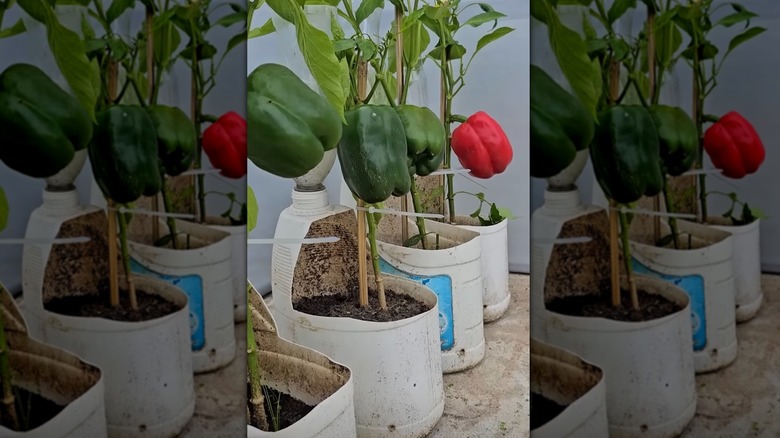
There are a few things to keep in mind when creating a self-watering planter to ensure it's successful. Before you start the project, make sure to thoroughly rinse the inside of the detergent container to get rid of any soil-harming residues. You may also find that threading cotton yarn (or another moisture-wicking material) through the water bottle cap provides droplets with a more direct route to the soil around the base of the plant. Also, monitor the homemade water reservoir drip to ensure the plant is getting adequate moisture; you may need to add extra holes depending on the drip frequency.
As important as the laundry detergent container is, the water bottle you choose is just as vital to the success of the planter. The bigger the water bottle, the bigger the reservoir you have to work with, and the less often you have to refill it. So when you're out and about, grab the largest ones you can find. You'll stay hydrated, and your plants will reap the benefits later on.
As for what you can plant in this DIY pot, the possibilities are almost endless. While bulky varieties of squash or indeterminate tomatoes might benefit from a larger planter, you'll be able to grow herbs, flowers, determinate tomatoes, peppers, strawberries, and any vegetable plants labeled container-friendly.