

Better Than Wildflowers: The Summer-Blooming Herb Pollinators Love
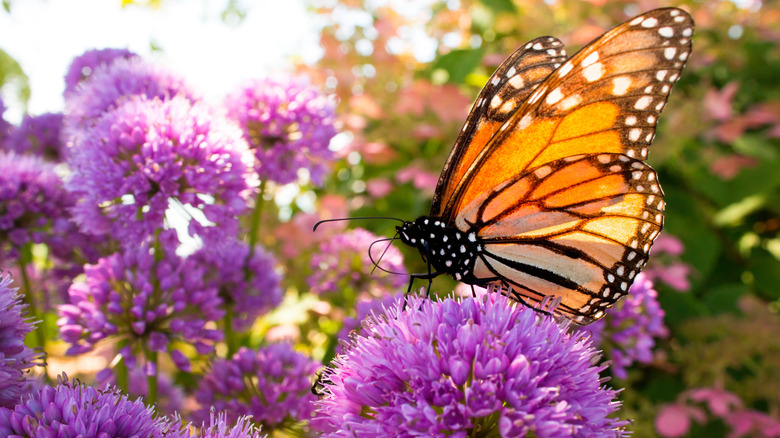
While starting a pollinator garden, many home gardeners think about adding popular options like colorful wildflowers. While flowers are great for pollinators, culinary herbs are an often overlooked way to attract them. Some might say they're a better all-around option. Why? Because planting herbs gives you fresh ingredients for your meals while still creating a nectar-rich flowering haven for pollinators. So if you want to take the path less traveled, don't just opt for common herbs like mint, go the extra mile and plant an herb that'll outshine almost everything else in your garden: African Blue Basil (Ocimum kilimandscharicum x basilicum).
Unlike standard sweet basil, which gardeners usually have to pinch back in order to prevent flowering, African Blue Basil is entirely meant to bloom. In fact, it's a sterile hybrid plant, so it cannot produce seeds. And because of that, the plant focuses its energy on producing endless gorgeous pink to purple flower spires until the first hard frost. That means this impressive herb becomes a nonstop feast and one of many reasons to add basil to your garden.
Butterflies, bees, hummingbirds, and beneficial wasps, are all likely to flock to African Blue Basil with gusto. And as an added bonus, it's also really lovely to look at, sporting lovely purple-veined foliage and stems that vary from green to purple in addition to its blossoms. And though it has a more intense flavor than other basils, it's still a great edible culinary herb that can be used as garnishes or in pesto.
How to grow African Blue Basil to attract more pollinators
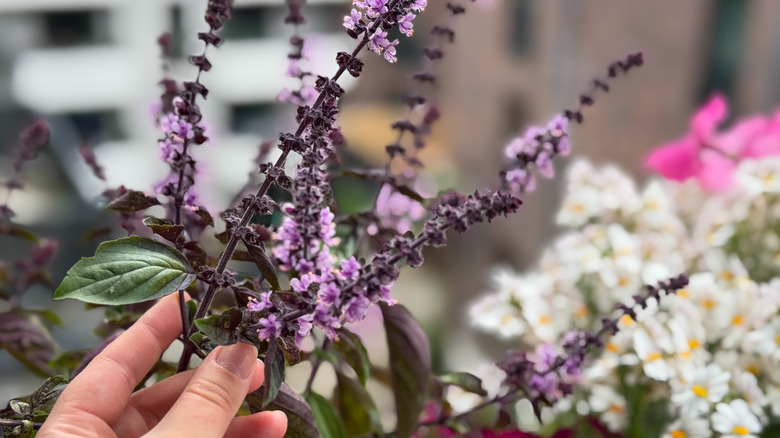
Because this ornamental basil variety is sterile, you can't grow it from a regular old seed packet. Instead, you'll need a propagation from a nursery or a friend. Once you have your starter in hand, plant it somewhere that gets partial to full sun. African Blue Basil thrives in well-draining soil. The herb can reach anywhere from 1 to 3 feet tall once mature, but its spread has a greater range; it can stretch out from as little as 10 inches out to as much as 3 feet. So, make sure you use a pot that's large enough to properly accommodate it as it grows; you'll want an even larger pot if you plan to nestle in some other herbs or plants by it.
It's important to note that African Blue Basil is a hardy perennial in USDA zones 10 and 11. So if you live somewhere colder, you can still enjoy the herb and its pollinator benefits as an annual. But once that first frost hits in autumn, take cuttings to root indoors. That ensures you'll have a fresh batch of this ultimate pollinator herb to hit the ground running with next spring. What better way to continue growing a thriving herb garden each year?