

Can Hydrogen Peroxide Remove Algae From Your Backyard Swimming Pool?
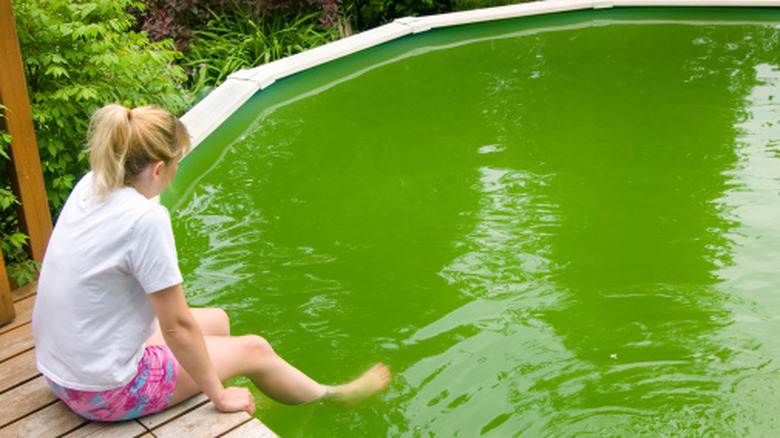
Algae is an unfortunate possibility when it comes to pools, and may be a sign that your pool is in dire need of a cleaning. Spores blown in on the wind or leaves, twigs, and dirt falling into your pool from nearby gardens can contaminate the water. If your pool chemical levels are too low or your water filter isn't working efficiently, algae can quickly colonize the water. This may leave you frantically searching for ways to safely clean your pool before the weekend or hot weather arrives and everyone wants to go swimming. Thankfully, hydrogen peroxide can remove algae from your pool — as long as you use it correctly.
Hydrogen peroxide breaks up the cellular structure of organic material, leading to disintegration. However, you can't just grab a bottle of the chemical from your bathroom and pour it into the swimming pool. The 1% to 3% concentration of hydrogen peroxide most people have at home is not strong enough to be effective in pool water. Instead, you need to buy at least 12% hydrogen peroxide. This is also the right concentration for clearing bacteria and stains from hot tubs. If you have a lot of algae you need to break down, you can go with something stronger, like a solution with a 30% concentration. To kill algae with a single application, you need to shock it into submission using a roughly 1:10,000 hydrogen peroxide-to-water ratio.
You need a strong concentration of hydrogen peroxide to clear algae from pools
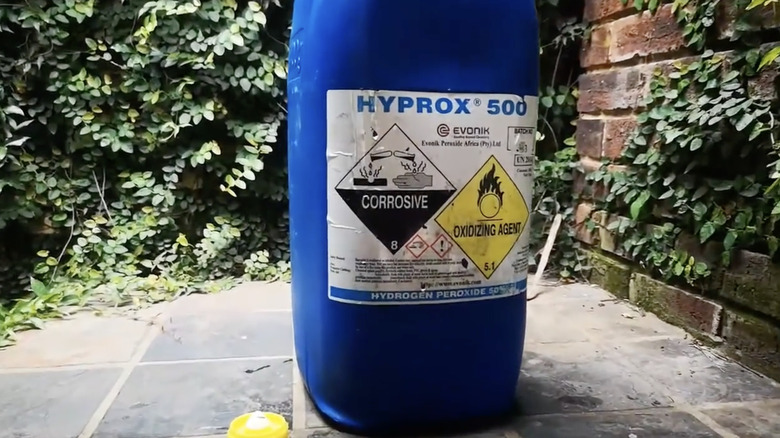
You need hydrogen peroxide with a concentration above 12% because it dilutes once it's poured into the algae-filled swimming pool water. Even small, above-ground pools hold upwards of 2,500 gallons of water. Using the hydrogen peroxide you have under your kitchen sink likely isn't going to do anything — it will simply dilute to a point where it's ineffective. If you're trying to get rid of mustard algae, the chlorine-resistant menace that lurks in pools, using the right concentration of hydrogen peroxide to shock the water is vital.
The only exception is if you have a natural swimming pool filled with plant life, beneficial bacteria, and animals. Pouring in a strong concentration of hydrogen peroxide may harm them. In these cases, use about ½ cup of 3% household hydrogen peroxide per 100 gallons of water. Wait a few days to gauge the result of the addition, then add more as needed.
Thankfully, with hydrogen peroxide, you don't have to worry too much about the dangers of any harmful chemicals being leftover after treatment. Once the solution has broken down the organic materials in the water, it leaves behind water and oxygen as by-products. There are no dangerous gases or residues that could hurt you, your children, your pets, or local wildlife. In fact, hydrogen peroxide is often used in public spas and swimming pools to prevent algae growth and keep the water clean.
Safety considerations when using hydrogen peroxide in swimming pools
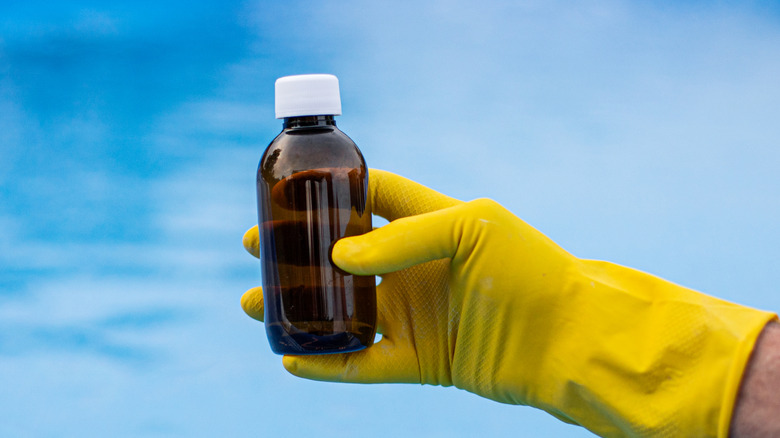
Most household hydrogen peroxide is only a 3% concentration for good reason. Stronger concentrations can cause chemical burns if touched, damage nose and throat tissues if inhaled, and cause serious health complications if ingested. This sounds terrifying and not like something you may ever want to use, but the dangers are comparable to other commonly used pool chemicals. Chlorine — a popular disinfectant for swimming pools — is equally dangerous. In fact, hydrogen peroxide is often seen as a gentler alternative pool cleaner to chlorine. When applying liquid hydrogen peroxide to pool water, always wear protective gear, including gloves, goggles, and a face mask, and ensure you open the bottle or container in a well-ventilated area.
If you currently use chlorine to disinfect and clear algae from your swimming pool, remove the tablet-filled chlorinator or floater from the water and wait about five days before applying the hydrogen peroxide. Mixing chemicals — particularly chlorine — is something you should never do with hydrogen peroxide in your home and garden. You also don't want to use it if you use a diatomaceous earth (DE) filter in your pool; it dissolves DE. You may also need to apply hydrogen peroxide repeatedly. It breaks down quickly and the algae may grow back, particularly if the contamination is caused by something preventable, like overhanging trees. Hydrogen peroxide is useful for cleaning the surfaces around your swimming pool of mold and algae, too. Use it on tile grout, waterfalls, drains, and your pool deck.