

Plant This Shrub That Hummingbirds Love For Delicious Berries Year After Year
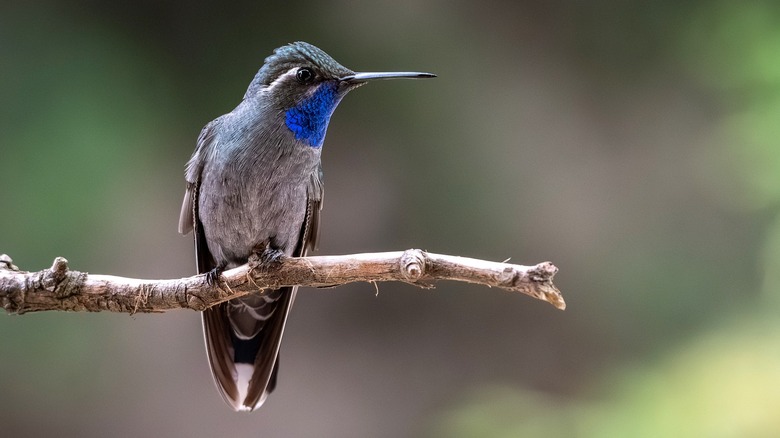
When you think about smart ways to attract more hummingbirds to your yard, your mind likely drifts to nectar-filled flowers. After all, one of the best ways to reach a hummingbird's heart is through its stomach. However, food is only one of a hummingbird's needs. They also need a place to nest, which the mulberry (Moras spp.) tree (or shrub) can provide.
Mulberry is a genus of tree that produces berries humans have long relied on as a food source; this dates back some 5,000 years. In the United States, you'll find two main types of mulberry: red and white (though there's a black mulberry, too). The 'Trader' mulberry (Morus x 'Trader'), however, is actually a cross between red and white, and it only dates back to the late 19th century (and a family named Trader).
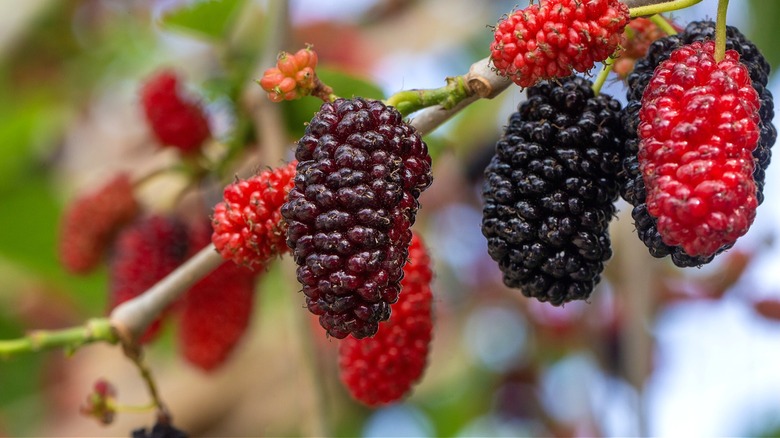
'Trader' mulberries are perfectly edible once ripened. You'll know a 'Trader' mulberry is ripe by its color, as the berries will turn completely black. Trees start producing fruit in three years' time. A word of caution, though, as unripe mulberries or the tree's sap itself can be toxic, so be aware of what you're picking and eating.
As for hummingbirds, a mulberry tree is among the trees and shrubs the tiny birds choose to build their nests in. What's more, the fruit itself will attract songbirds and other species you may love to see visiting your yard. On top of all that? It's easy to grow and take care of mulberry trees. You can even grow some varieties in containers. (See other tree varieties that grow happily in garden containers.)
How to grow mulberries in your garden
Mulberry tree hardiness varies based on the species. The 'Trader' mulberry, specifically, is known for its cold-hardiness, with its range beginning at zone 3b, which is -35 to -30 degrees Fahrenheit. The red mulberry, by contrast, is also winter-hardy, but its hardiness zones range between 4 and 9.
Light requirements for mulberries include a mix of full sun, part shade, and shade; they do best with six or more hours of direct sunlight a day. The Institute of Food and Agricultural Sciences at the University of Florida, however, notes that mulberry trees grow fine when planted under the shade of larger trees. This gives you ample flexibility when it comes to choosing the right location for it in your yard. Also, for hummingbirds, it matches their preference, too. Though the birds can handle heat (most species live in the tropics, after all), they do appreciate shade.
The mulberry tree is also categorized as drought-tolerant (once established), which makes it a more beginner-friendly option for those gardeners looking to nail down a consistent watering routine. Watering should be based on the soil; if it's dry at 2 inches deep, you should water. As for soil, the mulberry tree will happily grow and flourish in clay; it also does well in sandy or loamy soil.