

Skip Pyrex: The Art Deco Style Antique Dishware To Search For At Thrift Stores
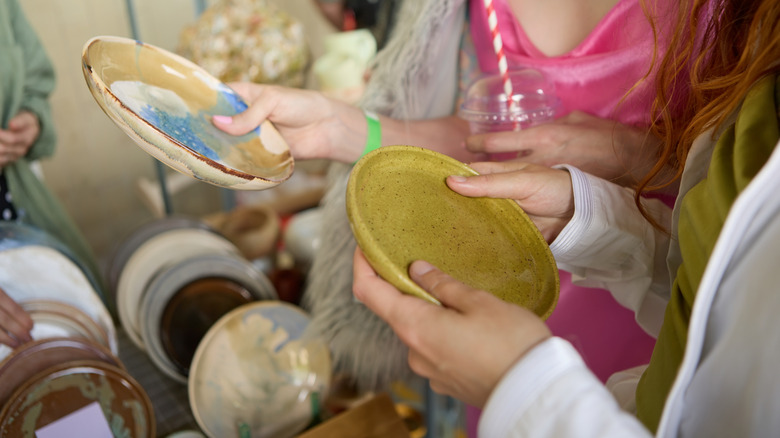
If you're hoping to score valuable antique dishware at your next thrift store run, don't overlook Villeroy & Boch. While Pyrex dishes tends to get most of the attention from vintage hunters, certain Villeroy & Boch pieces can be just as collectible, particularly the company's Art Deco-era designs from the early 20th century. Known for elegant European craftsmanship and eye-catching geometric patterns, these dishes remain popular with both collectors and interior design enthusiasts.
Founded in 1748, Villeroy & Boch is one of the oldest ceramics manufacturers in Europe. Over the centuries, the company developed a reputation for producing high-quality porcelain, stoneware, and fine tableware. While collectors seek out pieces from many eras, it's the company's Art Deco examples that are especially desirable today thanks to vivid tones and sophisticated motifs.
Art Deco decor emerged during the 1920s and 1930s emphasizing bold geometry, symmetry, and modern luxury. During the interwar period, Villeroy & Boch combined the functional aesthetic of the Bauhaus and the striking designs of Art Deco. The result was dishware with dramatic borders, stylized floral motifs, angular patterns, and sophisticated color palettes. Depending on the pattern, rarity, and condition, vintage Villeroy & Boch dishware can sell for surprisingly high prices on the secondary market. Christmas-themed sets are particularly collectible, and can fetch $150 to $200, and the same can apply to butter dishes. Sets of salad plates can easily fetch $60 and up, with larger (81 piece) sets fetching over $1,500.
How to identify vintage Villeroy and Boch dishes
The best part of collecting Villeroy and Boch is that many shoppers might not recognize the name when browsing secondhand stores. That means valuable pieces occasionally slip through unnoticed. Unlike some antique dishware that can feel dated, these vintage designs still bring your kitchen retro charm while complementing modern homes, which means they are still in demand. Collectors and resellers often search for a variety of vintage kitchen items like these.
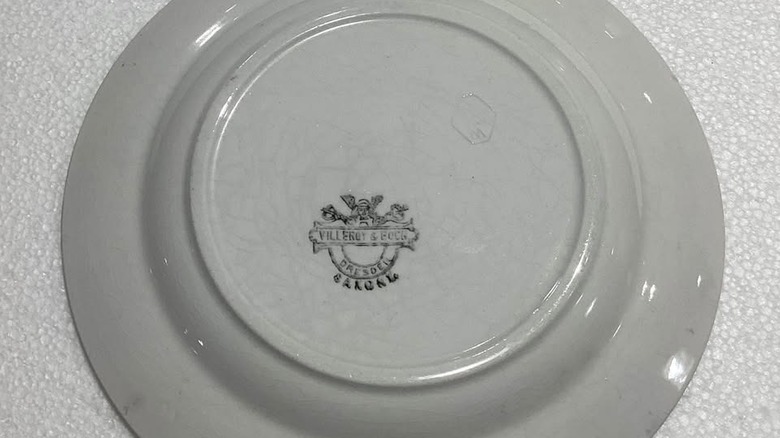
When searching thrift stores, the easiest way to identify Villeroy & Boch antique dishware is by checking the underside for a backstamp. Pieces made between 1874 and 1909 often contain a winged figure of Mercury above the company's name. For Art Deco dishware, look for a simplified, circular or oval ink stamp that reads "Villeroy & Boch", often with the name of the city where it was manufactured, such as " Mettlach". Dishware dating from the era of 1913 to 1947, often contain labels such as "Made in Germany" or "Saar."
The designs featuring geometric motifs or unusual color combinations are often among the most sought-after finds. Like other collectible pottery brands, Villeroy and Boch did a wide range of pattern, styles, and shapes. In addition to these aspects, condition also plays a major role for value. Collectors generally prefer pieces without chips, cracks, repairs, or significant crazing. Complete sets tend to command higher prices, but individual serving platters, tureens, teacups, and decorative plates can also attract buyers.