

Not Coffee Grounds: The Popular Kitchen Scrap You Can Use As DIY Fertilizer For Vegetables
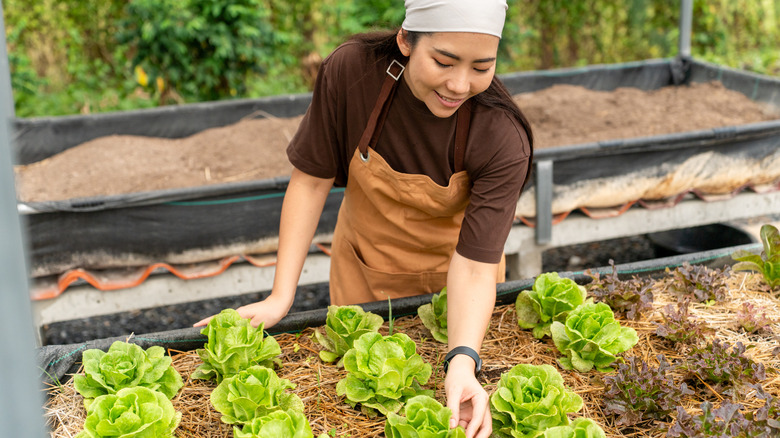
There are all sorts of weird kitchen items that make great fertilizer, like coffee grounds. However, there may be one more to add to your list of things to try, especially if you're hoping to increase the yield from your vegetables this year. Chickpea water — also known as aquafaba — is a liquid with nutrients leached from chickpeas when they are soaked or cooked. It is what is used to keep them hydrated in cans, as well. Some people use it as an egg replacement in cooking and baking. However, if you don't like it this way, you can still repurpose it in your garden.
While it's often suggested that you start sprinkling leftover coffee grounds on your lawn, using too much can increase the acidity in the soil and actually slow plant growth. This is why it may not be ideal in your vegetable garden. Chickpea water, on the other hand, provides nitrogen and is full of many important macro and micronutrients, including magnesium, calcium, and phosphorus.
It makes sense that a liquid with these kinds of nutrients would be a good fertilizer for your garden. Unfortunately, at the time of writing, there aren't many studies on its effectiveness. Various users across social media platforms, though, tout that using chickpea water increases plant growth, so if this liquid would already go to waste, you may consider trying it on your veggies.
How to use chickpea water as a fertilizer for vegetables
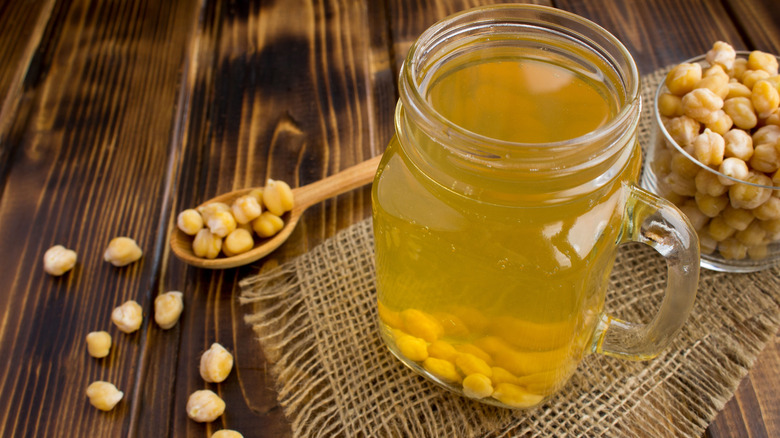
Chickpea water is easy to use. You simply take the liquid that's left when you soak or boil chickpeas and dilute it with plain water. The ratio needs to be at least 1:1, though some people suggest 1:10. It's best to begin with a more diluted solution to see how your plants will react first. It should also be noted that if you boil your chickpeas in water with salts and seasonings, you do not want to use this in your garden, even when diluted, as they can sometimes hurt your plants. You also want to ensure it's cooled down before using, as hot water can damage the roots of your vegetables. Like with some fertilizers, you want to pour it around the base of your plant, and avoid the leaves and stems as much as possible.
Most social media users who show aquafaba being applied as fertilizer mention using the liquid from soaking the chickpeas. However, it should also be possible to use the water in the cans. This is what is often used as an egg substitute and — as long as you get the unsalted version — should be equally fine for your vegetables, as long as you dilute it.
Some creators also suggest that you can mix it with milk. This provides not only the nutrients present in the aquafaba, but extra proteins and calcium as well, which is one of the reasons you should try watering your plants with milk. Tomatoes, zucchinis, and peppers in particular could benefit from extra calcium and nitrogen, depending on your soil.
What you should understand before trying this hack
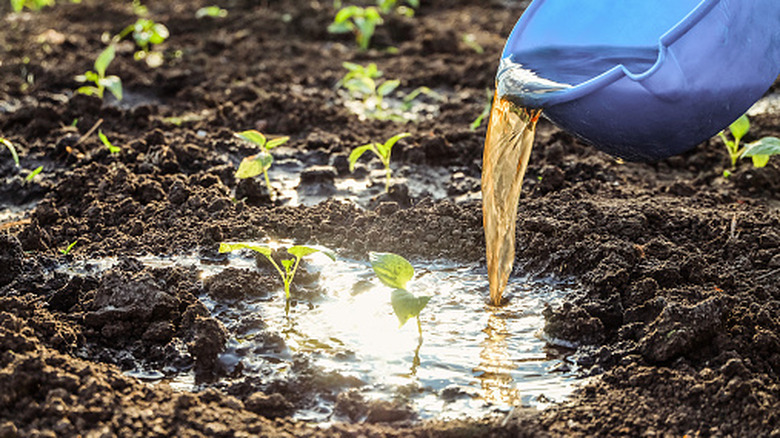
Since chickpea water as fertilizer hasn't been studied, it will require a bit of experimentation in your garden. Some reports say you can use the diluted liquid about once a week. Using it too much can be harmful, though. If you see your plants start to wilt, look burnt, or just not grow properly, then you may need to cut back on how often you use it or stop using it altogether. Theoretically, you can also try this with other vegetables, beans, and peas you boil, as long as it was cooked without any seasoning. For example, liquid from spinach and corn can be used in gardens as well, though the effectiveness is unclear.
It has also been noted that chickpea water, when poured around plants and left out in the heat, tends to stink. The odor will only be worse if you combine it with milk. So if your vegetable garden is close to your house, or you just don't want to smell it every time you go by, this may not be the best fertilizer for you. Because of the odor, you may want to avoid using it on any plants you are growing inside — including vegetables. Thankfully, if it is too unpleasant, diluting the mixture more can help, though it also decreases the nutrients per feeding.