

What Is The 80% Furnace Rule And Does It Cost You Money?
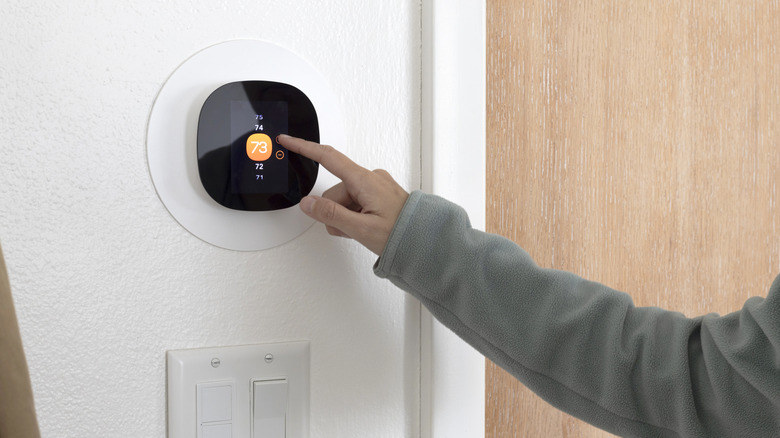
One quick look at your latest utility bill will confirm it: energy costs are on the rise. With almost half of energy bills going straight to heating and cooling their homes, more folks are looking at their HVAC systems with a closer eye — and many are surprised to learn that their furnace only uses 80% of its fuel to create heat. Does this mean that you're throwing away 20% of your energy budget every time you turn on the heat? Well, it depends.
Created by the U.S. Department of Energy back in 2015, the 80% furnace rule mandates that all new non-weatherized residential gas furnaces must use at least 80% of their fuel to create heat. This means that all furnaces currently on the market must have at least an 80% AFUE (Annual Fuel Utilization Efficiency, or how effective a furnace is at using its fuel to create heat). Sounds great on paper, right? At least until you realize that the last 20% of fuel is pumped out of the house as waste. Because when energy costs are spiking, every last percent counts, right?
At first, the most obvious solution might seem to be upgrading to a higher-efficiency furnace that uses 90% or more of its fuel. However, while these appliances retain more heat inside and could potentially save energy, the reality isn't as cut-and-dry. It might actually be that an 80% AFUE furnace is perfect for your home and energy budget.
Should you stay with an 80% AFUE furnace or upgrade?
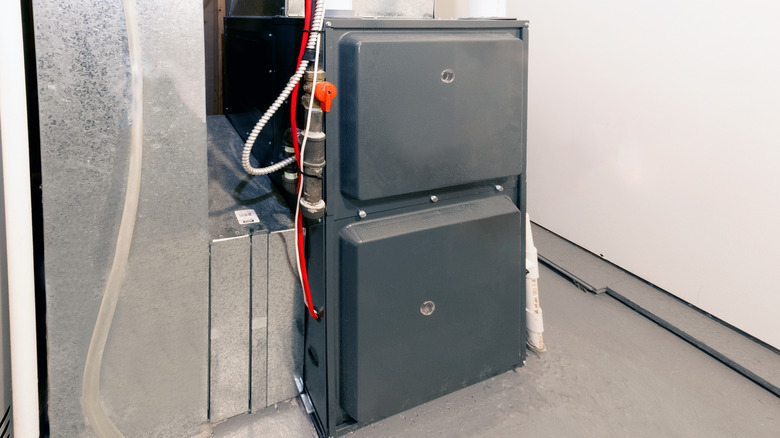
To figure out if your 80% AFUE furnace is really costing you money and if it's worth upgrading it to reduce energy costs in your home, you'll need to consider a few factors: where you live, where your furnace is located in your home, and how much you're willing to invest in installation and modifications. First up, location. Homes in warmer climates generally don't need heavy-duty heating power, making an 80% efficiency furnace ideal. While you aren't getting the same bang for your fuel buck, since it's used so rarely, the cost tends to balance out. Of course, homes that experience freezing winters on the regular may need a higher-efficiency unit to stay warm without the price tag.
Your actual furnace's location may be a surprising factor to consider, but it comes down to how 80% units work compared to their higher-efficiency counterparts. 80% AFUE furnaces typically pull nearby indoor air into an open combustion chamber to create heated indoor air, while 90% AFUE and higher units need to draw in outside air. So, if your furnace placement is located in an open space like the garage or attic, an 80% furnace is ideal, but if your furnace housing is in a sealed area, a high-efficiency unit is perfect.
If you have your heart set on a 95% or higher AFUE furnace, but the location is in an open area, you can definitely make modifications. However, just keep in mind that it will likely increase your installation costs. If you're trying to keep costs down, matching your furnace to placement is key.