

Not Honeysuckle Or Wisteria: The Vining Plant That Turns Your Chain-Link Fence Into A Living Wall
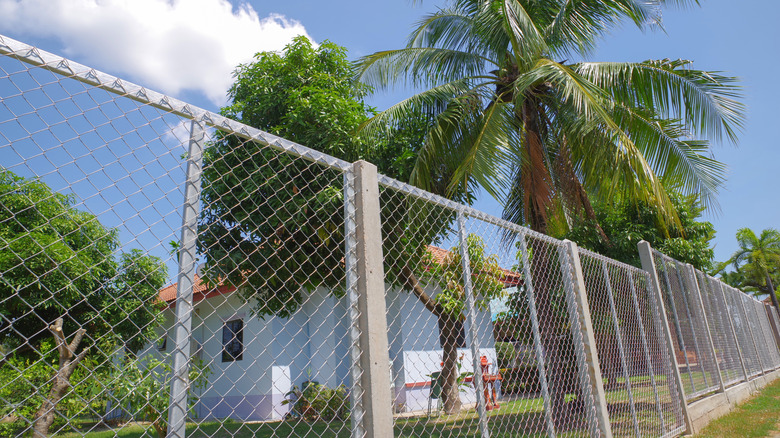
Chain link fences provide a budget-friendly way to enforce the perimeter of your yard. However, that doesn't mean that you have to love its rather minimalistic appearance. On the bright side, there are plenty of unique ways to make a chain link fence look better for boosted curb appeal, and that includes turning it into a living wall using vining plants. When choosing the best option for your fence, you may wish to avoid certain invasive species of wisteria and honeysuckle, instead opting for a North American native like this unique flowering vine.
Also known as the pipevine, the Dutchman's pipe (Aristolochia macrophylla) is an eye-catching climbing vine with unique, trumpet-shaped flowers. In fact, they've been compared to smoking pipes in appearance. However, the flowers aren't the plant's main attraction. That distinction belongs to its large, heart-shaped leaves, which can grow up to a foot long. As a result, they're perfect for transforming an ordinary chain-link fence. Because it serves as a host plant for pipevine swallowtail butterflies, it can also help support a pollinator-friendly garden while making use of vertical fence space.
However, when your goal is to grow the Dutchman's pipe as a screen across your fence, it needs some specific maintenance alongside its usual care. As a result, brushing up on these requirements before adding this plant to your yard gives you the best chance at success. It's also important to keep in mind that this plant is highly toxic and ingesting any part of it can cause severe complications.
How to grow Dutchman's pipe
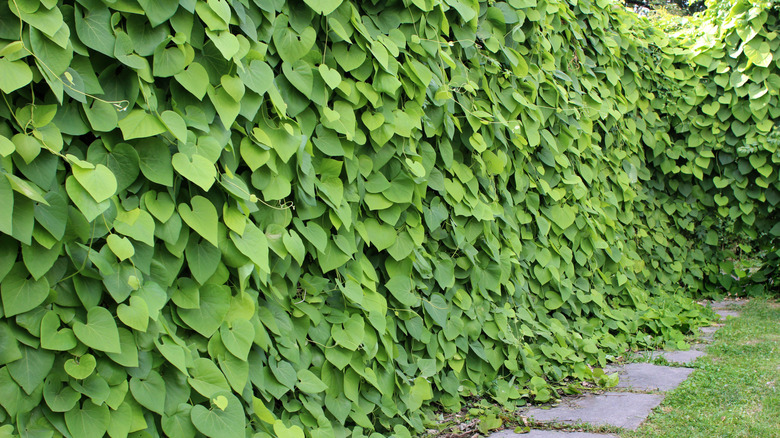
There are three main factors to consider when growing Dutchman's pipe as a living wall: USDA hardiness zone, sunlight, and pruning.. As a perennial, planting this vine in the right USDA growing zone helps ensure that it comes back year after year. As a native of eastern North America, pipevine often does best when offered similar climates. It's hardy in zones 4 through 9.
Dutchman's pipe does not tolerate heavy shade conditions. Instead, you want to choose a spot that receives plenty of sunlight each day. As a result, fencing along structures or under trees may not be the best spot for this plant. It grows best when offered full sun or partial shade, which means that it needs several hours of direct sunlight each day. While it may not be resistant to shade, it does resist other common challenges, including deer and other pests.
While the idea of specific maintenance may sound daunting, don't worry – pipevine is overall a low-maintenance plant. However, when you want to create a screen using this plant, you want to ensure that it's branching out and spreading over the desired surface area. As a result, it's important to pinch the tips as they grow to encourage spread over height alone.