

Not Just Fertilizer: Tomatoes Thrive With The Help Of These Companion Plants
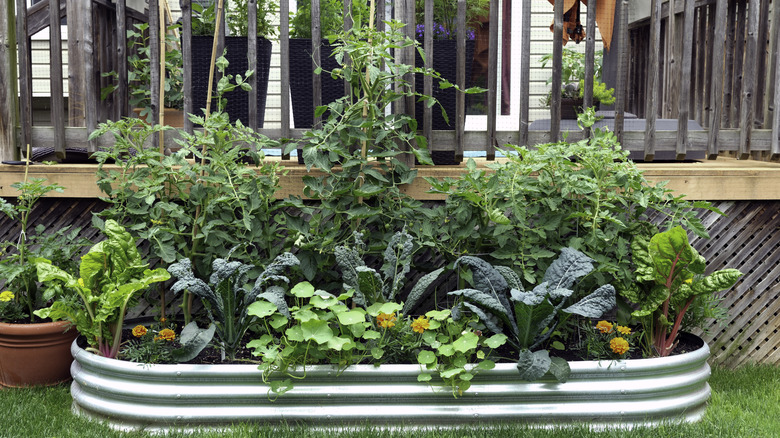
Anyone who has tried planning a veggie garden can tell you that there are a lot of factors to consider before your shovel even touches the soil. When it comes to maximizing your tomato harvest, one often-overlooked strategy is making full use of companion planting. The two sidekicks that really shine for tomatoes, and have some scientific backing, are marigolds and basil. This combination may help deter pests and potentially support plant growth.
Planting basil is the secret to keeping thrips out of the garden, which helps tomato plants survive. Thrips, tiny insects transported on the wind and weak wings, can cause massive damage by sucking the sap out of the leaves. They can also transmit tomato spotted wilt virus. One study found that basil may have promoted tomato root growth comparable to fertilizer. (What's the opposite of kryptonite?) Of course, this is only one study, so it may be wise to keep a DIY fertilizer made from a stinky kitchen scrap on hand if you decide to give this planting combination a try.
Marigolds, particularly French marigolds, are excellent trap plants. They attract the pests, shielding your more fragile tomato harvest. French marigolds contain a compound called limonene that may help repel whiteflies. While it is less effective to add marigolds after an infestation, if grown together, there's a significant reduction in the pest. Interestingly, basil has also been shown to help reduce whitefly populations, so the combination can be helpful! If you plan ahead, you can plant marigolds as a cover crop to control nematodes in the soil, but they need to be there for two months before planting tomatoes. This is only viable if you use season extension or live in a warm climate. Finally, the flowers attract pollinators, which increases tomato harvests.
Planting basil, marigolds, and tomatoes together is a simple task
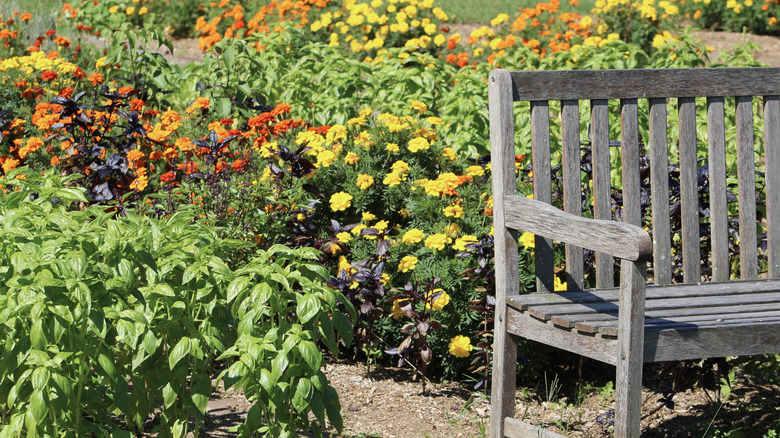
Naturally, as companions, tomatoes, marigolds, and basil all like similar growing conditions: full sun, medium water, and well-draining soil. They also grow during the same season, and marigolds are easy to maintain if you avoid a few common mistakes. The term "companion planting" often leads to a misguided feeling that the companions must be right next to each other to work together, but a little spacing is perfectly fine. As long as the basil and marigolds are within 5 feet of the tomato plant, the pest-deterring and pollinator-alluring benefits are still there.
However, there are a few strategies you can employ. Try planting marigolds on the borders of beds or corners of planters so that they can be insect beacons. The goal here is to make a sort of shield, where the pests hit the marigolds first, acting as a trap plant. Basil can be a bit closer — usually about a foot away from tomato plants. You can also plant in rows if that's easiest for you. In that case, you can either alternate plants within the rows (interplanting), or alternate rows of the three plants (interrow planting).
When you think about it, with a bit of planning you can get a lot of benefits with little to no disadvantages when you intercrop your tomatoes with companion plants. Boosting growth without chemical fertilizers can help reduce harmful runoff scenarios. Reducing pest pressure without relying solely on insecticides may help protect beneficial insects. Plus, you get a more diverse harvest. Make a margherita pizza with your fresh tomatoes and basil, and then set the table with a vase of your colorful marigolds snipped in their prime.