

Not Thyme Or Oregano: The Summer-Blooming Herb That Looks Good On Retaining Walls

Retaining walls perform important functions in the landscape, containing and holding back soil, making slopes more usable, and guarding against erosion. A functional retaining wall may be attractive on its own, but you can give it even more curb appeal and a softer look if you incorporate plantings that will gracefully cascade over it. You'll get even more bang from your buck if you choose a plant that's appealing, aromatic, and easy to care for. Trailing rosemary (Salvia rosmarinus (Prostratus group)) is one of the beautiful plants that will happily spill over your retaining wall . The evergreen, herbaceous cultivar is also known as creeping or prostrate rosemary.
This fragrant, heat-tolerant trailing herb produces the familiar leaves that resemble pine needles and little blue flowers that attract pollinators. In cooler climates, blooms appear in spring and summer, while they emerge earlier in the year in warm areas. Foliage can spread up to 6 feet wide, making it perfect for draping over a retaining wall. Trailing rosemary's pungent smell even deters deer, helping to keep unwanted visitors from damaging your meticulously maintained landscaping.
Consider fragrant trailing rosemary for your retaining wall
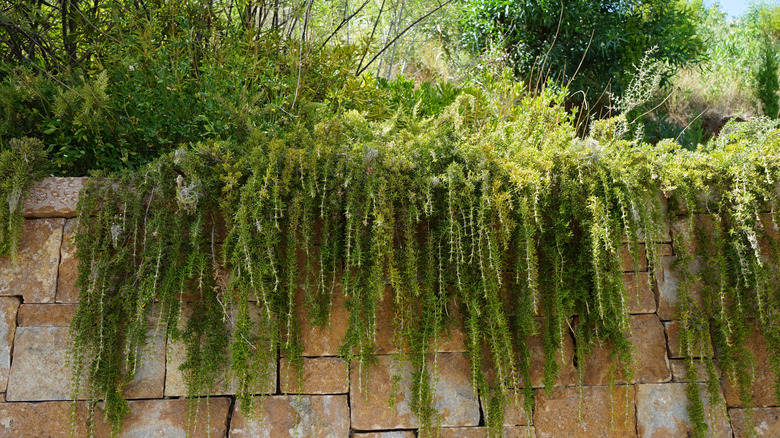
Trailing rosemary is cold-hardy in USDA Zones 7 to 10. Transplant it in the fall from nursery pots in well-draining sandy, rocky, or poor soil with moderate fertility. Your retaining wall's placement must allow full sun for trailing rosemary. Deter weeds around the plant by placing a ½ inch sand layer around the plant. Water regularly during trailing rosemary's first year of establishment. After that, give it deep but infrequent waterings about every two weeks.
Fertilizer isn't needed, but you can topdress your trailing rosemary with compost. Pruning dead growth from underneath your wall-trailing herb every few months will keep it arching attractively over the wall, and you can propagate from stem cuttings if you need to fill in any bare spots. Except for spittle bugs (which you can spray off with a hose), trailing rosemary resists most pests, though the plant is susceptible to powdery mildew, botyris, downy mildew, and leaf spot. Check out our guide to how to care for your rosemary herb plant to help keep it healthy and prevent these diseases from destroying your display.