

The One Mistake To Avoid When Purchasing Solar Panels (And It Isn't What You Think)
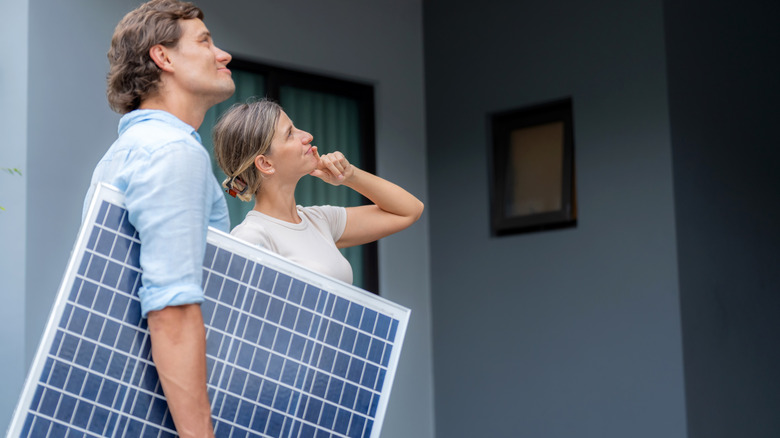
Whether you're weary of the ruthless upsurge in electricity bills, exhausted by power outages or utility disconnections, or have outgrown your existing HVAC, you've likely considered switching over to solar panels for some relief. In addition to offsetting energy costs, solar panels may qualify you for credits on your energy bill if your system sends excess power back to the grid. Besides, adding solar panels to your home can increase its value by nearly 6.9% according to the latest research from SolarReviews.
However, when purchasing solar panels, avoid making the mistake of buying extra in advance if you don't plan to add them to the system straightaway. This may seem counterintuitive because many homeowners want to plan ahead for future energy needs. But Greg Field, owner of PGT Home Energy Solutions & HomeSmart Solar Realtor, feels that buying them ahead of time for later installation isn't worthwhile. Wondering why? "Because photovoltaics are sophisticated systems with limitations on voltage and capacity," he explains in his exclusive interview with House Digest.
Long-term storage can create challenges, especially in hot climates where temperatures inside garages may become extreme. "Besides, the cells of photovoltaics are very delicate. Long storage poses risks of cracking them even before installing them," he adds. For these reasons, our expert tells us, "Extra panels cannot be put aside for later use but should immediately join the existing system."
Planning for additional energy requirements the right way
When switching to renewable energy sources like solar, the primary consideration for most homeowners is to easily meet their current energy requirements without sourcing any extra from the main grid. However, as Greg Field highlights during his exclusive conversation with House Digest, "The situation is always evolving and so [are] people's energy needs." With the climate growing warmer, people are running their cooling systems for longer. Pool owners often use additional electricity to operate pumps and other equipment during warmer months. Homeowners looking to shrink their carbon footprint by switching from gas to electrical appliances also require more power. "Also, the presence of an electric car will increase electricity expenses by 25-30%," he reveals.
Besides, on account of age and wear and tear, old systems grow inefficient, extracting more energy for the same production. "Any equipment, including the solar panels and the air conditioning systems, degrades over time, which is why an older AC is consuming way more energy compared to how it used to function 5 years ago," he states.
In short, it isn't unusual for energy requirements to shoot up later on. Rather than planning a future expansion, Field recommends sizing the system with some room for future growth whenever possible. This also helps maximize financial incentives available. But if such a step strains your budget, another alternative is to "try to get microinverters installed by your contractor because modifying them is very easy later on," advises our expert.
Important things to know before you install additional solar panels later
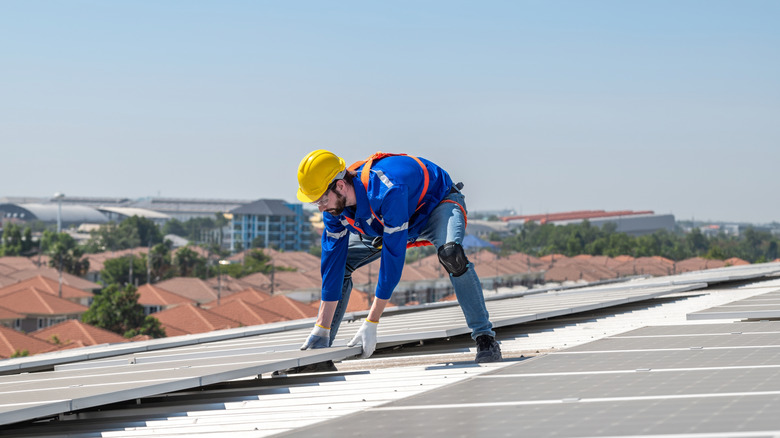
To keep things simple, installers and homeowners typically follow the 20% rule for solar panels. So, rather than matching the existing electricity usage, they raise the capacity by another 20% to account for additional usage or electricity losses from weather vagaries (think clouds, fog, or rain interfering with production). However, if this proves insufficient and you require additional solar panels in the future due to evolving preferences, know this: "It will definitely be considered modifying and will demand acquiring new permits from your utility," clarifies Greg Field in his exclusive interview with House Digest.
As you can imagine, obtaining new permits, hiring installers, and updating interconnection agreements can add both time and expense. "Also, it will likely influence your net metering/net billing and may lead to losing grandfathered rights." For instance, not too long ago, California switched to a net billing tariff, drastically reducing offsets on energy prices. While customers previously enrolled in a net metering structure could continue enjoying better benefits, they were upgraded to the latest policy if they expanded their existing capacity by 10% or 1 kilowatt, whichever is higher.
Besides, by the time you require more panels, other system parts may be due for a replacement due to deterioration or maxed-out capacities. "Finally, photovoltaics change so fast that getting the same-size and same-capacity panels years later might be difficult," he concludes.