

Not Bee Balm, Not Honeysuckle: The Edible Hibiscus Cousin Pollinators Love
When you're starting your own pollinator garden, you have an almost endless variety of options to choose from. Bee balm (Monarda spp.) is a classic choice for attracting bees, butterflies, and hummingbirds, as is native honeysuckle (Lonicera sempervirens) if you're looking for a vining option. However, when you're looking for the best plants for your pollinator garden, you can also get creative with some less common picks. That includes this edible hibiscus cousin that's a cornerstone staple in many regions' cuisines and a fan-favorite among pollinators.
Also known as ladies' fingers, okra (Abelmoschus esculentus) is a flowering vegetable that's related to hibiscus, as well as cotton and hollyhock. It's native to Africa and Asia, but it's commonly grown as a crop in the United States, and it can grow over 4 feet tall. For many people, the vegetables themselves are the prize of growing okra. However, if you're trying to make the most out of a small backyard, you might appreciate the fact that this plant can pull double-duty. After all, those vegetables need flowers to form, and the plant's large, hibiscus-like summer blooms aren't just visually appealing but also a great way to attract more beneficial bees to your yard.
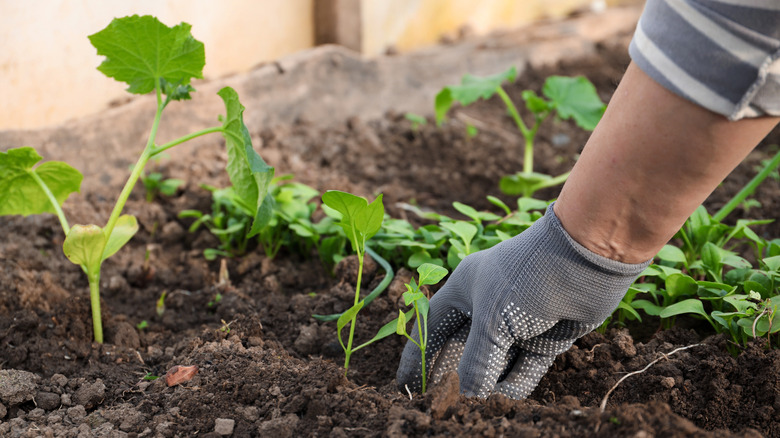
Overall, okra is an easy-to-grow plant that also does well in containers, making it easy to incorporate in your garden. Before planting it, however, just keep in mind that it does have irritating hairs on the seed pods, so you'll want to wear gloves when handling this plant.
How to grow okra for pollinators
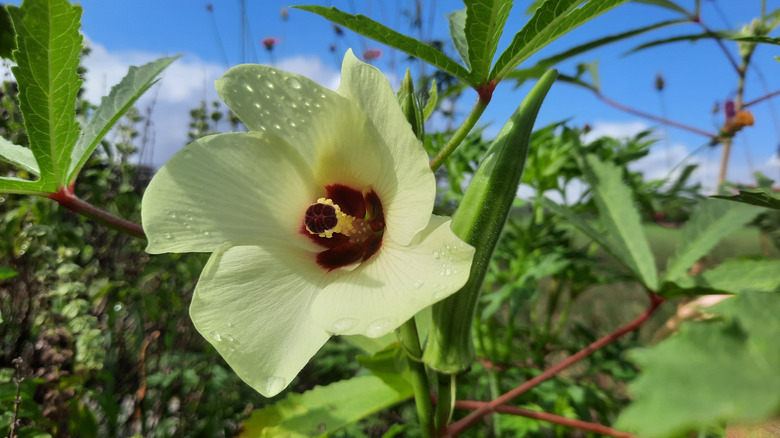
Okra is an annual, so there's no need to worry about familiarizing yourself with USDA growing zones to enjoy this plant in your yard. However, choosing the right spot in your yard is essential to enjoying the bee-magnet flowers that okra produces. Learning the right amount of sunlight, soil conditions, and common problems is one of the best ways to help this plant succeed in your yard.
One of the most important things to look for when choosing a location to grow okra in your pollinator garden is sunlight. While there are many shade-loving plants that attract pollinators, okra isn't one of them. Instead, this plant grows best when it's offered full sun. It also needs a location with well-draining soil. It prefers consistent moisture, but you don't want to leave it waterlogged or soggy. It also needs protection from harsh weather, such as shelter from heavy winds and protection from cold temperatures. It can take a few months for this plant to finish its life cycle from germination to vegetable, but you want to make sure the night time temperatures are warm enough to support healthy growth, aiming for temperatures over 55 degrees Fahrenheit.
As far as common problems go, bees aren't the only garden visitors attracted to okra. This popular vegetable can also attract common pests, including aphids, spider mites, slugs, and other unwanted garden critters. Because of this, you'll want to keep an eye out for any pests on your plant to keep it healthy.