

Those Dark Stains On The Roof Aren't Dirt
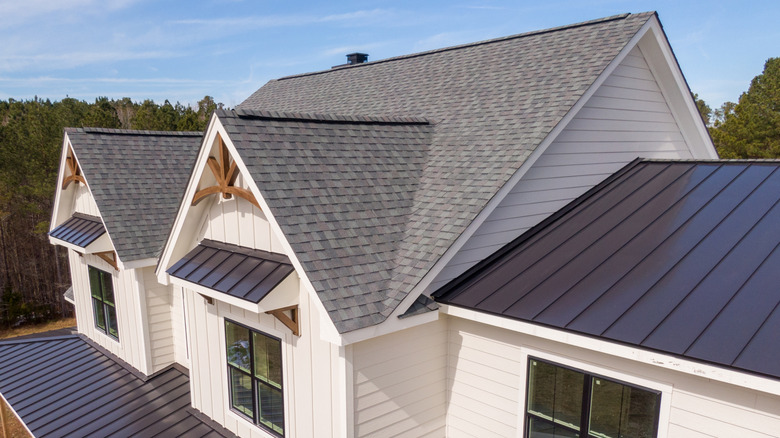
After a winter of being pounded by rain, hail, snow, airborne dirt, leaf litter, and goodness knows what else, your roof can end up looking pretty grubby. As such, cleaning it in the spring or summer is a good idea. Not only does it smarten up the appearance, but it also helps prevent damage from excess moisture that can be trapped by moss, mold, mildew, or lichen. These usual suspects may not be responsible, though, for some dark stains that won't come off with water alone. Instead, these stains can bee caused by a type of cyanobacteria (or blue-green algae) called Gloeocapsa magma. It's actually something you need to deal with before it starts to harm your roof.
Asphalt shingles are particularly vulnerable, because Gloeocapsa magma feeds off the limestone in them. However, there are downsides to most popular roofing materials, and the bacteria can survive on the moisture found in any porous material. Thus, clay tiles and wood shingles can also be infected, for example. Although Gloeocapsa magma does not attack the shingles or tiles as such, the damp environment they create can contribute to faster wear on your roof and a tendency for the structure to break down or rot.
How to clean the dark stains of blue-green algae from your roof
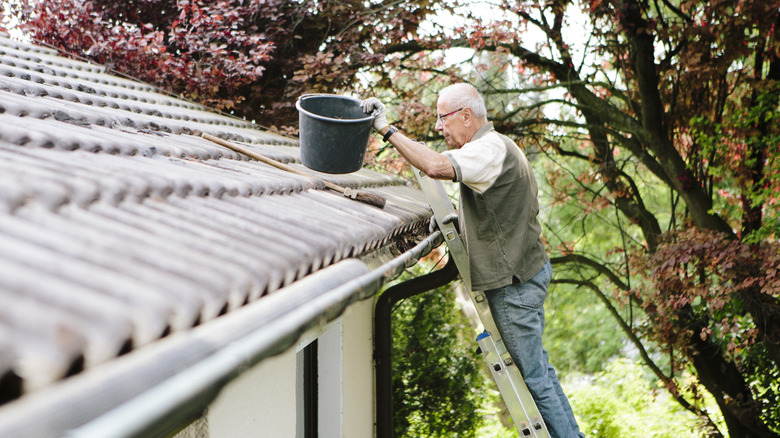
For some people, roofing work is understandably one of those DIY tasks they should avoid at all costs, so people need to think about any safety implications before getting out the ladder. Calling in a professional cleaning company experienced with blue-green algae is certainly worth considering.
One of the reasons these cyanobacteria are so difficult to remove is that, as they die, they form a protective shield over the remainder of the colony. This can be difficult to cut through, but necessary. Commercial cleaners can work, since they use bleach that contains sodium hypochlorite in a 1:5 ratio with water. Household bleaches may contain sodium hypochlorite, but it's likely the concentration will be weaker, so you may need to experiment with the dilution. Bear in mind that any bleach runoff may kill plants or damage outdoor furniture left nearby. If you can't prepare for that situation, then you should be able to find alternatives at your local hardware store or online. Make sure to choose one that specifically targets algae.
After you've let the solution sit for about 20 minutes, you'll need to wash it off. A pressure washer could damage shingles or rip them off, so use a low-powered garden sprayer instead. Choose an overcast day so the bleach doesn't evaporate too quickly. Wear goggles, gloves, and non-slip footwear.
Even if you don't notice these dark spots, regular inspection is among several expert tips to extend the life of your roof. You'll want to especially check the north side of your roof, which traditionally receives less sun and thus retains moisture longer. Now that you know what to look for and how to treat it, you should be able to tackle those dark stains before they become an even worse problem.