

What To Do If You Find This Native Milkweed In Your Yard
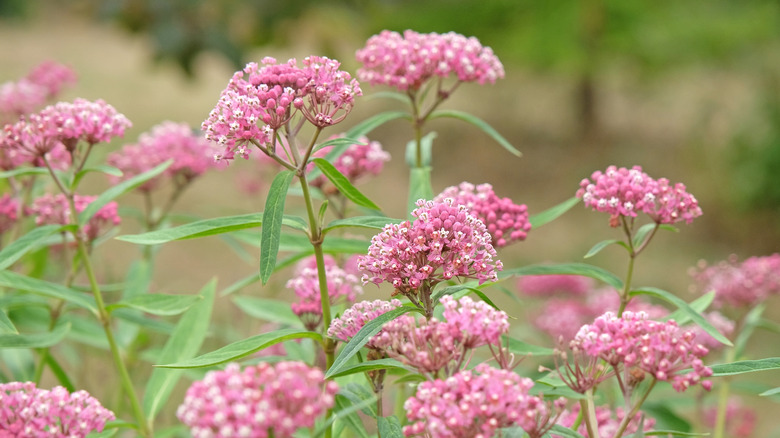
Very few things frustrate gardeners faster than spotting flowering plants that were not part of the original bed and are now creeping into a beautifully manicured lawn. While weeds will take over if there's bare ground and the conditions are right, you don't have to get rid of every volunteer plant. Case in point: native milkweeds, especially common milkweed (Asclepias syriaca), can make welcome additions despite their aggressive tendencies. Wondering why? They produce some of the best flowers for attracting monarch butterflies. And quite frankly, our yards can always use more life and color.
To determine whether you have common milkweed growing in your yard, closely examine its flowers. They typically bloom between June and August in large clusters of several tiny flowers — often close to 100 — arranged in a single flower head called an umbel. Each flower is split into two sections: The crown, also referred to as the corona, features five hood-like structures that hold the nectar, while the lower area, called the corolla, has five petals that curve backward beneath them. The blooms are usually pink or purple, though they can sometimes be white or green. Stand close enough to whiff them, and you'll notice a sweet rose-esque or honey-like fragrance. If they're well along into the blooming season (say July into September), you may find silvery threads holding about 4-inch-long, spiky, wart-like seedheads. Common milkweed can grow up to about 5 feet tall and features reddish veins with fuzzy undersides on leaves. To confirm the identification, you can use the best plant identification apps to protect your garden, like Google Lens and Pl@ntNet, in addition to checking pictures online.
Retain common milkweed for monarchs
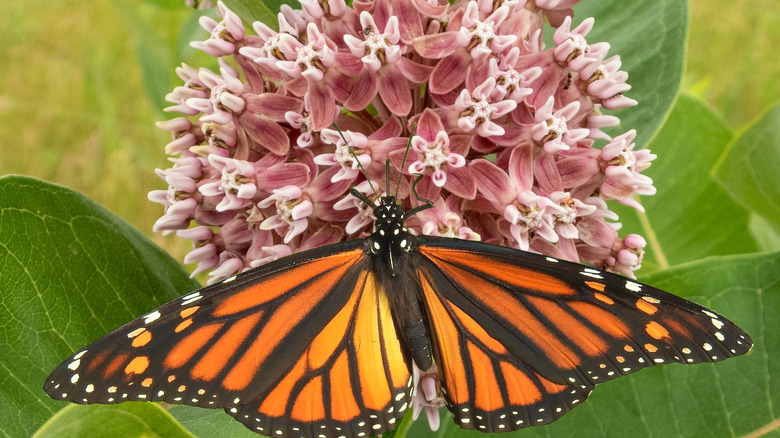
After you've confirmed the plant growing in your yard is indeed common milkweed, step back and let it thrive. This beautiful plant is native to many states across the central and eastern U.S. and has evolved alongside local pollinators. Monarch butterflies, which are the best-known migratory butterfly species in the U.S., travel long distances during the fall season to the south. Along the route, they look for nectar-rich flowers for fuel and depend on plants like milkweeds to support their caterpillars. Interestingly, their larvae absorb the toxic compounds from the plant. As a result, they taste bitter to predators, who then spare their lives.
Because milkweed has long been treated as an unwanted weed in pastures and crop areas, much of it has disappeared from the monarch's migratory routes. This loss of habitat, along with the consistent use of pesticides and adverse climate conditions, has contributed to monarch population declines. Preserving common milkweed in your yard can help provide essential habitat for monarchs while also supporting other beneficial insects, including milkweed tussock moths, milkweed bugs, milkweed beetles, bumble bees, and specialist native bees. Even better, these native plants may even turn your yard into a safe haven for fireflies.
Managing common milkweed's aggressive spread
While common milkweed is highly beneficial for butterflies and other pollinators, there's no denying that it can behave poorly in curated gardens and yards. Unless you've got a bare patch of land where it's free to spread, you'll most likely want to keep its growth in check — even more so where square footage is limited.
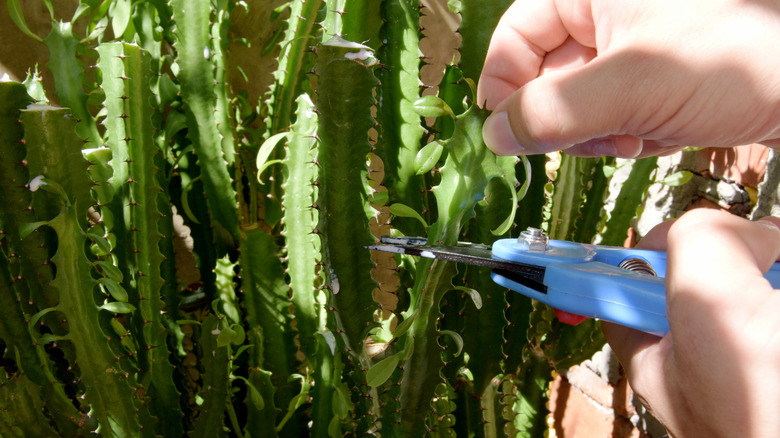
Common milkweed spreads through both seeds and rhizomes (underground shoots). So, after it terminates all flowers and makes way for seed pods, clip them off before they open up and release their seeds. Doing so helps reduce the random plants popping up in different parts of your yard. Make it a point to wear gloves, a mask, and eye protection, as their milky sap can be irritating.
If you're managing a larger patch, you can minimize your labor by mowing the plants instead at a height of 8 to 12 inches. Make sure the last of the caterpillars have already left, usually in October. You may also give milkweeds a light trim in mid-summer (early July) when monarchs take a reproductive pause, as the new growth may spur a fall breeding. Also, dig out any unwanted new seedlings with a shovel. Aim to dig in deep so you can get out all the roots. Spring is generally the best time to do this before monarchs begin laying eggs. While the jury is still out on how many milkweeds you need to support monarchs, growing at least three is a good start.