

2 Concrete Driveway Cleaners To Avoid At All Costs (& More Reliable Alternatives To Try)
We may receive a commission on purchases made from links.
When you buy a house, everything starts out as full of possibilities. So you move in, decorate, and fix every detail to make the house your home, from the interior paint color to the landscaping and driveway. But after a few years, that perfect concrete driveway that you used to love starts looking a little worse for wear. Luckily, you're not alone. Every homeowner will someday experience the reality of long-term driveway care. When it comes to concrete driveways, the porous surface can hold on to residue for years if you don't keep it clean. Regular oil spills and use of deicer add up over time. The thing is, each type of stain needs its own specific type of cleaner. On the other hand, some cleaners simply won't get the job done or can be downright dangerous, like Coca-Cola and vinegar.
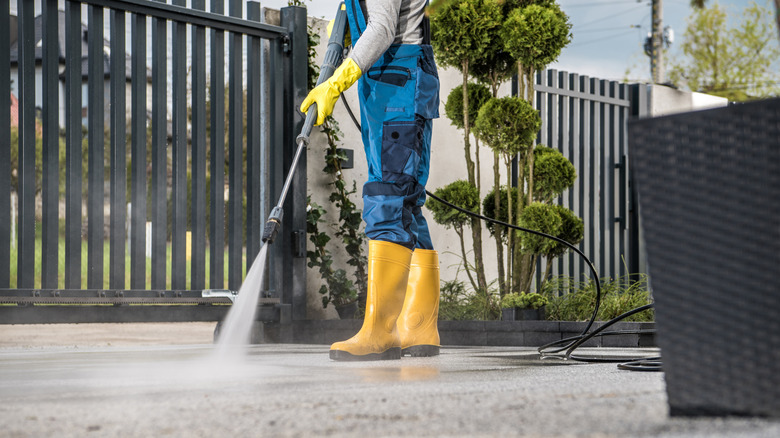
Since it's chemical liquids that stain your concrete driveway, using the wrong compounds to clean them can lead to damaging or even hazardous reactions. In addition, internet hacks, like using Coca-Cola, are far more likely to leave a messy residue, create garden-harming run-off, or attract pests. Regular maintenance can help you avoid the need for chemical cleaning agents, but every now and then, you may want to use an eco-friendly cleaner to remove stains. Regular sweeping, pressure washing, or using an alkaline degreaser are some of the easiest ways to clean concrete. In most cases, the best cleaner for the job depends on the type of stain you're dealing with. You should choose a product that is safe and effective, like peroxide, for oil stains and pH-balanced cleaners for everyday cleaning.
Avoid: Coca-Cola
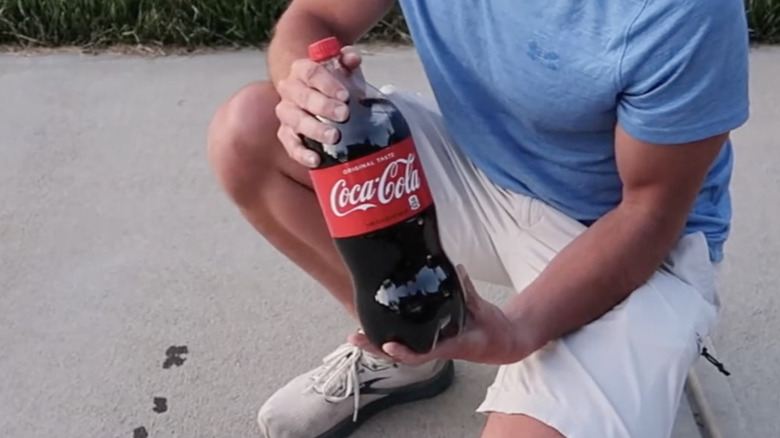
There are plenty of ways to use Coca-Cola in your garden and yard, but cleaning the driveway is not one of them. It's a common internet myth that Coca-Cola can clean oil stains off your driveway. Unfortunately, it may do more harm than good. It's true that the acids in the iconic fizzy beverage may help reduce the appearance of certain kinds of stains. However, it also leaves behind a sugary mess. Not only can this attract unwanted pests, like wasps and ants, but it can also damage nearby plants. It's probably best to simply avoid this hack altogether.
The theory that Coca-Cola can remove oil stains stems from the fact that it contains phosphoric acid, which has been proven to remove certain substances from concrete. But it can also damage sealed concrete if left too long. You may also end up spending just as much money pouring this mild acid on your driveway as you would purchasing an eco-friendly degreaser designed specifically for concrete cleaning. Plus, you need to clean any type of acid cleaner off the concrete driveway after application. When you hose off the Coca-Cola from a driveway bordering a lawn or garden beds, you risk negatively impacting plant growth. Instead, leave the acidic concrete cleaners to the professionals if your situation calls for such an approach.
Avoid: Vinegar
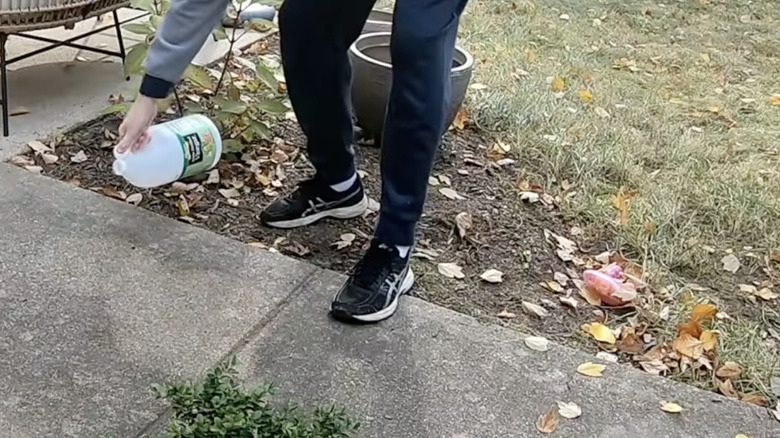
Another option that seems affordable and easy for any homeowner to access is household vinegar. If you found mold growing on your driveway and are considering using vinegar to get rid of it, approach the idea with caution. Vinegar solutions are often recommended for concrete driveway limescale or mold removal, either via spot cleaning or pressure washing. That's because they actually work. The problem with this popular hack is that your clean driveway comes at a cost: there's a high risk that you'll further damage the concrete. This is especially true when it comes to unsealed concrete. Plus, vinegar is not nearly as reliable as purpose-made concrete cleaners.
Vinegar can be used as a mild acidic cleaning agent for concrete driveways. The issue is that, ideally, you should get a professional assessment to justify using any acidic cleaner on concrete. Some of the solutions that are safe to use on concrete — in very specific situations, mind you — include those containing muriatic acid, hydrochloric acid, or phosphoric acid. These cleaners are usually only suitable for unsealed concrete driveways with mineral stains. Any acidic applications, including household vinegar, have the potential to cause discoloration, eat away at sealants, or cause acid etching, which can lead to long-term damage. Plus, it's never a good idea to use vinegar — or any other kind of acid cleaner — on oil stains.
Use: Peroxide
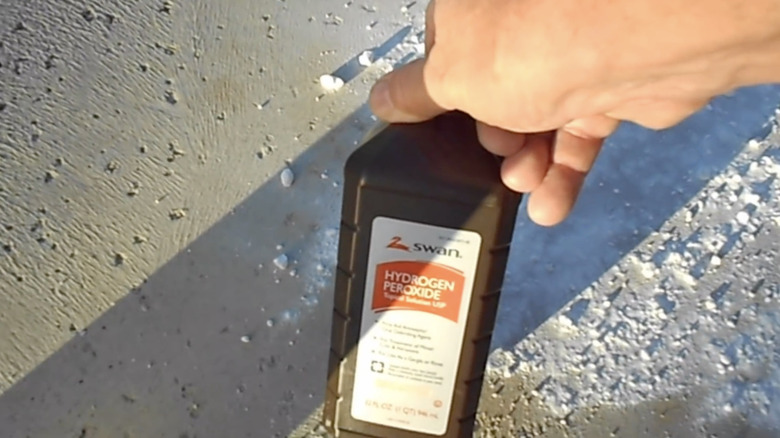
Peroxide is a safer, more effective cleaner for concrete driveways than vinegar. It can tackle mold, mildew, and even oil spills without any damage. Peroxide also works as an alternative to dish soap — a go-to everyday cleaner for driveway maintenance that can leave behind a white film. Peroxide reduces stains — especially organic stains — by bleaching the surface of the concrete through oxidation. It won't damage the cement in the concrete or the sealant. Plus, it is safe for plants, so there is no risk of damaging your lawn or nearby greenery when you rinse it off the surface of the driveway after application.
Simple Green Oxy Solve Total Outdoor Cleaner, sold at Home Depot, is a top-rated product that makes removing oil stains from concrete a breeze. Hydrogen peroxide is the active ingredient. It's safe for wildlife and plants and works on dirt, grime, mold, mildew, moss, and algae. Simple Green Oxy Solve is designed to be used as a pretreatment before pressure washing. You can also add it directly to your pressure washer's cleaning reservoir. It may also be effective at removing oil spills if you apply it right when the spill occurs. Before applying a hydrogen peroxide-based cleaner to a fresh oil spill, soak up as much of the oil as you can using kitty litter. Then, pressure wash the area with the cleaner and scrub away any residual staining.
Use: Baking Soda
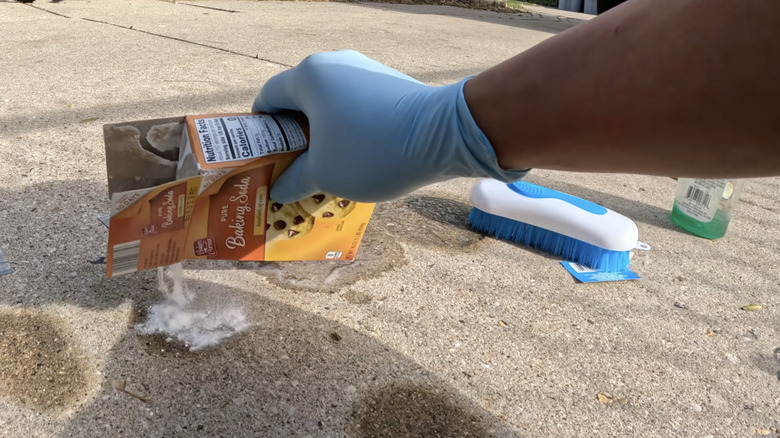
If you're looking for a simple solution that can clean dirty concrete without a pressure washer, head to your pantry and grab that box of baking soda. Yup, the same product you use in homemade cleaners for your bathroom or kitchen works outdoors, too. Baking soda is a mild abrasive that is also alkaline, so it won't break down the surface of your concrete the way that acidic cleaners can. In fact, if you insist on using vinegar to clean your concrete driveway (which we still don't recommend, by the way), you could pair the solution with baking soda to reduce the risk of acid etching. Baking soda can be used to remove grease, oil, and other stains from concrete.
To use baking soda to remove an oil stain, for example, create a paste with warm water and baking soda, then spread it liberally over the stain. Leave it on the driveway overnight — make sure you choose a period of dry weather to complete this task. You can even combine hydrogen peroxide and baking soda for enhanced cleaning power. Add the hydrogen peroxide to the baking soda paste before you rinse it off the concrete. If you are using baking soda for everyday driveway cleaning, mix the hydrogen peroxide and baking soda — and dish soap, if desired — into a gallon of water before scrubbing the concrete with it. You can also sprinkle the dry powder directly on the surface of your driveway and scrub it in with a brush before washing it away.