

Everyone Had It In The '70s — Now It's The Thrift Store Dish Pattern We Crave

We may receive a commission on purchases made from links.
If you love thrifting, then you're likely always on the lookout for a wish list of items and brands. One vintage dinnerware brand you might be thrilled to spot at a thrift store is Corelle, which was first introduced to consumers in the '70s by Corning Glass Works. Designed as a nearly unbreakable line of glass dinnerware, Corelle is meant to be a timeless addition to your kitchen. One iconic design that still works in contemporary kitchens is Butterfly Gold. Said to have been in 35% of American households at one point (via Business Insider), this design features a pattern of mini butterflies and flowers, often running in a strip around the edge of whatever piece of dinnerware it's imprinted on.
Set against a white background, this golden design is simple yet elegant, while also being rather nostalgic. Corelle's Butterfly Gold is the kind of pattern and colorway that would work in a mid-century modern home, as well as in both a retro or cottagecore-inspired aesthetic. The golden color feels warm and inviting, while also elevating what would otherwise be a plain white dish. So if you're looking to boost your kitchen's aesthetic appeal, this dinnerware could make a great addition to your cabinets, and even decor.
What to pay attention to when thrifting Corelle's Butterfly Gold pieces
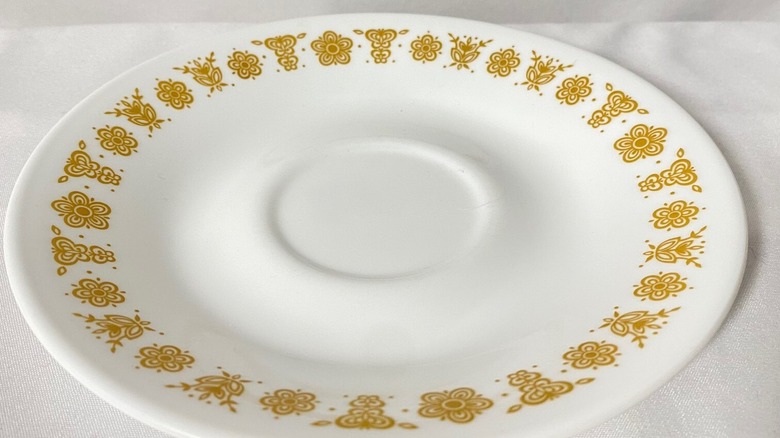
The original Butterfly Gold Corelle pattern was released in 1972, with a second version of the design also released in 1979. The second version of Butterfly Gold saw changes to the original design, with larger central flowers being replaced with smaller bouquets. Besides their distinctive pattern, these dishes are also identifiable by their backstamp, which should read "Corelle by Corning" or "CorningWare" depending on when they were made. Some pieces like casserole dishes even have their capacity listed in imperial and metric measurements on the bottom.
When searching for this pattern at the thrift store, you'll want to look for any surface damage, such as scratches, chipping, or cracks. While these dishes are designed to be durable, it's important to know that vintage Corelle has been found to have lead in the paint. This means that if the paint is scratched off or damaged, that lead could potentially leach into your food. Corelle's FAQ page says that their vintage dishes produced between 1978 and 2000 comply with the FDA's lead safety regulations, but to avoid risk since the first round of these dishes was released pre-1978, it's safest to keep your Butterfly Gold dishes display-only. These dishes could instead be used for decorative purposes, whether on open shelving or on display in glass-front cabinets. You may even want to include one of the larger plates as part of a vintage-inspired wall design to show off the golden pattern alongside other retro pieces.