

Those Tiny Specks On A Strawberry Aren't Seeds
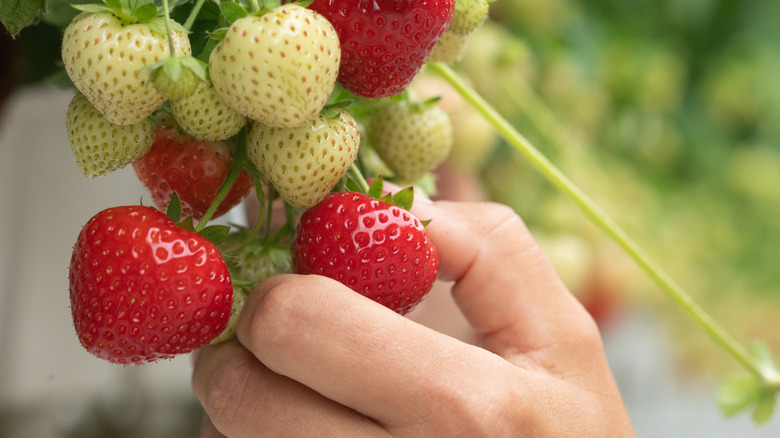
Most people think those little tan gold flecks dotting the skin of a strawberry are seeds, but they aren't. Each one of those little tiny seed-like bobbles is actually its own separate fruit. They are called achenes, and they each have a single seed tucked inside. A single ripe strawberry has an average of 200 achenes scattered across its surface. With cold stratification and proper planting, each one of the seeds inside the achenes would germinate. Germination with strawberries can be slow and sporadic, though, which is why so many gardeners grow strawberries from runners that they take from established plants instead.
Technically, the delicious red flesh of the strawberry isn't a fruit either, or at least it's certainly not a true berry. Botanists classify the structure of a strawberry as an accessory fruit. That juicy red flesh is actually the swollen flower receptacle, which is the tissue that originally connected the bloom to its stem. The true fruits are the achenes embedded across its surface. With a true berry, such as a blueberry or a grape, the fruit swells from a single ovary, and the seeds develop inside.
A strawberry has many tiny ovaries that each develop independently into their own achene, and the receptacle swells to support them. Before pollination occurs, the receptacle is just a small green knob at the center of the strawberry flower. Once the ovules are fertilized and begin developing into achenes, they help signal the surrounding receptacle tissue to swell into the bright red summer fruit you recognize.
Why some homegrown strawberries turn out lumpy or small
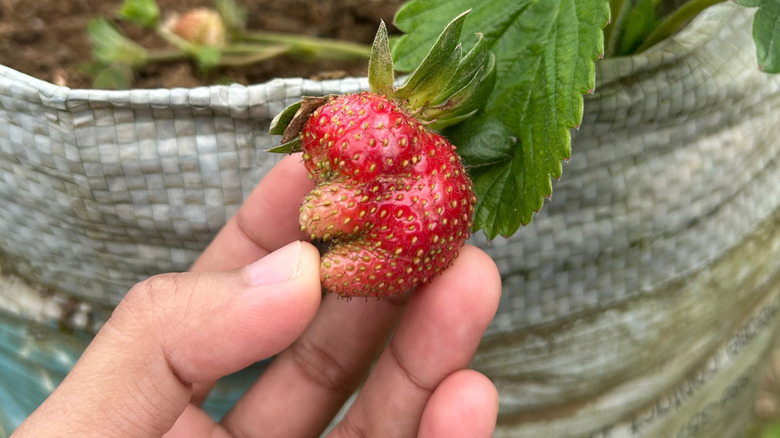
Strawberry flowers contain many pistils, and each one contains an ovary that should, if fertilized, turn into an achene. However, if a flower has a rough time during the pollination window, such as excessive heat or cold, heavy rain, or too few visits from pollinators, some of those individual ovaries don't get fertilized, and those that don't receive fertilization don't develop into achenes. Therefore, the patches of receptacle tissue beneath them don't get the signal to start to swell. Because the majority do get pollinated, most of the receptacle tissue does grow and ripen. This results in lumpy, twisted fruit that gardeners call catfaced, because it looks something like a cat's scrunched-up face. Those berries are generally also smaller than the rest of the crop.
If you're growing strawberries and the fruit keeps coming out lumpy and deformed but not obviously diseased, and the plants themselves appear healthy, it implies there's a pollination problem. Even though strawberries are technically self-fertile and can pollinate themselves, especially with help from the wind, insect activity definitely helps. A 2013 study from the Proceedings of the Royal Society B: Biological Sciences found that honey bees increased achene pollination 26.8% more than wind pollination and 61.7% more than self-pollination.
As such, strawberries need full sun where bees and other pollinators are already active. It's also a good idea to plant a few bee-friendly companions nearby, such as borage and lavender. Or better yet, make a pollinator-friendly garden by filling your growing space with attractive flowers that draw in all kinds of pollinators from the local area. If you still struggle with encouraging pollinators, you can hand-pollinate using a small soft paintbrush, brushing pollen across the whole surface of the receptacle at the center of the flower.
How to grow strawberries from seed
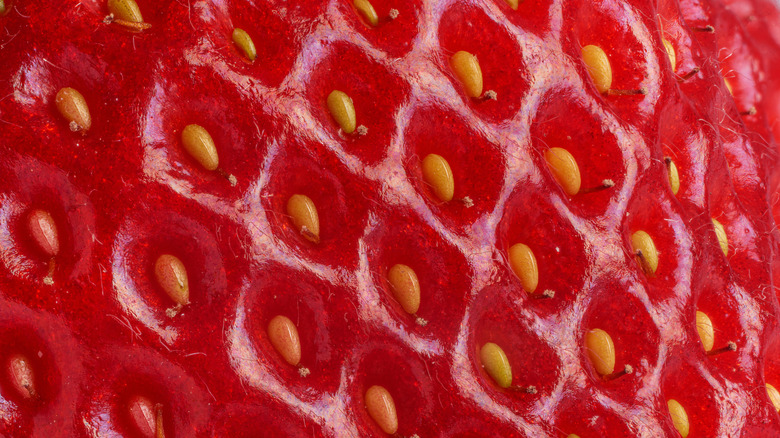
Most gardeners choose to start new strawberry plants from runners that they take from mature plants. Those runners are clones of the mother plants. It is possible to grow strawberries from the seeds inside the achenes, but every single seed on a strawberry plant is different from the others because every achene comes from its own separately fertilized ovule. Therefore, if you plant 100 and all 100 germinate, you will get 100 completely different, genetically diverse plants, not 100 copies of the parent. This means you never quite know what you're going to get when growing strawberries from seed, and they may not run true to the mother plant, unlike runners.
If you do want to grow your own strawberries from seed and you're fairly new to the process, go with Alpine strawberries (Fragaria vesca). They are smaller and more aromatic than grocery store strawberries, and they are open-pollinated rather than hybrid, so you'll get usable seed if you want to save more seed from one of your crops. To maximize the chances of germination, you need to cold stratify the seeds for seven to 10 days on a damp kitchen towel in a tray in the refrigerator.
Once they have had their time in the cold, sow the seeds on top of a moistened, fine seed starting mix. Press them lightly onto the surface, but don't cover them, as strawberries need light to germinate. You should see tiny seedlings in 10 to 14 days. Once the seedlings pop up, move them into direct sunlight and keep them moist but not waterlogged. They can go outside once they are a few inches tall (or about six weeks after germination) and the danger of frost has passed. Then you'll have some delicious strawberries in no time, achenes and all.