

How To Protect Lettuce From Bolting In The Summer Heat
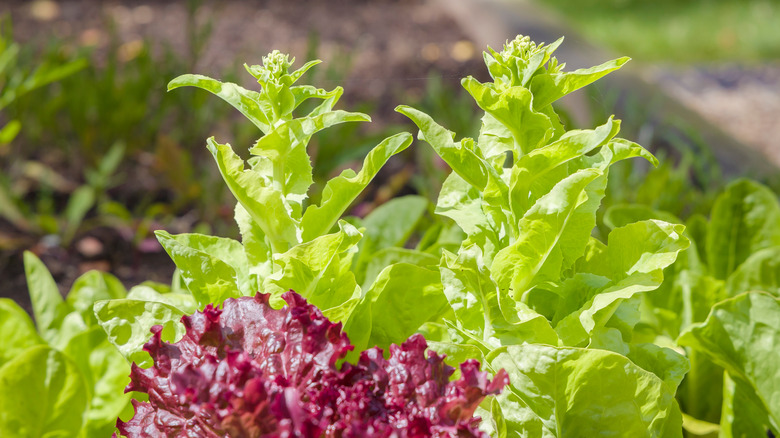
You finally decided to start that vegetable garden you always dreamed of. You know, the one that provides fresh greens for perfectly crisp summer salads that you'd serve guests at all your warm weather outdoor dinner parties. After all, lettuce is one of the essential garden vegetables worth growing, according to HGTV's Erin Napier. But it seems like every time you go out to harvest, more of the lettuce has bolted. And we don't mean it suddenly ran off in a rush. We mean it flowered before you got a chance to cut and gather it to bring inside. And while you love that other portions of your garden have bloomed (those dahlias are stunning), this wasn't what you had in mind for your lettuce heads.
If it feels impossible to keep your lettuce producing fresh greens throughout summer, don't worry. We have a few ideas to prevent seeing the dreaded bolting lettuce each day — like choosing specific types of lettuce that tolerate that heat better and keeping the soil cool and moist. Approaching your lettuce garden with this perspective is the key to a successful summer growing season. This is because as the days get longer and hotter, the soil dries out and lettuce takes it cue to bolt. TBolting becomes much more likely when temperatures consistently reach the mid-80s Fahrenheit and above, although the exact threshold varies by variety. If you're growing lettuce for looks, this isn't a problem. But if you want to actually eat it, then knowing how to prevent your lettuce from bolting is important. Especially because once it flowers, the lettuce will taste bitter.
Easy ways to keep your lettuce from bolting in the summer

If you want a thriving garden full of delicious summer lettuce, you'll want to start by selecting the appropriate varieties. Typically, lettuce is considered a cool season crop, but some varieties tolerate warm weather better than others. Varieties such as Oakleaf Green and Buttercrunch are good choices. If growing from seed, you can usually find information on the seed packet to indicate if it's an appropriate warm weather option.
Choose a location that receives morning sun but afternoon shade, or plant it beside taller crops that provide natural protection from intense afternoon heat. You could also try types of lettuce that thrive when grown in pots that can be moved as the shade patterns shift across the yard throughout the day. Using a couple of inches of dry grass clippings as mulch can help insulate the soil and keep it cool. Just be sure that the grass hasn't been treated with herbicide that can cause damage to your crops. If you planted the lettuce in a spot that's a bit too sunny, you can cover it with a mini-hoop tunnel and drape a shade cloth over the top.
As for watering, try to get out early and water them in the morning before the temperatures get too high. Since lettuce loves a moist soil, a smart idea is to run a drip hose underneath the dried grass mulch to provide a low level consistent water source. Positioning the hose beneath the mulch helps deliver water directly to the soil while reducing evaporation from the surface.