

The Planting Trick That Makes It 10x Easier For Pollinators To Find Your Garden
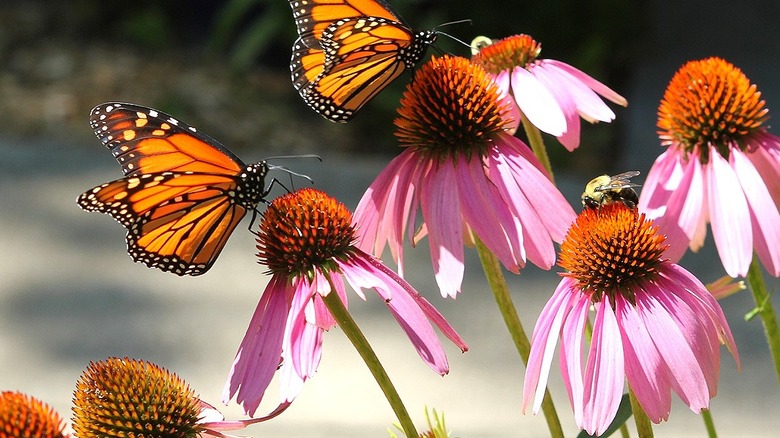
Pollinators, like butterflies, hummingbirds, and bees (especially), play key roles in the success of your garden's plants. But they need a little help to arrive, along with safe places to land. Planting clumps of pollinator-attracting plants is a simple trick that makes it much easier for them to find your garden.
Pollinator populations are shrinking throughout the world, but average gardeners can help boost their numbers, and the more action each person takes, the better the outlook gets. Choosing native plants and flowers to grow close together will give you the best chance of drawing in insects and other pollinators that are indigenous to your area. Meanwhile, a wide range of plants with different bloom times is best, so pollinators that stay in the same place year-round retain nourishment. What's more, if you add in varieties that bloom at night, it could even help invite pollinating bats into your garden mix.
What you put on and around those plants matter, too, however. Using systemic pesticides, for one, is a mistake to avoid if you're trying to attract pollinators to your garden.
Why planting in clumps attracts pollinators
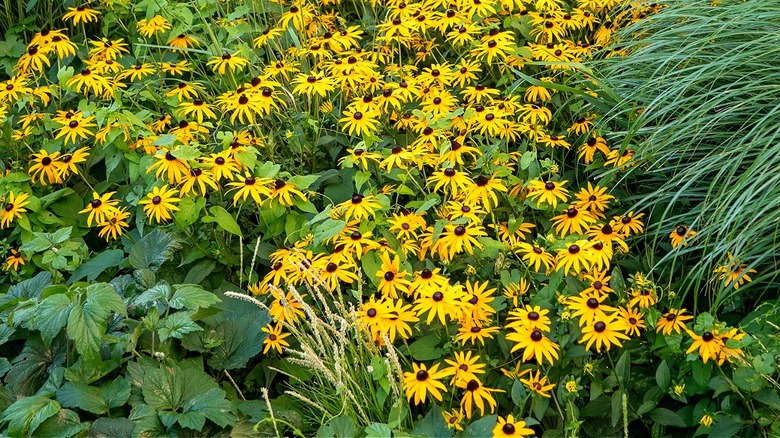
Clumps of plants in your garden are more visible to pollinators, who might otherwise skip over a solitary plant rather than settle in, moving from flower to flower. Pollinators are on the lookout for color, and a big, colorful swath that they can easily see functions like a flashing "Eat Here" sign — especially since meadows and prairies would naturally have drifts of the same plant.
The individual planting techniques will vary, but the idea is to create plant clusters that vary in color, and shape. You can start small, grouping, say, five pots together, or clustering six or so shrub or groundcover varieties. Plants with differing colors and a mix of flat, bell-shaped, and funnel-like flowers will keep the pollinator crowd diverse. Also note that purple, yellow, and white blooms are visible to bees, while red and pink hues are attractive to hummingbirds. (See plants that attract hummingbirds, specifically.)
There's a science to arranging these landing zones. Rather than planting under the shade of a building or other vegetation, make sure the plants are located in sunnier areas. Bees would rather flock to sun-kissed landing spots, and butterflies (being cold-blooded) need their bodies to reach and maintain a high temperature, so that they can flutter around and feed.
You can choose from many gorgeous flowers to plant when you have no shade in your yard, including sun-loving native options like orange coneflowers (Rudbeckia fulgida) and tickseed (Coreopsis grandiflora). With this said, while it's important to group plants, leaving some open spaces might benefit bees that nest in the ground, and stray branches or wooden boxes can also serve as their nesting material.