

The Bird Feeder Alternative That'll Be A Big Mistake To Use In Your Yard
If you're interested in feeding the birds in your backyard, a bird table is often thought of as one of the more obvious choices. They've been popular garden features for decades, being raised platforms that offer birds a place to gather and giving you a greater ability observe the birds as they eat. However, there is research that seems to suggest that not only are bird tables not the best choice, but they may actually be harming the birds. In 2025, organizations including The Guardian reported that the Royal Society for the Protection of Birds (RSPB) stopped selling bird tables and other flat feeders, as research indicated that they could be contributing to the spread of the disease finch trichomonosis. This disease has been linked to significant declines in songbird populations, and conservationists are concerned that flat feeding surfaces create perfect conditions for these diseases to spread easily between birds.
Sadly, a year later, the charity updated its advice, recommending against bird tables, tray feeders, and other flat feeding surfaces, after concluding that they do pose a greater risk of disease spread. So, these designs are no longer recommended as wildlife-friendly additions to your garden.
These flat feeding surfaces are a problem
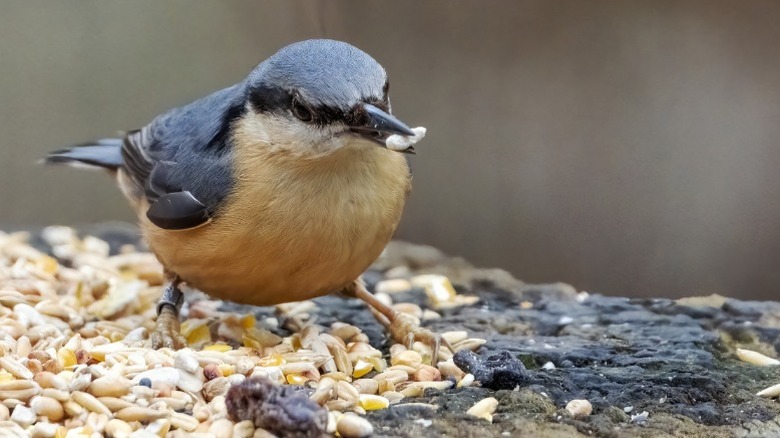
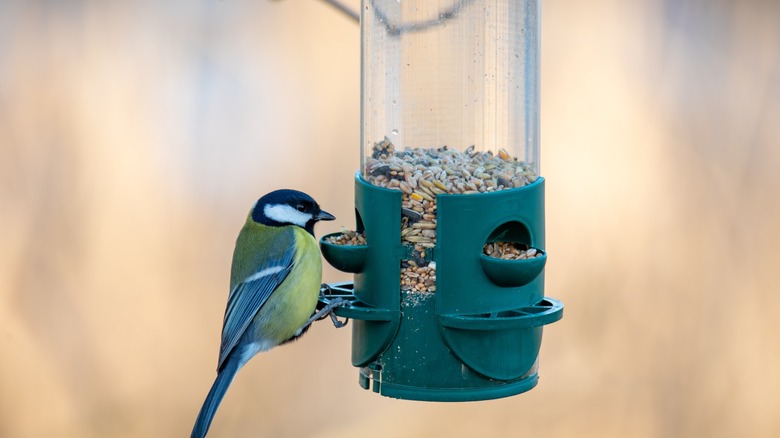
The problem stems from how birds interact with bird tables, as sick birds can easily leave behind regurgitated food or droppings that are contaminated. Then, because the feeding surface is flat, it's all too easy for healthy birds to come into contact with contaminated food later. Hanging bird feeders, on the other hand, are more like food dispensers that release smaller amounts of food a bit more gradually, whereas bid tables let food sit out for extended periods, increasing the opportunities for contamination to spread through populations of greenfinch and other songbirds.
So, it turns out one of the biggest mistakes you're making with a bird feeder could simply be choosing a design that allows food to build up on a flat surface, as even diligent cleaning may not fully eliminate the risk. This is one why reason conservation groups have increasingly focused on feeder design rather than just feeder hygiene. If after reading this, you're wondering what to look for in a bird feeder, the current guidance definitely favors hanging feeders and designs that reduce any food buildup. So, you certainly don't need to stop feeding birds altogether — the takeaway is that the feeder really matters if the concern is also supporting bird health (which, of course, it should be).