

Not Swarovski: The Popular Crystal In The 2000s That's Now A Rare Thrift Store Find
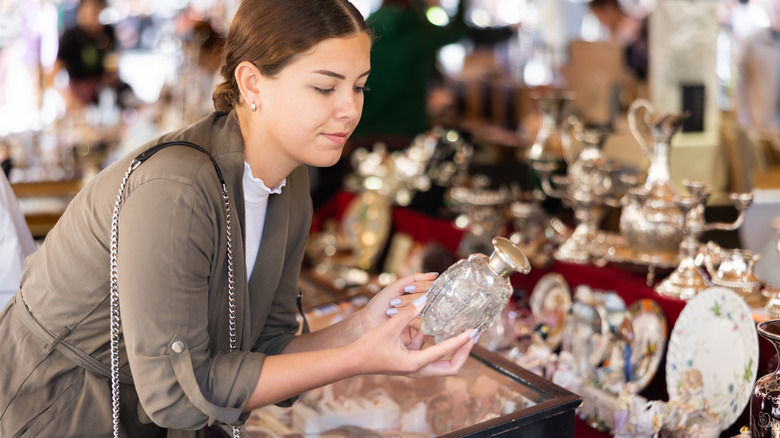
When people think of collectible crystal, they may think of Swarovski. But thrift shoppers should keep an eye out for Cumbria Crystal, a British luxury glassmaker whose handcrafted vases and stemware gained momentum with collectors during the 2000s and 2010s. Founded by Lord and Lady Cavendish in 1976, its designs skyrocketed in popularity after appearing in modern releases such as "Downton Abbey," "The Crown," and the James Bond film "Casino Royale." Cumbria's presence in major TV and film productions introduced many viewers to the beauty and elegance of hand-cut crystal.
Many of Cumbria Crystal's best-known patterns draw inspiration from 17th- and 18th-century English cut glass. English cut glass from those eras is special because of lead crystal, invented in the 1680s by George Ravenscroft. Adding red lead oxide to glass revolutionized the whole industry because it resulted in heavier, more durable glassware. Lead crystal pieces also have exceptional light refraction, which makes them sparklier than your average glass.
The Grasmere pattern, in particular, became closely associated with "Downton Abbey," where its intricate design complemented the period setting. Unlike mass-produced glassware, each Cumbria Crystal piece is hand-cut by skilled artisans, giving every piece and tumbler a distinctive brilliance. As interest in vintage décor continues to grow, enthusiasts should keep their eyes peeled for thrift store crystal vases, which can turn out to be quite valuable. Vintage Cumbria crystal pieces vary in price depending on shape, use, and condition. However, it's common for champagne flutes to sell for hundreds of dollars, while brandy snifters can fetch $85.
How to identify pieces of Cumbria crystal while thrifting
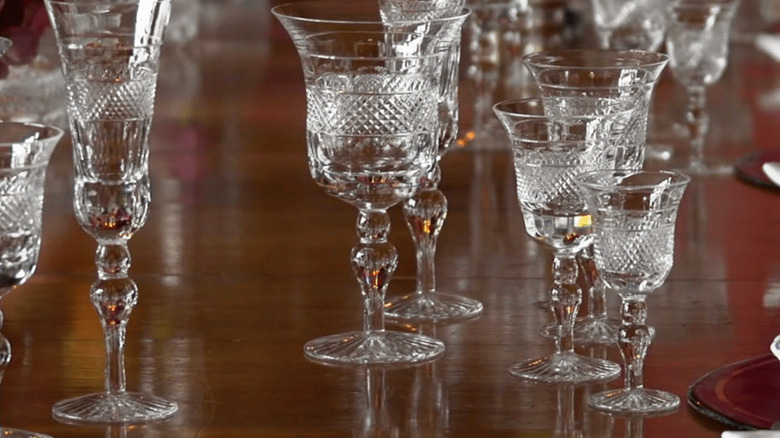
Treasure hunters should be aware of how to tell valuable crystal from cut glass at the thrift store. To start, when shopping for Cumbria Crystal, check the weight. Genuine lead crystal feels noticeably heavier than ordinary glass because it contains at least 24% lead oxide. That added weight also gives the crystal its signature brilliance, allowing it to refract light into a rainbow of colors when held up to a bright light.
Next, examine the cutting. Cumbria Crystal is hand-cut, so the patterns should appear crisp and deeply engraved rather than lightly etched or molded into the glass. Handcrafted lead crystal may also contain tiny bubbles or a slight "cord." Cord is the subtle wisps in the glass caused by the traditional manufacturing process. While some buyers mistake these for flaws, they're actually signs of authentic handmade crystal.
Of course, the best way to identify authentic Cumbria Crystal is by checking the underside for the company's engraved signature, if possible. Many Cumbria pieces have a very faint acid-etched watermark. Condition plays a significant role in the value of Cumbria Crystal. Chips along the rim, scratches, or cloudiness can significantly reduce collector interest, but pristine examples remain highly desirable. Vases, decanters, wine glasses, and whisky tumblers are all popular with buyers, especially if they belong to sought-after patterns like Grasmere or are part of matching sets. It's the perfect choice if you want to decorate your home like "Downton Abbey."