

Skip Pyrex: The Bold Antique Dishware Brand Worth Hunting For At Thrift Stores

When shoppers look for tips on how to tell if thrift store dishware is valuable, Pyrex often gets a lot of the attention. After all, it seems like the brand's vibrant casserole and serving dishes dominated the mid-20th century. However, experienced thrifters know there's another vintage dishware brand worth hunting for: Metlox. These ceramic pieces were produced in California throughout much of the 20th century, when the brand became famous for its colorful glazes, hand-painted details, and mid-century modern designs. Today, pieces from the popular — and early — Poppytrail line are particularly sought after by collectors.
Metlox was founded in the 1920s and originally manufactured ceramic bases for neon theater signage. During the Great Depression, Metlox pivoted to producing colorful dinnerware and decorative pieces in an effort to increase profits. It was a move inspired by observing competitor brands of the era, such as J.A. Bauer & Sons. Metlox's everyday dishes featured bold colors and playful designs. After World War II, the company focused on higher-end, hand-painted dinnerware, represented by lines like Ivy and Camelia. The last dishes came off the Metlox production line in 1989.
The renewed popularity of mid-century modern design has introduced a new generation of collectors to Metlox. Its colorful, casual designs fit naturally into today's interiors. Now, Metlox is undeniably a vintage kitchen dishware item you should always look for at thrift stores. While many shoppers associate Metlox with colorful dinnerware, some of the company's most valuable collectibles are its decor. Vases designed by Italian-American visual artist Carl Romanelli can easily sell for $75 to $100 each, while unusually-shaped, whimsical creations like Martian cookie jars may go for $300 a piece. A single dish featuring the asymmetrical California Mobile pattern can sell for a $100 or more.
What to look for when thrifting Metlox dishes
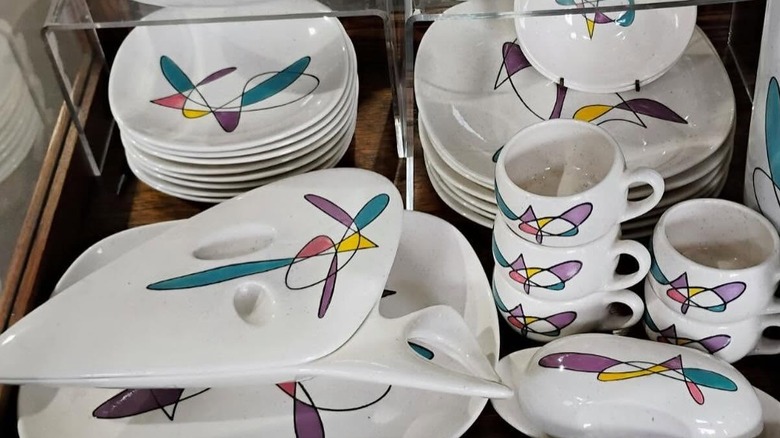
One of the easiest ways to identify Metlox is by checking the underside of each piece for a maker's mark. Depending on the item's production period, markings include different variations of the word Metlox and iconography, like stars, circular frames, or outlined letters. Some pieces say Vernonware if they were made with Vernonware molds — a rival ceramics company that shut their doors in the late 1950s. Metlox bought their molds. Colorful floral designs, hand-painted details, and complete sets attract the most interest from collectors.
Condition is especially important when evaluating vintage dishware of any brand — not just Metlox products. Inspect every piece you come across while thrifting for chips, cracks, crazing, stains, and repairs, all of which are defects that can affect value. Though serving pieces, such as platters, cookie jars, pitchers, and covered dishes, were produced by Metlox, it's their dinnerware that's particularly desirable. Some lines were influenced by the work of famous artists, like the Pintoria line, which was inspired by the work of Dutch artist Piet Mondrian. Whether a complete set commands a higher price than individual pieces depends on the line in question.
With certain Metlox patterns selling for decent prices on the secondary market, it may be worth looking past all that Pyrex on display at the thrift store and checking the underside of dishes for the name Metlox instead. Of course, not every item will fetch high prices — depending on rarity, condition, and completeness, most individual pieces sell for modest amounts. This makes Metlox one of the vintage dishware brands for bringing retro charm into your kitchen on a budget.