

The Hawaiian Design Trend That Makes Spaces Look & Feel Bigger

Hawaii is so much more than resorts and beachfront properties. It's a place with a rich cultural heritage, where many residents have a strong connection with the land, and the islands' architecture often blends outdoor living with day-to-day life. With its amazing year-round weather and awe-inspiring natural backdrop, it makes perfect sense that houses in Hawaii often boast an impressive fusion of indoor and outdoor spaces. This approach to design fosters a connection with nature while making interiors look bigger and brighter.
Modern Hawaiian design is defined by an expansive, relaxed atmosphere with a highly nature-inspired aesthetic. The goal is to blur the line between your indoor and outdoor spaces as much as possible. This design philosophy encourages you not to plan your outdoor space as a mere afterthought but as a truly special slice of nature right on your property. With large, floor-to-ceiling windows and high ceilings that maximize light, a home's interior embraces its natural surroundings.
This style feels both warm and minimalist. The design isn't cluttered — it allows for plenty of room to breathe. It's not overtly themed or obviously tropical. The colors are soft and calming, with plenty of negative space for the eyes to rest on. Every piece is selected and placed intentionally. To make this design work, airflow and ample natural light are paramount. There's an emphasis on natural textures and materials such as wood, linen, and stone. The modern Hawaiian design features colors such as soft blue, jade green, and sandy taupe. Mimicking the colors of your natural environment helps blur the boundary between your indoor and outdoor spaces.
How to embrace a Hawaiian-inspired design philosophy
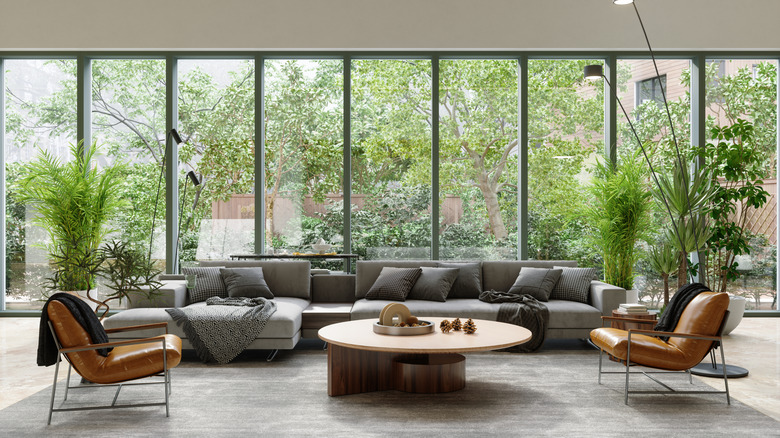
Modern Hawaiian design helps you maximize your outdoor living space while dialing up the tranquility of your indoor space. You don't have to live in a tropical region to take notes from Hawaiian design — simply take stock of your natural environment and draw inspiration from it. For instance, if you live in a desert region, you may lean on a color palette featuring rich terracotta, sandy brown, and soft red. If you're a mountain dweller, you can incorporate exposed wood beams or granite stonework into your interior to capture the essence of your natural environment.
Certain design principles will remain the same, no matter where you live. Remember, you're trying to cultivate a seamless transition from indoor to outdoor. One way to do so is to install large floor-to-ceiling French doors or folding patio doors at the threshold between your indoor and outdoor space. Covered patios at the doorway also aid in the melding of these two spaces, as does carrying the same flooring material from the indoor area out to your patio. Inside, be sure to integrate plenty of biophilic interior decor, such as live, native plants. You should also use the same color palette inside and out for a seamless, cozy outdoor living room that bleeds into the indoors.
Beyond your patio, you can continue to embrace your natural environment while honoring your local ecosystem by planting a native garden. Research your local ecosystem and mimic it. While traditional landscaping requires heavy maintenance, you won't need to fuss over a native garden too much. Embracing your local plant life will only deepen your connection with nature and help you cultivate a less defined line between the outdoors and the indoors.