

Tomato Plants Not Fruiting? These 13 Things Are The Reason
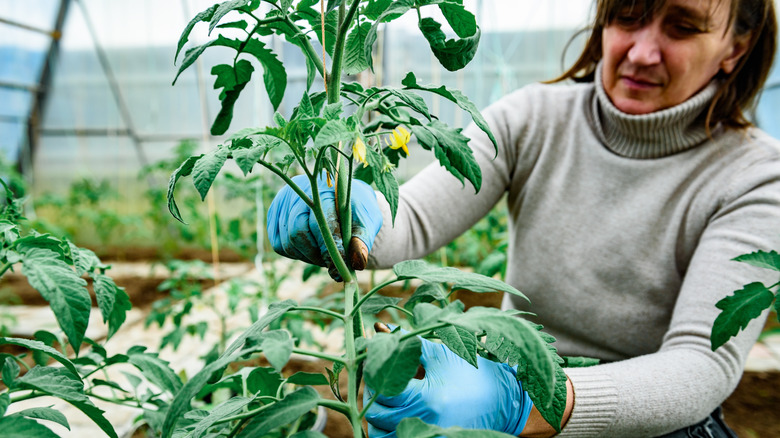
As a master gardener and permaculture specialist with a keen interest in organic food growing, tomatoes are one of the crops I get more questions about than any other — especially when it comes to fruiting. Although tomatoes are fairly large plants that look like they should be pretty tough and self-sufficient, they're actually quite needy and they are sensitive to all kinds of changes in their environment. This often shows up in their fruit, or lack of it. Plants can have beautiful, full, lush green leaves and lots of sturdy stems and sometimes they'll even put off a decent number of flowers, but they won't fruit, or the fruit will be small, diseased, or sparse. Even flowering isn't guaranteed, though.
A number of things, including too much nitrogen, can cause a reduction in flowers or cause flowers to drop before pollination. Plus, of course, a tomato flower carries both male and female parts in the same flower. People assume this means pollination should be automatic or that tomatoes should be self-pollinating, but the pollen still has to be physically knocked loose and land where it needs to. There are all kinds of things that inhibit this process, ranging from a lack of pollinators to heat and humidity.
Excess nitrogen is fueling leaves instead of flowers
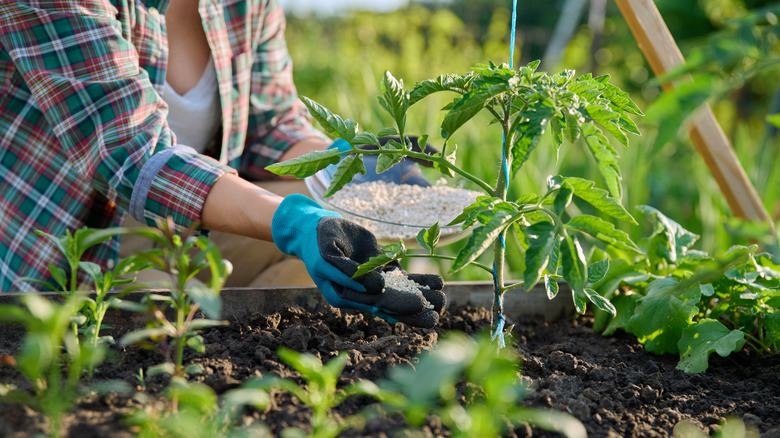
High-nitrogen fertilizers, whether synthetic or natural, are problematic for many plants, especially fruiting ones like tomatoes. One of the biggest issues I see is that every time a plant looks a little bit stressed or like it might not be doing too well, gardeners often reach for plant food, commonly one that's higher in nitrogen. It's true that all plants do need nitrogen. However, too much of this nutrient makes your plant produce lots of lush dark green foliage.
Nitrogen pushes leaf growth and so the plant diverts energy away from flowering and fruiting and root growth into leaf development, which is really not what you want if you're growing tomatoes. Additionally, applying too much feed or nitrogen to a plant that's already showing signs of stress significantly increases its stress because it's forced into rapid leaf production when it should be conserving its energy or expending it to heal from — or compensate for — the factors that were making it show signs of stress. If you really feel like your tomatoes need feeding, then opt for a budget-friendly homemade fertilizer like comfrey tea or nettle tea, or a good top dressing of finished compost. These provide a better balance and won't shock your plants.
Heat waves can kill pollen viability
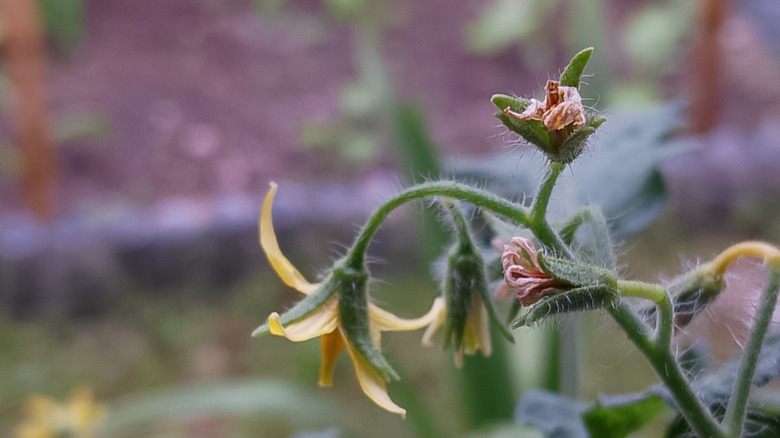
Much like me, tomatoes do not enjoy heat waves. Daytime highs above 90 degrees Fahrenheit, especially when combined with nighttime lows that stay above 70, can make tomato pollen sticky and non-viable. In this scenario you'll see plenty of flowers form but they won't be followed by fruit because the flowers don't get fertilized. You can combat this by providing shade cloth in the afternoon and making sure you provide consistent watering during hot spells, since drought stress and heat stress feed off each other. A tomato plant that's also short on water tolerates heat far worse than one that isn't.
For temporary shade, you can rig up some simple burlap strung between two tall bamboo canes or garden stakes. I also recommend a decent layer of mulch pulled back an inch or so from the stems, as this helps reduce moisture loss and keeps soil temperatures down. A short-lived heat wave only damages the current flush of flowers, so a plant that stops producing during a mid-summer heat wave often picks back up once it cools down again.
If you live in an area where heat waves are common, I recommend you grow heat-tolerant cultivars. Popular heirloom varieties include 'Arkansas Traveler' and 'Hazelfield Farm'. If you want to grow F1 hybrids then 'Sunchaser', 'Sunmaster', and 'Solar Fire' are all solid, heat-tolerant choices.
Cold nights are stalling pollination
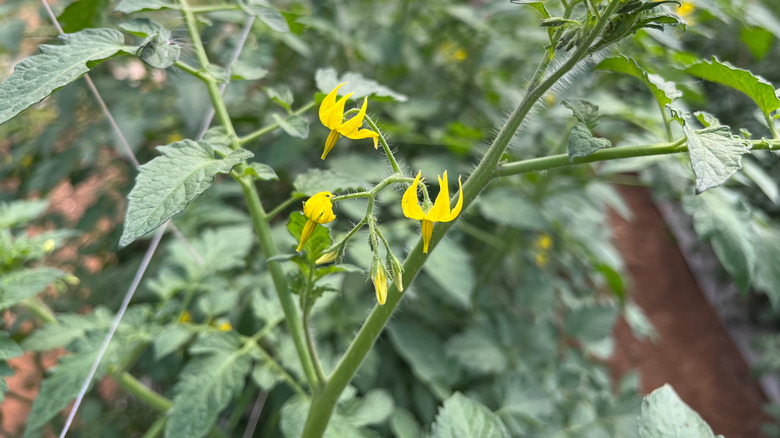
I'll say it again: Tomatoes are needy and they're sensitive to all kinds of environmental changes. Plus, they're a hot-season crop so they really don't like cool temperatures. Overnight lows of 55 degrees or less will cause blossom drop. Low temperatures like this interfere with pollen tube growth just as much as extreme heat does, even if daytime temperatures are achieving sufficient highs. Nighttime temperatures below 55 degrees Fahrenheit stall pollen production and have the same effect as heat damage. You'll get flowers but no fruit.
It's one of the reasons why being tempted to transplant too early backfires on gardeners who just couldn't resist the promise of those warm spring days. You can mostly combat this by waiting until nighttime temperatures are consistently above 55 degrees before you transplant your seedlings outdoors. If you did plant out too early or there is an unseasonable cold snap forecast, then add floating row covers as they will keep the area around the plants a few degrees warmer. This can make all the difference between blossom drop and actually setting fruit.
No bees are buzz-pollinating the blossoms
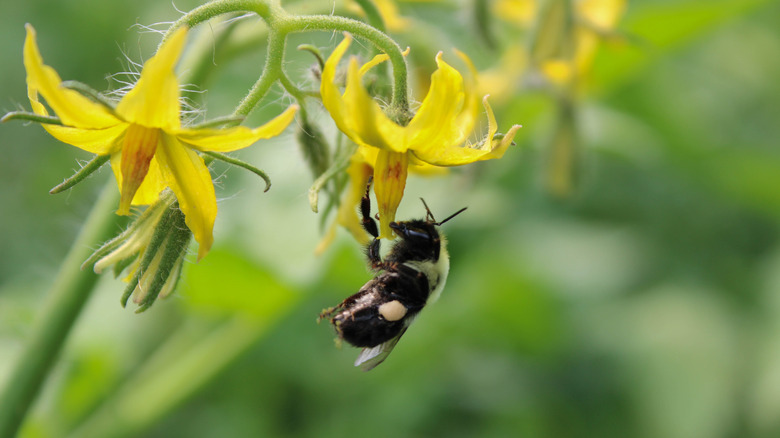
Even though tomatoes have both male and female parts within the same flower, they can't pollinate alone. Wind pollination helps, but buzz pollination gives them the best chance of setting fruit. Where the conditions are perfect and the plants look great while producing a lot of flowers, but don't set fruit, there's often a pollination issue. It's most common in greenhouses, polytunnels, patios, and quiet gardens that have minimal pollinators and wind exposure. Tomatoes need wind or insect vibration to shake their pollen loose so the flowers are able to fertilize themselves and produce a tomato.
Bumblebees are your biggest ally here. They vibrate at precisely the right frequency to release pollen most effectively. While honey bees and other pollinators are helpful, in that they can knock pollen loose while they're on the flowers, their efforts are not as effective as buzz pollination by the beautiful, fuzzy bumblebee. In fact, bumblebees are so effective at pollinating tomato plants that many commercial growers use bumblebee colonies to increase the pollination of their crops. While most home gardeners won't maintain a bumblebee colony, you can encourage them by creating a pollinator-friendly garden. If you're still struggling because you're growing indoors or under cover, then you can use an electric toothbrush to mimic bumblebee buzz pollination on open flower clusters. You can also try using a paintbrush delicately inside each flower or you can try gently shaking each flower cluster each day until fruit starts to set.
Humidity is making pollen too sticky to release
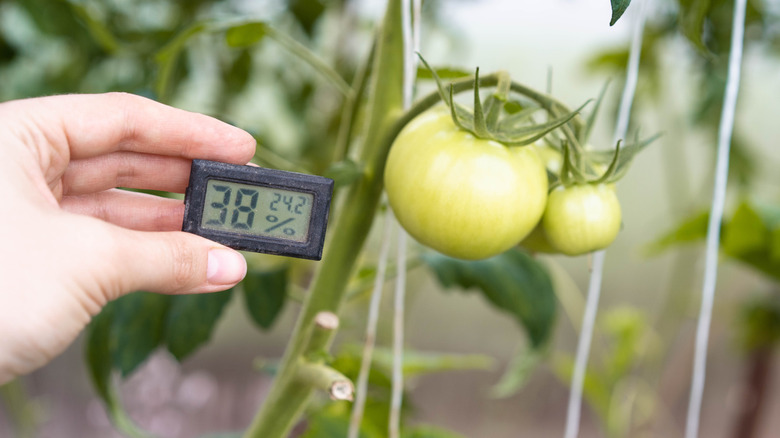
Tomatoes aren't keen on muggy stretches either. When relative humidity is above 80%, pollen gets sticky, so it doesn't shed properly. Even when temperatures are fine and there's an abundance of bumblebee activity, this results in poor or incomplete pollination and you'll get fewer or no fruits. As with heat waves however, this is a temporary issue that only affects the current flush of flowers. Once conditions improve, usually after just a few days, the next round of flowers should pollinate just fine assuming all other conditions are favorable.
High humidity makes the pollen clump and stick to the anther instead of falling free. Your best chance to limit problems is to prune your tomatoes at the right time for air flow and make sure you are watering at the soil line instead of overhead. This reduces humidity around the foliage and flowers and encourages good air flow. This also, of course, is a best practice for limiting the risks of disease.
The plant became root bound and never recovered
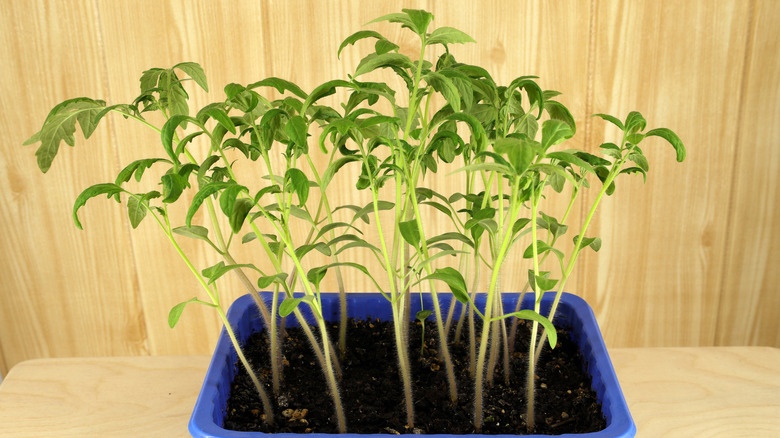
If you left your plant in its pot too long because you were waiting for conditions to be just right before transplanting, it may have become root-bound. This is where the plant develops a dense circling root mass that curls around the inside of the pot over and over. This can stunt the plant and if you don't take corrective action when you transplant, it will struggle to expand its roots. A root-bound plant grows slower and struggles to move water and calcium up through its vascular system so they are disproportionately prone to blossom-end rot later in the season if they fruit at all. If you've already transplanted your tomatoes, there's not much you can do at this point.
If you haven't transplanted yet but find that your tomatoes are root-bound when you take them out of their pots, soak the root ball in water to soften and loosen it. Then gently tease apart at least a third of the root mass. Be gentle and try not to break off too much. Easing apart the root ball can help the plant recover and encourage its roots to start growing outward.
Phosphorus or potassium levels are too low
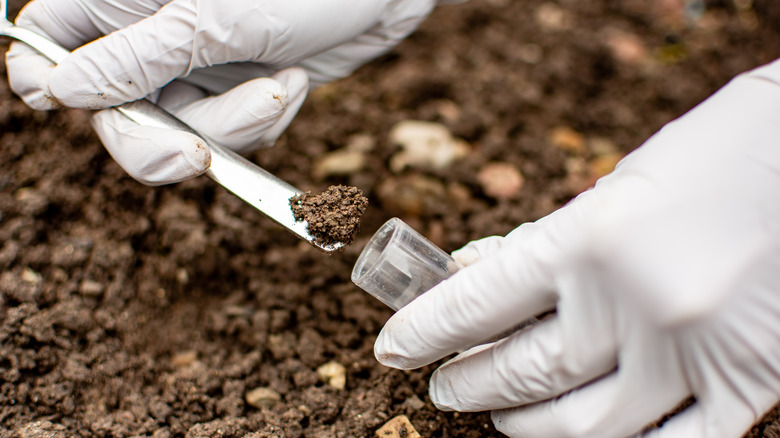
If you get flowers but little fruit and there's no other obvious cause, it's worth doing a soil test. Tomatoes are hungry plants and if your soil is lacking phosphorus or potassium, you'll see reduced or absent fruit set. Phosphorus deficiency weakens plants and delays their growth and maturity, while potassium deficiency causes browning along the edges of older leaves and an overall decline in plant health and vigor. In both cases, you get flowers but not fruit. You shouldn't assume that there's a deficiency without first doing a soil test, however. You can use a simple home soil test, but resist the urge to randomly apply phosphorus or potassium unless you know there's a problem. Too much of these nutrients can cause just as many issues as not enough.
Feed regularly throughout the season with a balanced natural fertilizer such as kelp or fish emulsion. Generally speaking, using something that is relatively high in nitrogen at the start of the season helps a plant bulk up, but once the first flowers appear you should switch to a more balanced preparation, preferably natural, that supports overall growth and fruit development. I prep my soil with lots of finished compost and I use comfrey leaves in the bottom of the planting hole. Then I find my plants don't need any excessive nitrogen applications. Instead, once the plants are established, I use a weak DIY fertilizer tea, like comfrey tea every couple of weeks.
Tarnished plant bugs are puncturing the buds
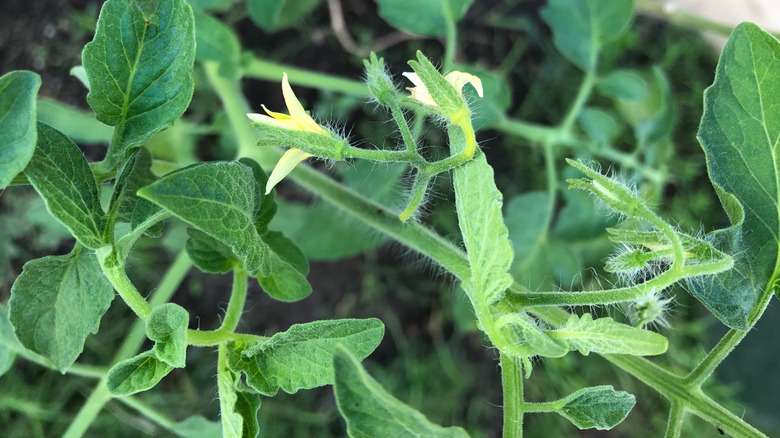
Tarnished plant bugs or lygus bugs are a real pain. They feed on developing buds and fruit, and they are voracious. If you're seeing a lack of flowers or your flowers are vanishing without explanation, take a close look at young buds. You're looking for tiny puncture marks, which is a clear sign of these pests. Tarnished plant bugs cause flowers and young fruit to wither, drop, or develop pitted scarring called catfacing.
Cultural controls are your best option here, as many insecticides struggle to control this pest. Plus, of course, I'm a permaculture specialist, so I never use synthetic chemicals when there's a natural option. One of the best ways to control or eliminate tarnished plant bugs is to clean up your garden at the end of summer. Clear weedy garden edges, as the adults tend to overwinter in nearby weeds, grass, and garden debris. Then as the weather warms, they move into your vegetable garden and wreak havoc on the very first buds. If you do have an infestation, then applying neem oil to affected plants is a good natural control option. You can try to prevent an infestation by using floating row covers, too. This limits the adults' access early in the season so they can't lay eggs on your plants.
A virus like curly top or yellow leaf curl has taken over
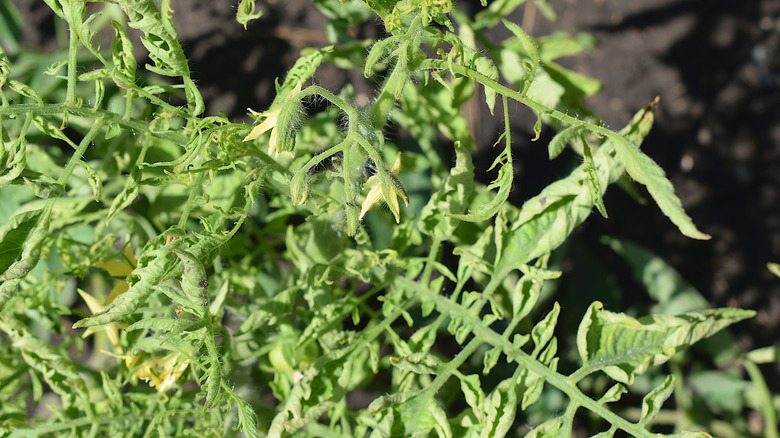
If your tomato plants are stunted, yellowing, or have oddly curling leaves and they stop flowering or fruiting, a viral disease like beet curly top or tomato yellow leaf curl could be the culprit. Beet curly top is spread by leafhoppers who transmit the virus during feeding, spreading it from plant to plant quickly and easily. Tomato yellow leaf curl is spread by whiteflies.
Both of these diseases cause leaves to curl and flowers to drop before fruit set or dramatically reduce overall yield. Unfortunately there's no cure once a plant is infected, so your only option is to remove it and try to manage the leafhoppers and whiteflies to prevent further spread. Leafhoppers move very quickly, stopping by just long enough to feed and transmit the virus before moving on to the next plant, and they're mostly gone before symptoms start to appear. Whiteflies, however, stay on the plants that they're feeding on for quite a while. Be sure to take a close look at the plants to look for signs of whiteflies before you try and remove them. If these pests are present, you need to bag the whole plant right down to the soil line before you cut it. That's because if you pull the plant without bagging it, you will scatter those pesky whiteflies over the rest of your garden and there's a good chance they'll infect other plants. Practicing good garden hygiene, using floating row covers and keeping weeds to a minimum is your best line of defense.
Herbicide drift has twisted the new growth
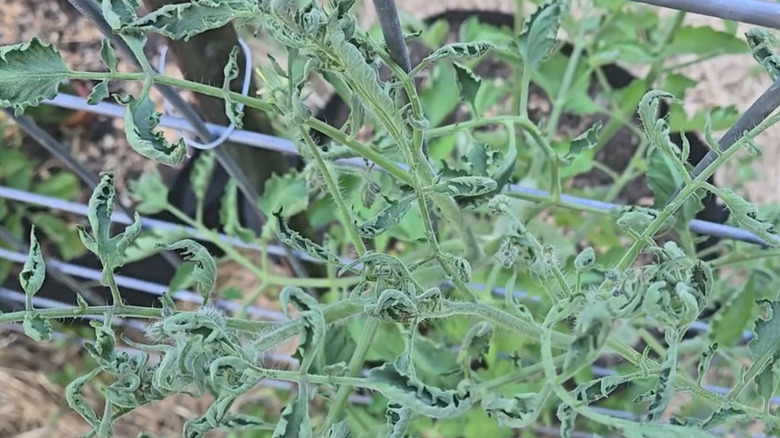
Herbicide drift is massively frustrating, especially if you are somebody who does not use these products. Tomatoes are particularly sensitive to the effects of broad leaf pesticides and herbicides, even at trace amounts. The concentration or volume of herbicide that's drifted onto your crops will determine how bad the damage is. Dicamba and 2,4-D are two commonly used herbicide products that have a significant effect on tomato plants. Dicamba, in particular, is particularly problematic because it persists longer in plant tissue.
A light mild drift will show as strappy, twisted, or cupped new growth. A more severe drift can inhibit flowering, cause flowers and fruits to fall, and can kill off the whole plant. Affected plants cannot be cured and, because you don't know what the herbicide is, I would strongly recommend you don't eat the fruit from affected plants, either. Depending on the chemical in question and how much drift occurs, symptoms can appear on the plant within a couple of hours but can take a week or more to show up.
Watering swings are triggering blossom drop
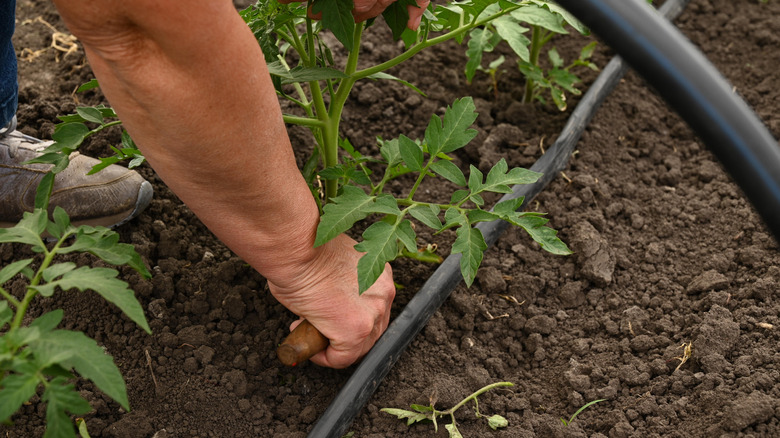
Tomatoes need steady, consistent moisture to prevent flowers from dropping and to produce decent fruit. They strongly dislike swinging from drought to heavy watering. It stresses them enough that it will cause the flowers to abort and if fruit is already setting, it will trigger blossom end rot. One of the keys to success with tomatoes in a low-maintenance garden is to set the watering system up as early as possible.
Use drip irrigation lines, a buried soaker hose, or ollas combined with a thick layer of mulch. This ensures the tomato plants stay consistently moist without being waterlogged, and it reduces the risk of swings between drought and soaking. Using a layer of mulch reduces evaporation and runoff and helps to even out soil moisture between waterings. Using an olla lets the soil draw water through the walls of the terracotta olla as it dries out, providing consistent — but not excessive — moisture. You would just need to top up the olla every few days.
An exserted stigma is blocking self-pollination
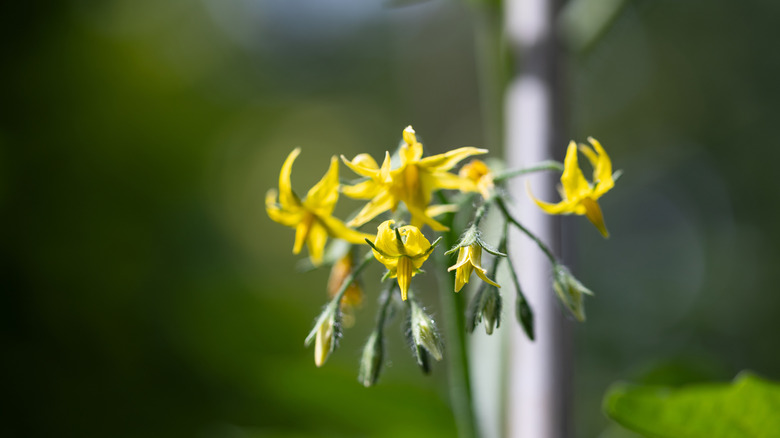
Most people have never paid that much attention to the structure of a tomato flower; however, if you take a close look at the flowers of older heirloom tomatoes, many have stigmas that extend past the anther instead of staying tucked inside it. This makes pollination much more challenging without buzz pollination from insects. This is known as an exserted stigma, and heat stress makes the problem worse. With excessive heat, the plant pushes the stigma out even further, which reduces successful pollination and cuts fruit set during hot spells.
This uncommon trait is a holdover from when tomatoes were still wild and they relied on cross-pollination between separate plants. It evolved so the stigma sits beyond the anthers to avoid self-fertilization. Most modern hybrids have been bred away from this, and the stigma is shorter, tucked safely inside the anther cone. Some older heirlooms never lost this trait completely, and heat can trigger it, even in a plant that has previously behaved perfectly normally. If this does happen, you can use a cotton swab or a small artist's paintbrush and hand pollinate. I've done this successfully with many tomato plants over the years during early heat waves, and I have still had very good crops, overall.
Broad mites or russet mites are wrecking the buds before they open
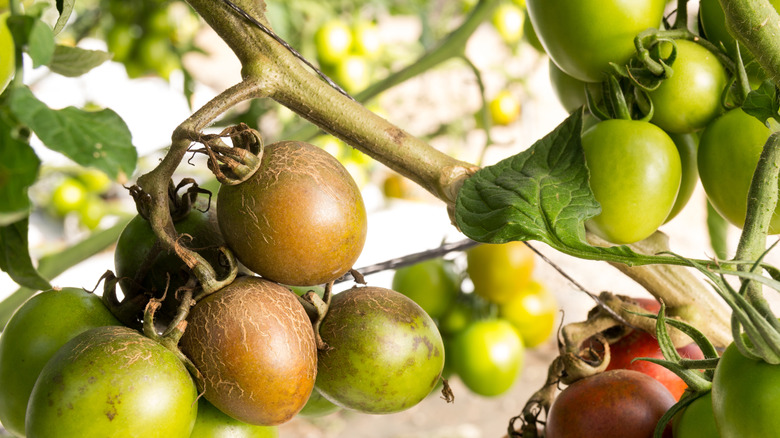
You can't see them with the naked eye, but broad mites and russet mites will wreck tomato flower buds and cause twisted growth and bronzing that can very easily be mistaken for herbicide damage or a nutrient deficiency. If you've got an infestation of either of these mites, there is a high probability the flower buds will drop off. Unfortunately, the damage is permanent, so capturing an infestation early and removing affected leaves is your best option if you still want a crop from your plants.
These pests are so tiny that you'll need a hand lens that's 14x or stronger, and you'll need to look at unopened buds and the underside of new leaves since that's where they target. By the time bronzing is visible to the naked eye, you've got a significant problem that has spread across much of your plant and probably to nearby plants, too, because these types of mites overwinter on plant debris and weeds just like tarnished plant bugs. Your best option for prevention is to do the same fall cleanup and practice good garden hygiene as it protects your plants against so many pests the following season.