

Not Coffee Grounds: The DIY Fertilizer Alternative That'll Have Plants Thriving

In 2024, the International Herb Association recognized yarrow (Achillea millefolium) as Herb of the Year for its wealth of uses in traditional medicine. This multitalented herb apparently does it all: boosting immunity, repelling insects, boasting anti-inflammatory and antioxidant properties, combating bacteria, and more.
When steeped in water, yarrow tea can treat inflammation, heal wounds, and lower stress, among other perks. Less well known is that yarrow is one of several plants that can be made into a DIY fertilizer tea to nourish your garden. Yarrow (and other weeds like purslane, dandelions, and stinging nettle) is rich with nitrogen, phosphorus, and potassium – nutrients commonly found in store-bought fertilizer. Gardeners looking for an inexpensive, readily available, chemical-free fertilizer may appreciate this option.
This sun-loving perennial from the daisy family, thriving in USDA Hardiness Zones 3 through 9, can be found in the wild and in gardens. Its height maxes out around 3 feet, with flat clusters of small white flowers topping off a stem of feathery leaves. Growing and caring for yarrow is quite easy. It prefers well-drained soil and is tolerant of drought and poor soil. Gardeners can sow seeds or divide them in the fall, but the plants also will spread on their own. Fun fact: The plant's genus (Achillea) is derived from Achilles, who is said to have used the plant to treat his soldier's wounds in the battle of Troy.
Making a yarrow tea to fertilize plants
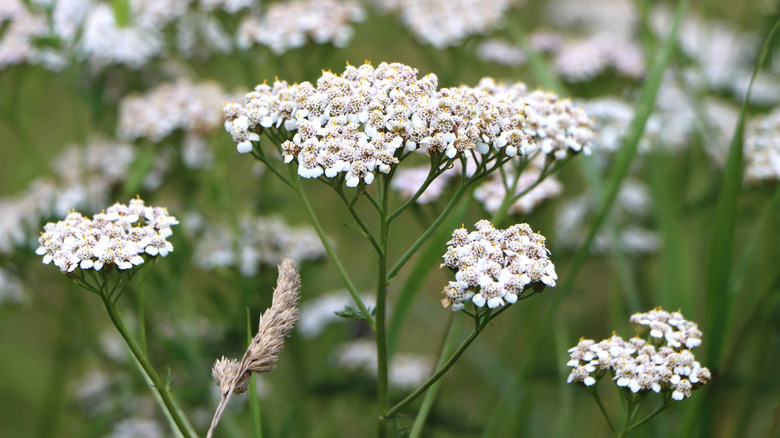
In life, good things come to those who wait. And when it comes to making yarrow tea, the same mentality applies. First, gather the yarrow before it goes to seed and break it up into small pieces; all parts of the plant can be used, as long as they haven't been sprayed with chemicals. Throw in some nettle, comfrey, or dandelions – the annoying weed that makes for the perfect fertilizer – with the yarrow, or use them to make a separate batch of tea.
Densely fill a 5-gallon container with the plants and cover them with water. If the yarrow floats, weigh them down to make sure everything is submerged and properly steeping. Cover the container and let it sit for about two to three weeks, until the water blackens. Once the mixture has finished steeping, strain out the plants. Dilute the tea by combining one part tea to 10 parts water, although you can experiment to see what ratio of dilution works best for your plants.
Yarrow tea can be used weekly either as a foliar fertilizer or at the base of the plant. Spraying leaves leads to quick, but short-term results, while the benefits of soil application are more long-term, but may take longer to kick in. If you're spraying the tea on leaves, it's best to first spot-test the fertilizer. Also, try to avoid spraying the leaves during intense afternoon heat, but instead doing so in the morning or evening when temperatures are cooler so that the leaves don't burn.