

Not Blackout Curtains: For The Best Sleep, This Is The Window Treatment To Have
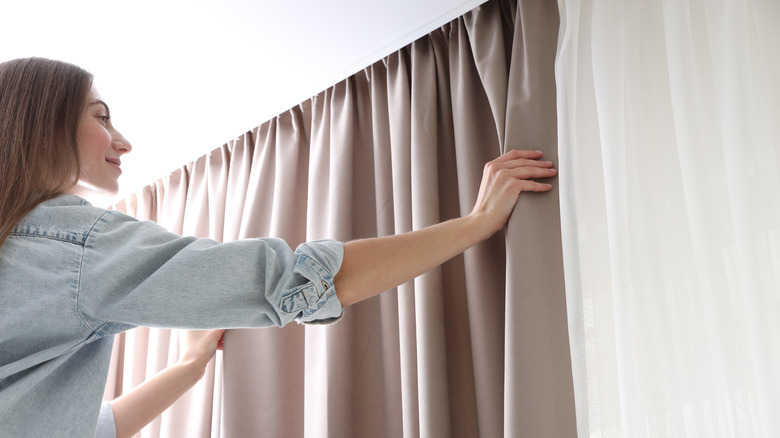
While lots of natural light tops many a homeowner's wish list, sometimes all of those windows can make it tough to rest easy. The same sizable double panes that make a space feel light and airy can leave rooms feeling overheated and far too bright to snooze through those super early sunrises. And while blackout curtains and blackout shades tend to receive the most hype, there are a few other options you shouldn't sleep on. Among the solutions Autumn Pochiro, the CEO and principal designer of Autumn Dawn Design, suggested in an exclusive interview with House Digest: room-darkening cellular shades, blackout Roman shades, and roller shades.
"Creating a versatile window treatment with blackout and climate-control capabilities is [easy with] cellular shades, blackout roman shades, and roller shades," Pochiro explained. "Each has the ability to control light, temperature, and energy savings." The pleated fabric of cellular shades form a three-dimensional honeycomb shape which traps air to keep out heat during the warmer months, and they're available in room-darkening and blackout options. Roman shades, meanwhile, hang flat when lowered and fold into pleats when raised up. And no matter the color or fabric you choose, they can be designed with a blackout liner. Though their price and appearance mean these shades won't work for every home.
Finally, roller shutters are a heavier barrier, made with horizontal slats of aluminum or steel. Not only do they fully block out the sun's heat and light, plus most external noise, they also provide increased security for your home. Ultimately, the choice comes down to your personal aesthetic. Because, as Pochiro noted, "."
How to best use these window treatments
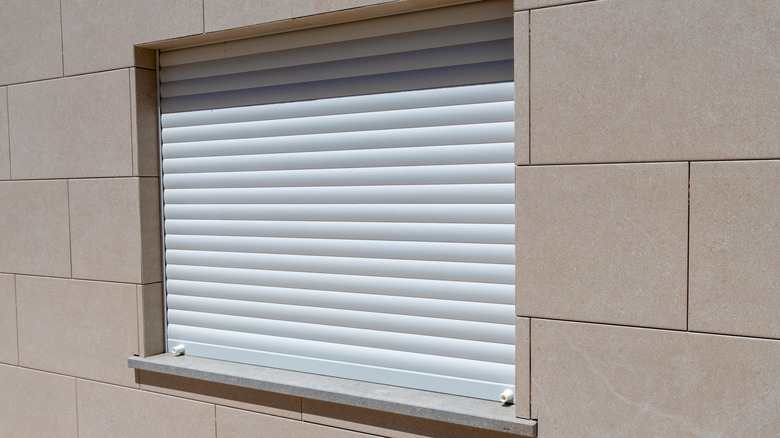
The main goal of these treatments is to block out those early morning summer rays might keep you from sleeping in. And while rolling shutters can darken your space up to 99%, you'll also want to pay attention to each product's ability to block out the heat of those harsh rays, designer Autumn Pochiro recommended to House Digest in an exclusive interview. "Be sure to look at the cool and heat ratings as well," she explained, "to ensure proper temperature control." Among the stats to consider: the Attachments Energy Rating Council (AERC) Energy Rating that's developed with the Department of Energy to indicate how effective the window treatments are at reducing your cooling and heating costs at home.
If you're the handy type, "installing shades is fairly simple for a DIY project," said Pochiro. Rolling shutters can be attached in roughly an hour per window, while you may just need half that time for Roman shades and even less for cellular shades. "But if time is a commodity," suggested Pochiro, "I would have a professional window installer handle it. With installation, the average cost per shade is about $600, depending on the shade's size."