

Not Mulch, Not Gravel — The Yard Waste That Has Been Studied For Its Weed Barrier Potential
Weeds in flower or vegetable beds don't just look unsightly — they also rob your plants of water and nutrients. Those who want to avoid the chore of regularly pulling them out generally turn to some kind of mulch, be it landscape fabric (which definitely has its downsides), gravel, or grass clippings. A 2023 study published in Methods and Protocols revealed that another natural material is being studied for its effectiveness as a weed barrier: walnut shells (also called hulls).
We already know that some people use walnut shells as one of those food scraps that can fertilize your garden. They're high in phosphate and potassium, which are found in many commercial fertilizers. If used as a mulch, the shells will eventually break down and incorporate these nutrients into the soil.
A thick enough covering of any biodegradable material, such as straw or bark chips, will block out vital sunlight and prevent moisture from reaching the weed seeds already in the ground. It should also help prevent new weed seeds from finding their way through. So why wouldn't a layer of walnut shells have the same effect? While there's a good chance they will, there are a couple of potential drawbacks.
Does it really work, or is it just nuts?
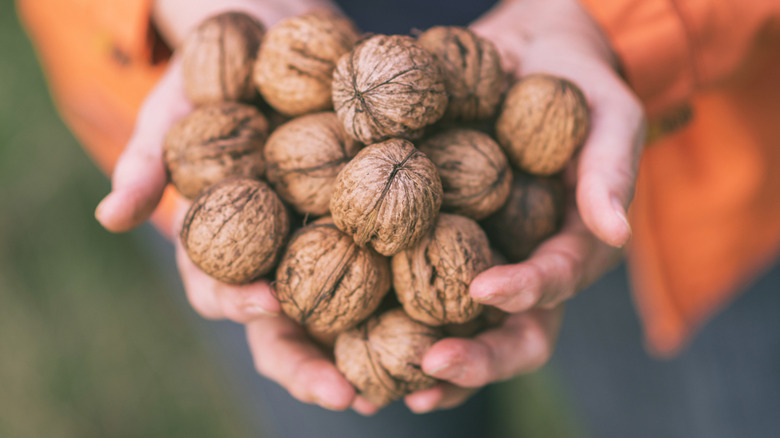
It's usually recommended that walnut shells be broken down rather than left whole when used as mulch. You can buy them pre-crushed for around $2 per pound, but they can, of course, be crushed at home. Our research found that they are a popular mulch around trees on golf courses, so the theory would seem to stand up to practical application.
A common drawback with most organic mulches, walnut shells struggle to combat perennial weeds, which have extensive root systems and strong growth that allows them to simply push their way through this protective layer. However, the main concern many gardeners have is that walnut shells (in fact, most parts of the tree) contain a toxic chemical called juglone. On the one hand, while juglone can prevent certain seeds from germinating under black walnut trees' dripline, studies have not found that crushed hulls trigger phytotoxicity in weeds growing through the mulch. It's worth noting that little research has been done to show that juglone present in black walnut shells causes damage to nearby plants.
In fact, it is believed that juglone breaks down quickly once it makes contact with soil, and since there are only trace amounts in black walnut matter, it's unlikely that enough juglone is present to suppress weed growth. However, using fresh walnut shells as mulch in your garden without partially decomposing them first could still introduce too-high levels of juglone into the soil. If you prefer to wait until the weed-barrier potential of walnut shells has been studied more extensively, there are other eco-friendly mulch options you can try instead.