

Why Over A Third Of Homes In Washington Don't Have AC

With temperatures rising, you're not alone if your personal goals just switched from painting the house to installing an above-ground pool. As people look for ways to stay cool during another summer of record-breaking temperatures, access to cool air and water is looking better than ever to people who don't have AC. It might be hard to believe, but even after 159 people in Washington died when the 2021 heat dome occurred, sending temperatures skyrocketing to nearly 30 degrees above normal for days, many homes in the state (34.2%, per the U.S. Census Bureau) still don't have air conditioning. The reason comes down to the simple fact that it didn't used to be seen as a necessity, especially in the western part of the state.
Washington state is divided into two main climate regions, where Seattle typifies the moist, mild coastal region and Spokane exemplifies the drier, inland part of the state. In Seattle, the weather has always been mild enough not to require air conditioning, but that's no longer the case. As the number of days over 90 degrees Fahrenheit has risen over the past several decades, the number of homes without AC is gradually decreasing. Statewide building codes are shifting accordingly, and new legislation is enhancing renters' rights to ensure people are safe when the mercury rises. Whether you own or rent in Washington state, if you're living without AC, you might want to consider installing a heat pump, an increasingly popular option in the area. This is a straightforward install that could make your summer a lot less miserable.
How building codes are making heat pumps standard in Washington homes
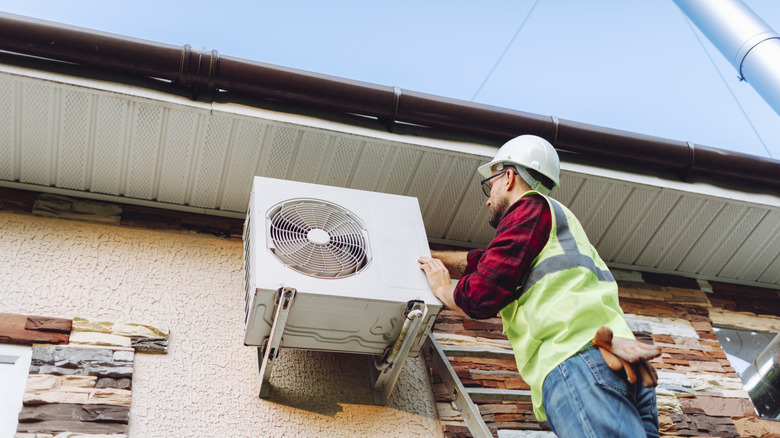
In Washington state, the building code written in 2021 and enacted in 2024 determines how homes are built based on climate zones and an energy efficiency credit system. The credit system favors heat pumps over natural gas, which has led to more heat pumps being installed in new construction homes across the state, and these can be used for both heating and cooling. Even though the Spokane and Seattle climate regions are different, they both fall into zones that require a minimum of R-60 insulation in the ceiling and R-20 in the wall cavities. They also require an additional R-5 of continuous insulation, often foam or wool.
Existing homes can also tap into a separate state rebate program that knocks the cost of a heat pump down at the point of sale for income-qualified households. This includes renters, although if you're interested in a unit you can take with you when you leave, you might want to consider a window unit or a portable AC. But window units aren't compatible with every home, and since there are downsides to portable ACs that get even worse during a heat wave, that's a temporary solution at best.
The new building code may be frustrating to some (there's even been a lawsuit), but the climate outlook is real. Washington is projected to keep warming through the century, and building a tightly insulated home with a heat pump, built for the climate of tomorrow, makes more sense than building one for the climate of the past.