

It's Been Around Since The 1800s — The Dreamy Glass Cup That's A Rare Thrift Store Find
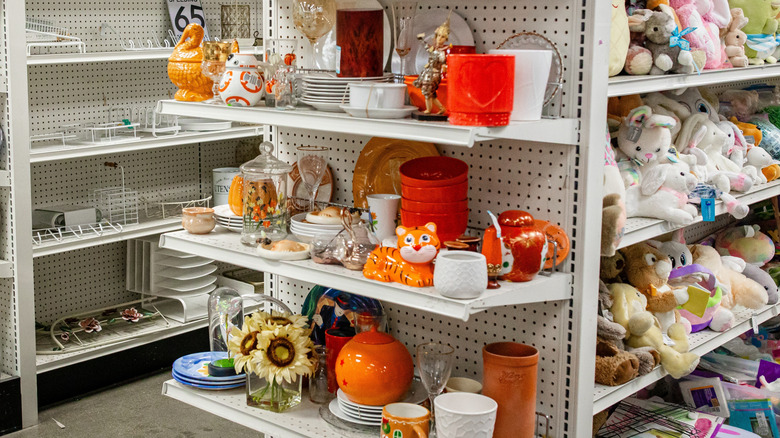
There's one type of vintage glassware you should look for at the thrift store if you love the color pink. Delicate, dreamy, and unmistakably elegant, Portieux Vallerysthal glass has been captivating collectors since the 19th century. Produced by two famed French glassworks, these pieces are made from opaque "opaline" glass, giving them their signature milky glow rather than the transparency of ordinary glass. Opaline involves adding minerals to molten glass to create a luminous, opaque finish that resembles fine porcelain while retaining the beauty of glass.
Soft pink opaline pieces were part of a European fascination with opaline glass that began in the early 1800s. Portieux Vallerysthal traces its roots to two historic French glasswork companies. Portieux, founded in 1705 in the Vosges region under the patronage of Duke Leopold of Lorraine, became known for producing high-quality tableware and decorative glass. Vallerysthal, established in 1836 in Lorraine, quickly earned a reputation for innovative designs. After the Franco-Prussian War of 1870 left Vallerysthal inside German-controlled territory, the two companies merged.
At Portieux Vallerysthal, artisans perfected a delicate blush-pink version that became one of the company's signature colors. Rather than being painted, the color was infused throughout the glass during production, giving each piece its rich, even glow. The resulting tableware and decorative objects reflected the elegance of the Victorian and Belle Époque eras, and today, their timeless color is a major reason collectors continue to seek them. Just three glasses can be worth $375, and the goblets easily attract $250 from collectors.
How to tell if you have authentic Portieux Vallerysthal pink opaline glass
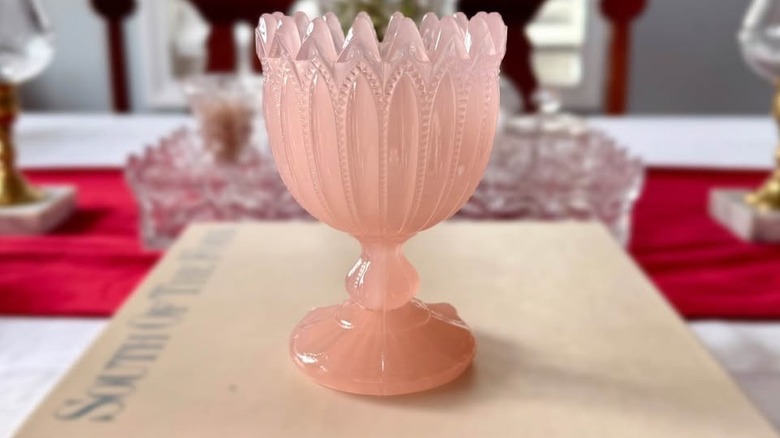
Although the company produced these pieces for well over a century, surviving examples are surprisingly difficult to find today, and there's little information about how many pieces the company may have created. Nevertheless, their timeless pastel color fits perfectly with many of today's popular design styles, including a form of design inspiration for French cottage style, bohemian, and mid-century modern, making them increasingly sought after by collectors who want to style on-trend vintage glassware in their homes.
Finding Portieux Vallerysthal soft pink opaline glass at a thrift store can be rare, but if you find it secondhand, get it immediately. One of the challenges with Portieux Vallerysthal glass is that many authentic pieces are completely unmarked, so to correctly identify them, you'll often have to do some detective work. Look for the distinctive soft opaque pink color, a smooth satin-like finish, and finely molded decorative details. Since these pieces were pressed rather than hand-blown, mold seams are normal and not a sign of a reproduction. If you do encounter opaline glass that has a mark or label, look for an acid-etched "Portieux Vallerysthal France", "France PV", or "PV France" mark.