

Not On Driveway Edging: The Unique Concrete Finish That Only Belongs Indoors

There are several ways to finish the surface of a concrete driveway. When it comes to edging, a unique finish called troweling is sometimes used to reduce the chances of chipping. Unfortunately, this also creates a particularly smooth surface for the concrete that gets extremely slippery when wet. It's a driveway accident waiting to happen. On the other hand, a pristine, glass-like concrete floor could be ideal for a garage or modern interior, and that's where this finishing technique is usually recommended.
Making a troweled concrete floor is a three-step process. First the concrete is poured and leveled with a long straightedge (screed) as is normal for any concrete slab. Next, a tool called a float (or bull float) is worked across the floor, which forces large pieces of aggregate beneath the surface. Finally, a steel trowel is moved back and forth over the surface. The pressure closes up the pore structure, resulting in a super-smooth finish. Depending on the size of the floor, troweling can be done either manually or with a machine.
Troweled concrete isn't just smooth. The sealed surface won't soak up moisture as easily as ordinary concrete and so is less prone to damage. Troweling also increases durability, making it an excellent choice for high-traffic areas.
Indoor spaces best-suited for trowel finish concrete
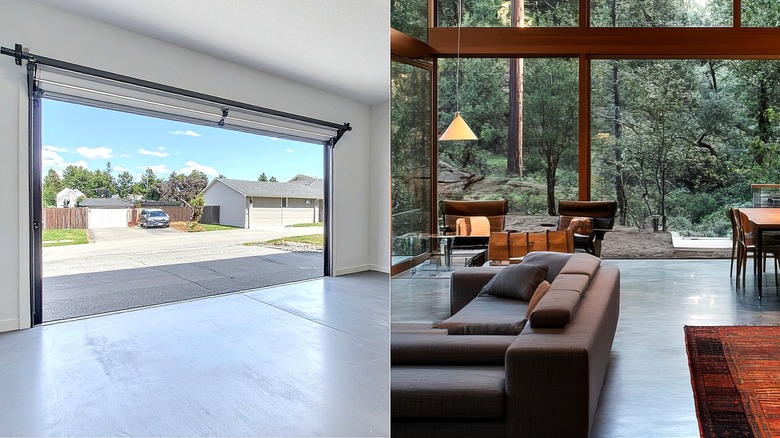
Trowel finish concrete is often suggested for basements and shop floors and can be one of the best flooring options for your garage. It sheds dirt and liquids, making it easy to look after, so it's an option for kitchens and other living rooms as well. It also makes a great base for epoxy coatings and colored stains. However, it might not be the best solution if there are kids and pets running around because of the danger of slipping.
If you enjoy DIY, there's no reason you shouldn't try your hand at a trowel-finished concrete project, but it's probably a good idea to start with a shed or small utility. Each of the three steps needs to be done with the concrete at different stages of hardness in order to avoid cracks or blemishes later. Working a large area takes considerable experience and skill, so if you're planning to add this finish to a room in your home, it's one of those home improvement projects best left to a professional.
That, of course, has an impact on price. There's also the question of how long the room will be out of action. Proper curing is a vital final stage, ensuring the floor is tough and resilient as well as silky smooth. Much depends on the environment and concrete mix itself, but it could be several weeks before the floor is ready for day-to-day use. (Check out the best flooring options by their ease of installation.)