

Ditch The Store-Bought Chemicals: The Household Alternatives For A Sparkling Pool
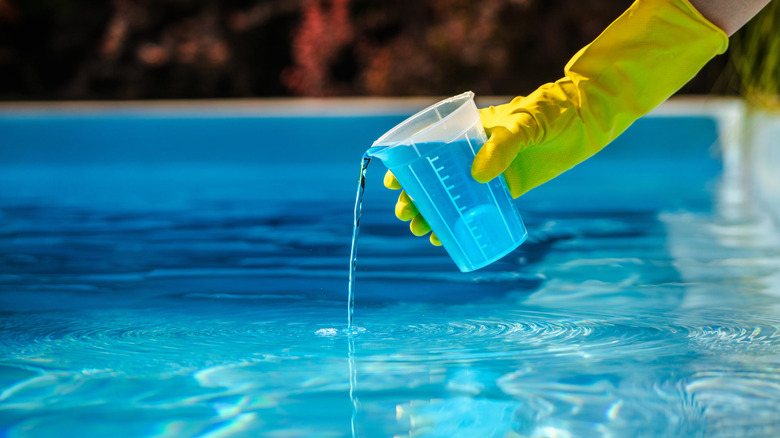
Having a swimming pool is amazing for refreshing summer fun and relaxation, but maintaining it can be a lot of hard work. Throughout the season, you'll need to take care of its cleanliness, circulation, and pH levels to keep it nice and usable so swimmers will be safe and healthy. There are the beginning and end-of-season preparations and the regular maintenance to consider. Along with some elbow grease, you'll need quite a few different chemicals to clean the pool, including sanitizers, balancers, and shock. Luckily, the household alternatives of baking soda, soda ash, muriatic acid, and bleach can work in your pool, too.
Purchasing all of the common pool chemicals can get quite expensive, especially since they are necessary for the maintenance that is required at least weekly during your swimming season. Rain, sunlight, swimmers, trees, faulty pool equipment, your water source for the pool, and more can all make your pool chemical levels fluctuate. So, if it unexpectedly storms the day before your big pool party and you don't have the chemicals ready or time to make it to the store, you could be out of luck. This is why having the household alternatives is beneficial. Plus, many of them are essentially diluted versions of the products sold as pool chemicals, which should help ease any fears of accidentally worsening your pool's condition by using household items. Just like other pool chemicals, though, it is important to understand the purpose of each one and how effective it is.
What baking soda and soda ash do to your pool's pH and alkalinity
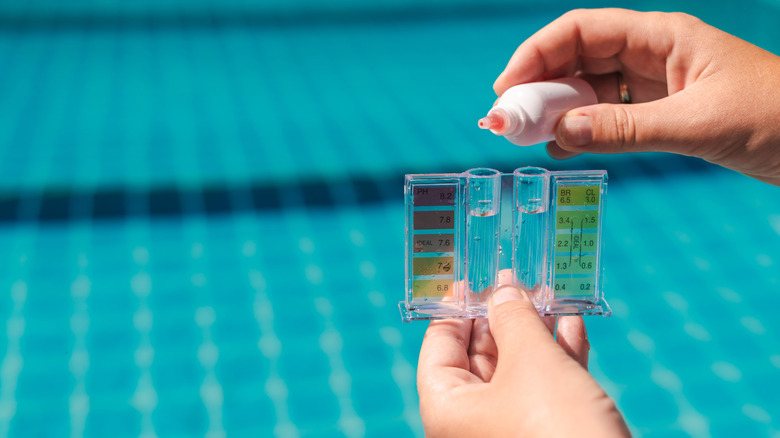
Baking soda and soda ash can raise your pool's pH and alkalinity. The pH level of your pool should be somewhere between 7.4 and 7.6. If it is not too acidic, it will burn your eyes and skin, and if it is too basic, sanitization will be less effective. Achieving the right balance is important here, which is why there are so many products on the market. Depending on pool use, people typically spend between $40 and $80 on pool pH adjusters annually, but household alternatives may help you save a little.
When your pool is too acidic (low pH value), baking soda can be used to raise its alkalinity and pH. Even if you need to add a few pounds of baking soda to your pool, the price of just over $1 per pound is hard to beat. Sodium bicarbonate (baking soda) is already typically used to adjust pool alkalinity, and grabbing baking soda from your pantry in a pinch is no different than buying the pool-specific kind. Also explore even more handy ways to use baking soda in your pool to keep it clean.
Soda ash also has a similar effect as baking soda so if you already have soda ash for cleaning around your home, you have a good pH fixer. Just be sure to calculate your pool's volume to determine how much to add and pre-dissolve the soda ash in a bucket of water before pouring it in.
What muriatic acid and household bleach do for your pool
Muriatic acid and household bleach are helpful, too. Muriatic acid lowers both the water's pH and alkalinity, making the pool more acidic, and bleach helps with sanitization. If you don't have this chemical on hand already, you may wonder what muriatic is and how it can be used to clean your home. Muriatic acid is a liquid acid that costs roughly $10 per gallon and can be used instead of dry acid to lower pH and alkalinity.
Along with a safe pH level and effective alkalinity, it's also important to keep the pool sanitized. If you regularly keep bleach in the house for cleaning, you already have what you need to sanitize your pool as well. Unscented household bleach has the same active ingredient as pool bleach — sodium hypochlorite — but at a lower concentration. You can use it to sanitize your pool just like you would regular pool chlorine, as long as it's completely plain and doesn't have any "splash-less" additives or fragrances. You'll just need to use a bit more, depending on the concentration.
While household items sometimes seem safer than chemicals designed for pools, proper usage is still important for your safety. Always put acid in water rather than the other way around, never mix acids and chlorine, carefully follow all product safety instructions, and wear proper safety equipment. It may seem harmless, but mixing substances for your pool, whether they're household items or not, can be dangerous. In fact, there's even a common pool cleaning mistake that can cause an explosion in your backyard, so keep safety in mind.