

Your Cool-Season Grass Fertilizer Guide For The Lushest Lawn

We may receive a commission on purchases made from links.
Your grass is green enough, but it's not turning heads. To find the proper fix for this issue, start with the type of grass you're growing. In the cooler parts of the country, that's going to be a cool-season type of grass like Kentucky bluegrass, tall and fine fescues, and perennial ryegrass. These grasses require a little different care than warm-season grasses, especially when it comes to timing specific chores like aerating, dethatching, and fertilizing. Cool-season grasses have two main growth periods, the spring and fall, and to be as lush as possible, you need to focus your fertilizing efforts in the latter. When this is supplemented by a summertime iron supplement, you'll start turning heads.
Many people use a spring feed to green up their lawns quickly once the snow melts and the grass starts growing, but for cool-season lawns, fertilizing your lawn in the fall makes the biggest difference. Unlike warm-season grasses, which start going dormant when the temperatures drop in the fall, cool-season grasses actually need fertilizer at this time to fuel growth and build a strong root system. Giving your lawn nitrogen in the fall helps with this and also gives the grass the energy it needs for the spring green-up. In the summer, avoid fertilizing cool-season grasses when temperatures climb and growth slows. Otherwise, you're more likely to benefit the annual weeds in your lawn. Instead, hold off through the summer and water deeply instead of fertilizing. When fall daytime temperatures dip below 90 degrees, you can begin applying fertilizer.
How to choose the right fertilizer for a cool-season lawn
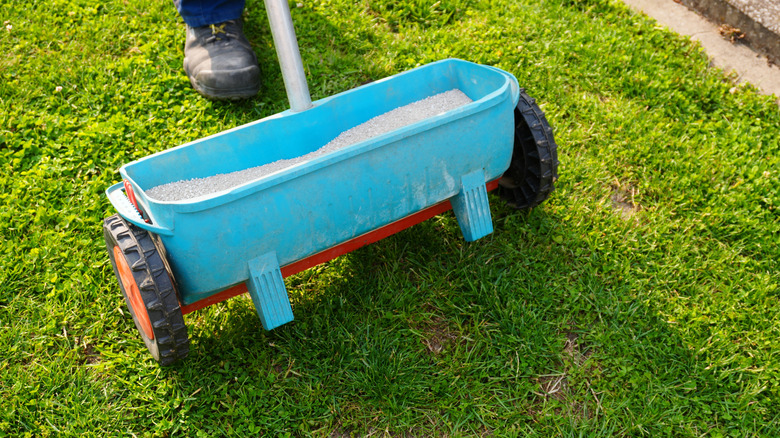
When buying fertilizer, keep the N-P-K numbers in mind: nitrogen, phosphorus, and potassium. You can remember these with the saying "up, down, and all-around." Nitrogen is for green growth up, phosphorus is for the roots below, and potassium is for overall health. To feed a cool-season lawn in the fall, the first application should be a fertilizer that's high in nitrogen, has zero phosphorus, and contains a little potassium. Scotts Turf Builder WinterGuard Fall Lawn Food is a perfect example of this with an NPK rating of 32-0-10. Apply it once daytime temperatures drop out of the 90s, using the bag's coverage chart to give your lawn 1 pound of nitrogen per 1,000 square feet.
The second fall feeding should come around the same time as your last mow, while the lawn is still green. Your lawn needs ½ to 1 pound of nitrogen per 1,000 square feet at this application. When it comes to phosphorus, most soil holds plenty, so you don't need to add it unless a soil test says otherwise. This type of lawn fertilizer is banned in some states because it gets washed into water sources and causes algal blooms. Potassium is similar; it gives cool-season grasses better tolerance against stressors like heat, drought, and winter conditions, but isn't usually necessary. If you do want it, a late-fall winterizer like Jonathan Green Winter Survival 10-0-20 is an easy way to handle that second feeding and supply potassium at the same time.
Turn your lawn from green to greenest
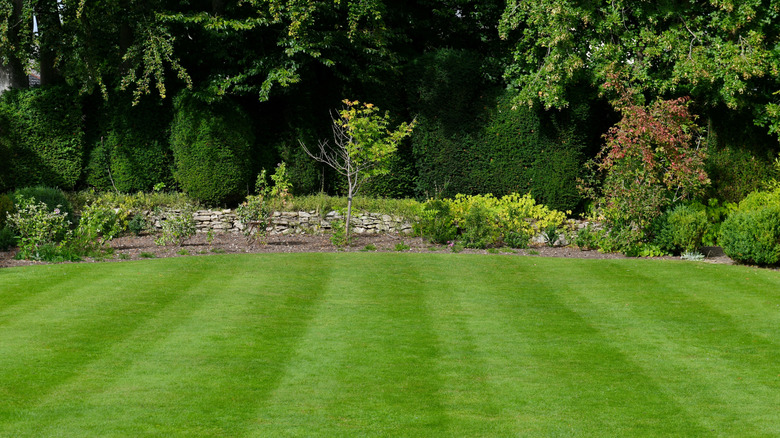
To give your lawn a healthy dark green glow-up fast with one simple solution, use an iron supplement in the summer to deepen the color. Iron is what plants need for chlorophyll production, and chlorophyll is what makes lawns green. The good news is that the Jonathan Green Winter Survival fertilizer contains iron, but it's a small amount. You can also apply iron directly to your lawn in liquid form in the summertime to green it up in as little as 24 to 48 hours. You can re-apply iron foliar supplements like Ironite Plus Liquid Lawn & Garden Ready to Spray 7-0-1 every few weeks. It will keep your lawn green all summer. A 32 ounce bottle is less than $20 and can cover up to 5,000 square feet.
Another option, if you prefer a granular product, is Ironite Mineral Supplement by Pennington 1-0-1, which comes in a 15-pound bag for $38.28. It's applied at the rate of 3 pounds per 1,000 square feet, so it will cover up to 5,000 square feet. You can apply this granular iron supplement up to four times throughout the year, usually every 30 to 60 days during the growing season. Whether you choose liquid or granular, iron is the last key to unlocking the greenest lawn you've ever grown.