

The Best Method For Cutting Glass Tile Without Cracking It
We may receive a commission on purchases made from links.
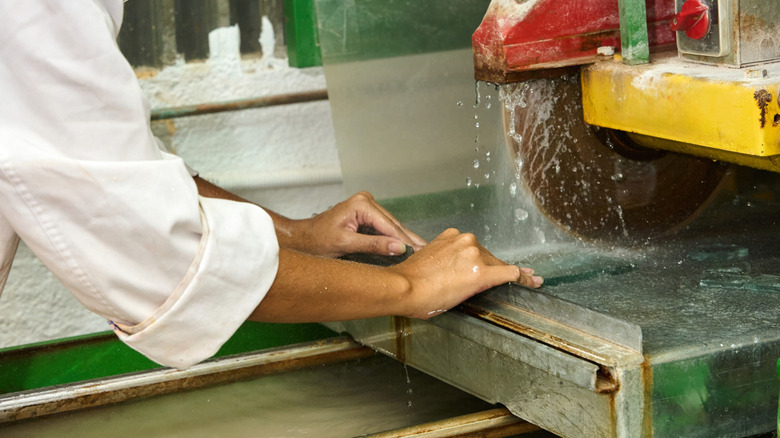
You've found the best backsplash colors for your kitchen and got complementary glass tiles to give the room a makeover. But how do you fit the tiles around your outlets, the pot filler, or that awkward nook? You need to cut the tile so it fits perfectly around these features and odd corners, and this is where things get tricky. Your glass tile might chip or crack if you don't cut it right. To learn the best method for cutting glass tiles, we reached out to Peter Kravchuk, a contractor and carpenter as well as the founder of New Day Construction, for an exclusive interview.
"Choose the blade carefully," Kravchuk tells us. "The best choice is a diamond blade that is specifically designed for glass tiles. A typical tile blade tends to be too aggressive and may damage the surface." So, pick something like the QEP 7-inch Continuous Rim Glass Tile Diamond Blade for your wet saw. You also want to mark the cuts well, our expert advises. He says, "Painter's tape should be used on the cut line before making any marks, as this will help minimize chipping and make the cut line clearer." Moreover, ensure the tile has optimal support and is placed on a flat surface. Otherwise "even minor vibrations may result in cracking when working on narrower cuts," warns Kravchuk.
Finally, patience is paramount. "Go slow when cutting. Do not try to cut the glass with pressure applied. It is tempting to do so, but it is also one of the fastest ways to break glass tiles," he says. Keep pouring water during the process, as this will prevent the blade from overheating and minimize friction, adds Kravchuk. Don't forget to smooth out the edges with a dedicated rubbing stone.
Avoid narrow strips, and wait to begin cutting
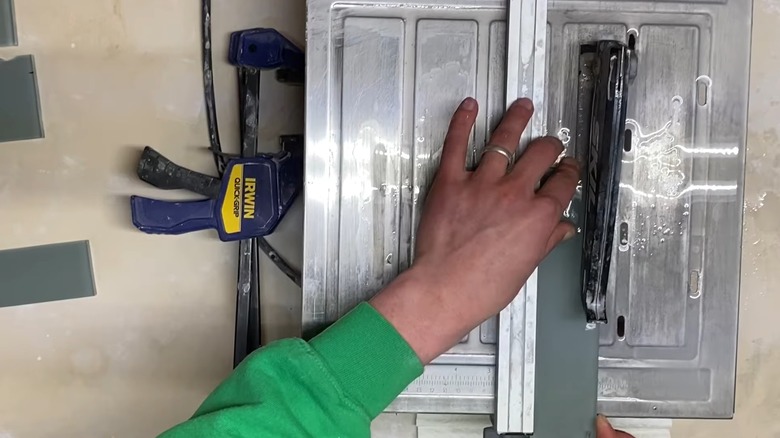
In addition to the techniques above, to prevent glass tiles from breaking or developing hairline fractures, Kravchuk recommends steering clear of narrow strips. In his exclusive interview with House Digest, he says, "Cutting one of the most hazardous strips is a very thin strip near the border of the tile. In such a case, the probability that the glass will crack or chip significantly rises. Where possible, try to change the layout so that the cut glass is bigger and safer." This will require you to use careful consideration as you design your colorful glass tile backsplash. Feel free to conduct a dry-run before you ready your blade to get the configuration just right. However, if you don't see a way out, go for rounded corners and always trim the edge before splitting a tile in half.
Moreover, Kravchuk emphasizes that you should "wait until the blade spins at full speed before beginning to cut. Home enthusiasts often start feeding the glass while it hasn't reached full operational speed. This can add to vibrations and cause chipping problems." So, wait for a few moments after plugging it in and turning it on before you allow the blade to touch the glass. Another expert tip is to constantly monitor the state of your blade. Explaining why you should do this, Kravchuk says, "Regardless of how professional a blade may be, over time it starts wearing off and stops cutting properly. If the blade starts chipping the glass or makes poor cuts, it probably needs cleaning or replacement." If the diamond bits seem worn or damaged, you'll have to spring for a new blade. Otherwise, dip the blade in a citrus-based cleaner mixed with water to cleanse it.
Don't attempt an important project right away
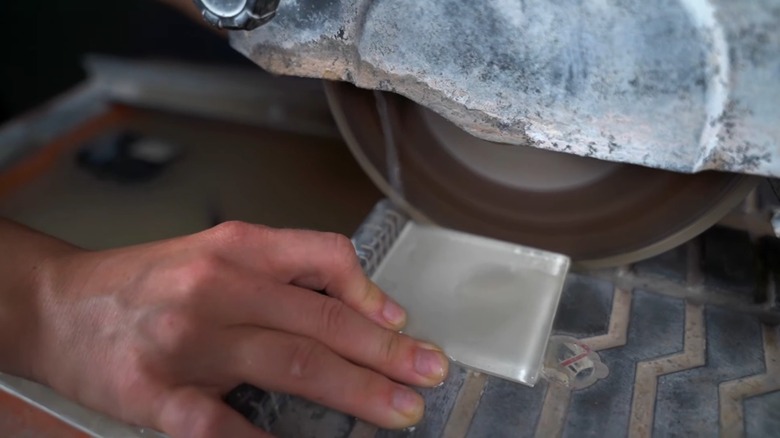
Tiles are an inspiring way to use glass in your kitchen design. But if the installation is shoddy, your dreams of a picture-perfect finish will vanish right in front of your eyes. This is why our expert, Peter Kravchuk, advises against DIY beginners cutting glass tiles. He elaborates in an exclusive chat with House Digest, "I do not think glass tile is the right type to work with for beginners since glass cannot tolerate mistakes in cutting compared to ceramics and porcelain. The cut may look fine during the process, yet a chip or a crack might show up after installation or after the glass is put under stress."
The process will be especially challenging for a novice if the cuts are centered around outlets, narrow strips, or corners, says our expert. DIYing mosaics or feature walls will be difficult, too, without prior experience. It won't matter if you have the right tools and invest in a fine diamond-tip blade; honing your glass tile cutting skills is more important. "Therefore, for someone who has no experience in dealing with tiles, it makes sense to practice on samples first. Using professional installations for important projects would be the best solution," recommends Kravchuk. If you go this route, be prepared to shell out anywhere between $50 and $200 per square foot when contracting a professional to cut glass tiles. If you're an experienced DIYer or don't plan on getting help, "Buy some excess material. Waste is relatively large when it comes to glass tiles, as some cuts may cause chipping," our expert concludes.