

Not Coneflower: The Easy-To-Grow Purple Flower That Hummingbirds Can't Resist
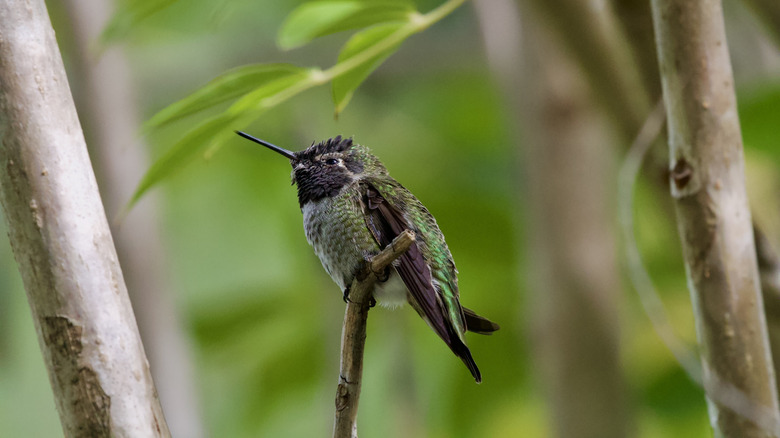
When you're planning a hummingbird-friendly backyard, your mind may drift to the classics — the best plants for your pollinator garden are coneflower, bee balm, or goldenrod, right? With an abundance of vibrant blooms, these flowers are all undeniably great choices. However, they represent just a few of the innumerable species suitable for attracting the tiny, gem-like avians to your yard. One such alternative plant is the easy-to-grow allium flower (Allium spp.), which has nectar-filled purple blooms that hummers simply can't get enough of. Onions probably aren't the first thing that comes to mind when inviting pollinators, including hummingbirds, into your garden. However, alliums are a surprisingly good choice.
The genus has about 700 species, including common garden vegetables and herbs like onions and chives, as well as ornamental onions. Each species and cultivar has unique characteristics, but all of them produce showy, fragrant flowers in various colors in spring and summer. If you're looking specifically for purple flowering alliums, consider star of Persia (Allium cristophii), Persian onion (Allium aflatunense), or giant ornamental onion (Allium giganteum). Plant any of these species and you'll have flocks of hummers. Alliums are fairly low-maintenance plants, and are arguably among the easiest plants to grow for beginner gardeners looking to attract hummingbirds while honing their green thumb. Still, giving your alliums the right care can mean the difference between a plant that blooms readily and one that struggles to thrive.
How to grow alliums to attract the most hummingbirds
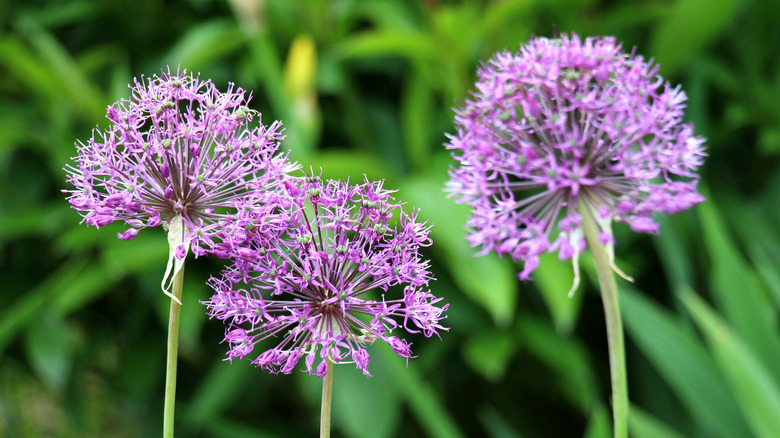
Learning the basics of allium care is necessary when planning a suburban or urban hummingbird haven. Ornamental onions are bulbous perennials, which means that you can enjoy their blooms in your garden year after year if you're in Zones 4 to 9. Since you don't have to resow most allium species each spring, it's far less work and money than buying and planting a seasonal pollinator garden with flowering annuals. Whatever species of allium you choose, double check that it's winter hardy in your specific growing zone. (Don't know what a USDA growing zone is and which one you are in? You can take a look at the online USDA Plant Hardiness Zone Map to figure it out.)
One of the most important things to keep in mind when growing alliums for hummingbirds is that the care requirements differ across species. Alliums are native in many parts of the world, spanning North America, North Africa, Europe, and Asia, and they occupy a wide range of climates and conditions. You can, for example, grow alliums in both full sun and light shade. However, since they typically produce the most flowers in full sun, choosing a spot in your garden with ample sunlight will maximize hummingbird visits. Shade makes for limp allium blooms. Most ornamental onions perform best in sandy, loamy, and fertile soil, as long as the bed has excellent drainage. Overly moist conditions will lead to bulb rot.