

Use Old Milk Jugs To Create Your Own Hydroponic Garden With A Clever DIY
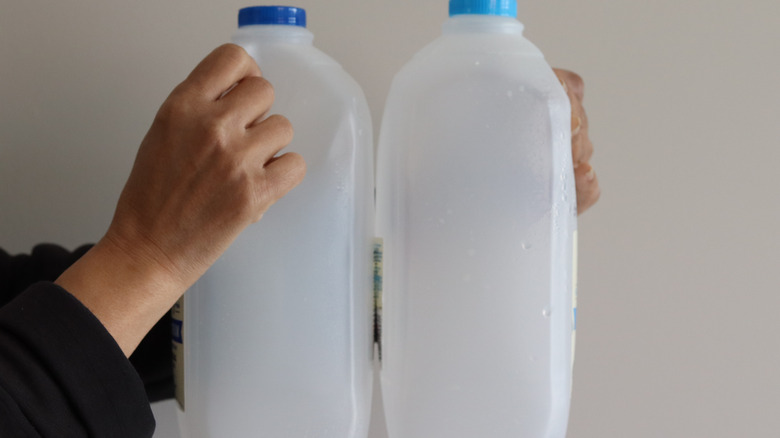
We may receive a commission on purchases made from links.
When you feel compelled to grow your own food but lack the space or time to cultivate a formal garden, a hydroponic garden is a great alternative. As it uses a nutrient solution rather than soil, it eliminates the problems of weeds and soil-borne pests. This may sound counterintuitive, given that it's a water-based system, but it uses far less water than a traditional garden while often producing higher yields. But what truly seals the deal for most growers is that you can DIY your own hydroponic garden setup for cheap, using old items, like empty milk jugs, gathering dust in your home.
The beauty of creating your own setup using these containers is that they're made of food-safe materials. So, you can rest assured that no harmful chemicals are leaking into your crops. Moreover, repurposing old jugs is a sustainable choice and keeps stuff out of the landfill. Compared to hydroponic kits that can retail for more than $300, they're an inexpensive way to see whether you enjoy producing your own food or would rather stick to shopping at grocery stores and farmers' markets. Other than pre-owned containers, you will require a balanced nutrient solution, like the Dyna-Gro Gro-008 Grow 7-9-5 Plant Food, or one personalized to your target crop. In addition, you must get pH strips to test the solution's acidity levels as they affect nutrient absorption, and an anchor to hold plants, such as net pots or a pool noodle.
Setting up a hydroponic garden with old milk jugs
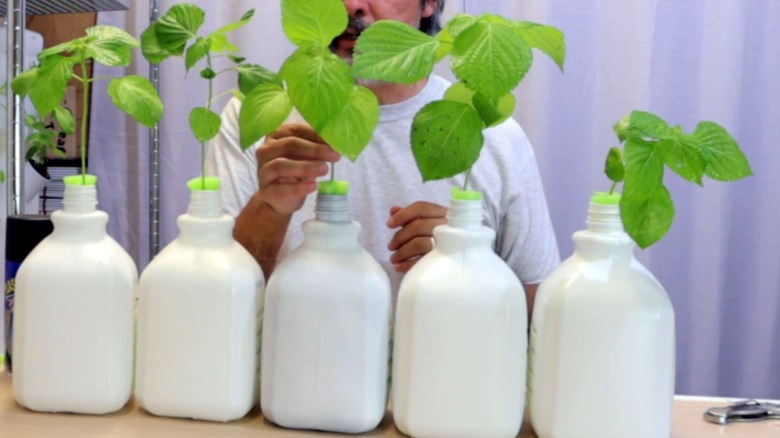
When DIYing your own hydroponic garden, you can start small with a jug or two if you're new to gardening, or employ several of them if you're producing food for a family. Stick to one type of plant per container, as growth requirements often vary and you don't want different crops competing for resources. Where space is limited, go vertical by placing these jugs on adjustable shelves or garden racks.
Before setting things up, clean and rinse the jugs thoroughly, then take the lids off. If your jug isn't opaque, keep in mind that the nutrient solution may become inundated with algal growth due to sunlight exposure. To avoid that, coat the exterior in Plasti Dip or paint it to block out the light. Following the label instructions, dilute the nutrient solution and fill the jug to about 1 inch below the brim.
Using the pH strips, measure the acidity levels of your solution. If they're in the range of 5.5 to 6, you're good to go, as most hydroponic crops absorb nutrients efficiently within that range. However, if they're higher, you may need to acidify the solution with distilled white vinegar. 10 teaspoons for a 5-gallon jug usually suffice to acidify a neutral solution (pH level 7.0). Next, add the nursery plugs or seedlings to the net pot and place the pot in the jug, or hold the plants in place with a strip of pool noodle. Make sure only part of the root system is submerged so the remaining roots have access to oxygen.
Why a milk jug-based hydroponic system works and caveats to consider
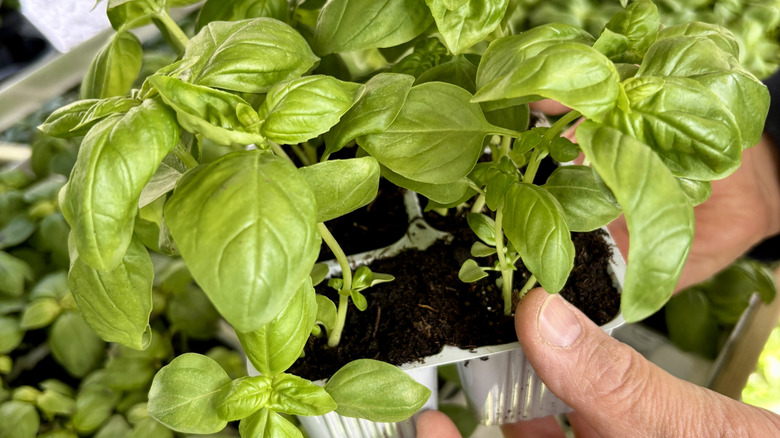
This hydroponic system is based on the Kratky Method, a passive method developed by the University of Hawaii's professor, Bernard Kratky, that eliminates the need for electric pumps. As the roots absorb water and expand, the solution level goes down, leaving behind a moist air space, allowing the roots to breathe.
However, without adequate sun exposure, there's a high chance that your seedlings may turn yellow. So, if you're maintaining this hydroponic garden indoors, you'll need to supplement with grow lights, especially in the winter, which can raise the costs. On the flip side, placing these containers where the light is too intense may cause them to break down quickly.
The best way forward is to stick to fast-growing leafy greens and herbs, like lettuce, spinach, basil, Swiss chard, or brassicas. Since they have a short growing season (under two months), you can harvest them quickly and will have no need to top off the nutrient solution. They're perfect for a "set it and forget it" approach. However, if you aim to grow fruit-bearing crops, such as tomatoes and peppers, temper your expectations. While it's still possible, you'll generally have better results with micro or dwarf varieties and should be prepared to top up or change the nutrient solution during the growing season.