

Not Basil, Not Cilantro: The Bold, Red Herb With Flowers That'll Look Great In Your Garden

Rather than the cool green of basil or cilantro, why not add a bit of colorful contrast to your garden? Red orach (Atriplex hortensis var. rubra) has been cultivated for centuries, but remains one of the most overlooked garden plants in the U.S. This is the red variety of orach, a type of plant often used as a substitute for spinach. However, this leafy species has a slightly salty taste compared to the typical greens in American cuisine. Grow it as an ornamental, letting it go to seed and flower, or as a potherb, where you can boil the leaves or just eat them tender and raw.
Originally native to western Asia and the Mediterranean, the name orach comes from a French word that itself derives from Latin meaning golden herb. You might just as likely hear someone call it mountain spinach due to its resemblance to that nutritious leafy green. But it is also referred to as saltbush as it is tolerant of high soil salinity and also has a salty taste. It is a cool-season species like spinach. In the United States, red orach is not as popular as it is in Europe, and you might have trouble finding seeds in garden centers.
How to plant red orach in your home garden
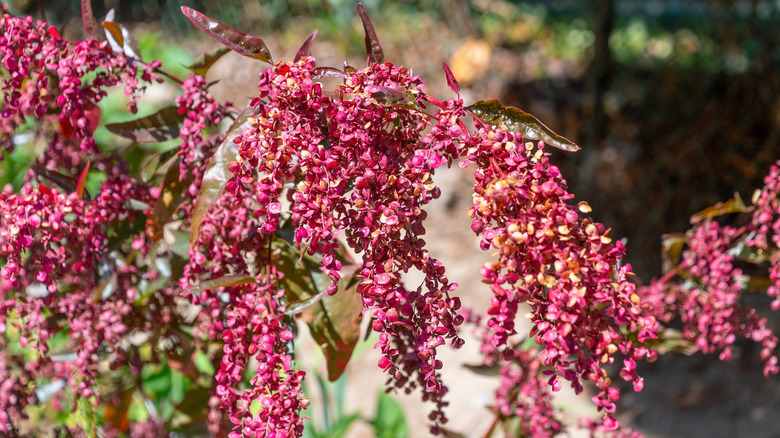
This variety of orach is a quick-growing annual, with dark red-colored, arrow-shaped leaves about 4 to 5 inches long. You can start red orach by seed in the spring even before the last frost, opting for full sun or partial shade. Highly tolerant of alkaline and salty soil, keep your plants well-watered for the best flavor. Unlike spinach, which cannot tolerate hot temperatures for long, red orach remains productive into the hotter months of the year. For this reason, red orach is an example of a leafy green you can still plant and grow in late summer. Some gardeners will plant it in succession for continual harvesting.
Because it grows best in fertile soil with lots of organic material, red orach will grow well in a container where you can add fertilizer and control the drainage. Whether you choose container planting or not though, you can expect to easily propagate red orach from seed afterward. In fact, this is one of the best self-seeding vegetables to grow because each husk it produces contains a seed. If growing for its ornamental value, it can get up to 6 feet tall, and develops tiny reddish flowers in clumps that create an attractive display even into autumn.