

Not Brick, Not Pavers: Use An Herb Pollinators Love As Driveway Edging
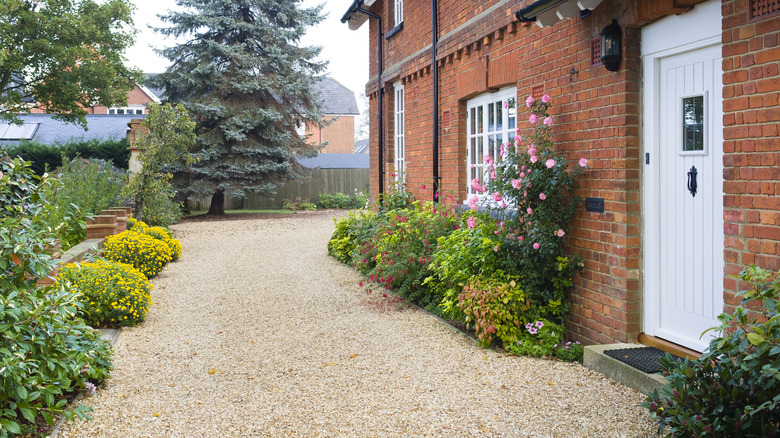
Depending on the layout of your lawn, your driveway may very well be the first impression guests get of your home. As a result, you likely want to ensure that it matches the aesthetic you've worked so carefully to curate in other parts of your yard. Bricks and pavers can be a great way to establish a traditional edge for your driveway, but they're not the only options you can incorporate. Instead, when you opt for living driveway edging with this colorful plant, you can cultivate a visually pleasing driveway while also attracting a variety of pollinators to your home.
Also known as devil's nettle or dog daisy, yarrow (Achillea millefolium) is a perennial herb found native across three continents, including North America. It does well in poor soils while holding up well to drought, heat, and pollution, which makes it perfect for planting alongside a driveway.
Yarrow grows up to 3 feet tall with a similar width, and blooms throughout the summer with colorful, showy flowers enjoyed by a range of pollinators and beneficial insects, including bees, hoverflies, butterflies, and more. This means that you can use it for edging while also starting your own pollinator garden. Because of its vibrancy and durability, it's a great choice for a unique driveway edging that steals the show before your guests even fully arrive. Yarrow is also considered easy to grow, making it a top plant for beginner gardeners looking to try their hand at driveway edging alternatives.
How to grow yarrow as driveway edging
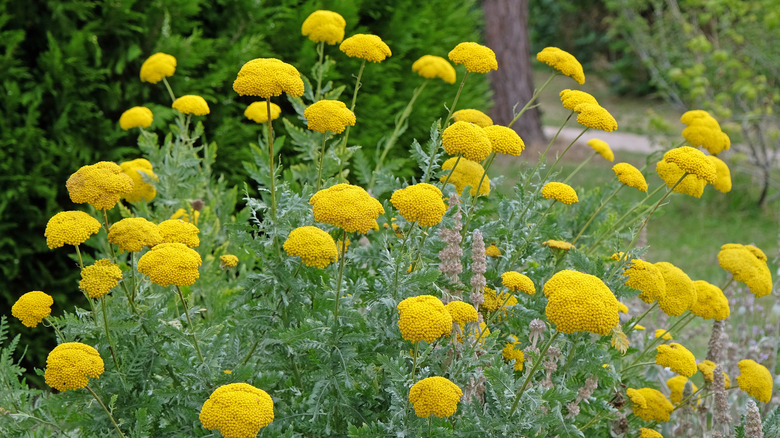
Before you dive into planting yarrow along your driveway to add color and bring more pollinators to your yard, there is just one thing to keep in mind. Yarrow is a solid ground cover choice that can handle light foot traffic. This makes it good for driveways where guests may occasionally walk over your plants. However, excessive foot traffic may reduce blooming, and fewer flowers often means fewer of those pollinators you want to attract. While you can still use yarrow as an attractive edging option with foliage that provides shelter for insects, this is something to consider if your guests have a common habit of accidentally trampling through your driveway's margins.
Yarrow is a perennial that's hardy in USDA growing zones three through nine. It can handle a variety of climates with ease while still returning year after year. It's also quite tolerant of various soil conditions. Not only is yarrow drought-tolerant, meaning that the occasional dry spell isn't detrimental, but it's also tolerant of the occasional wet soil.
Where yarrow tends to get the most picky with its care is sunlight. Yarrow requires full sun for the best results, which means at least six hours of sunlight each day. Fortunately, this often works well with exposed driveways that typically receive ample sunlight during the day, especially given yarrow's heat tolerance.