

Ditch Traditional Lawns: The Colorado Landscaping Alternative That'll Survive A Drought
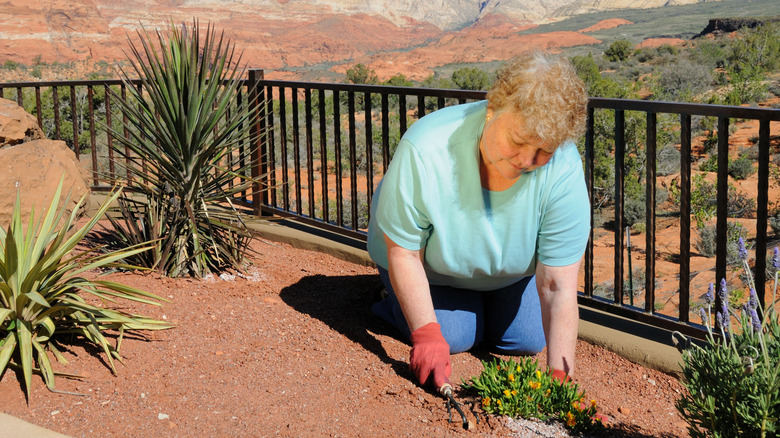
Lush green grass lawns cut in neat rows with perfectly edged sidewalks and a pristine garden bed lining the front path aren't exactly the most energy-efficient or eco-friendly in every region. While traditional lawns certainly have their place, locations like Colorado have turned to other forms of landscaping that may require less water usage and could possibly be drought-tolerant. Xeriscaping, a form of landscaping that uses native plants to help reduce water usage on the lawn, was invented in Colorado by Denver Water in 1981. It's a blending of the words "landscaping" and the Greek word "xeros," which means "dry." If you've never heard the term, you may be wondering what xeriscaping is and how exactly it can help your garden in a drought.
Xeriscaping has become an alternative for many lawns in areas that experience less rain. Arid climates, like that of Colorado, aim to eliminate irrigation and promote less water consumption. Instead, folks add plants that are native to the local environment, focusing on drought-tolerant varieties, in particular. According to Colorado State University, this form of landscaping could reduce exterior and lawn water usage by 30 to 50%. While Xeriscaping is popular in the Western parts of the United States, Realtor notes that it is a growing trend, and folks from many different dry and arid climates are starting to take part in it. Additionally, some folks note that the trend has expanded to other climates, promoting native plant usage and foliage that requires less maintenance overall.
How to xeriscape in your area
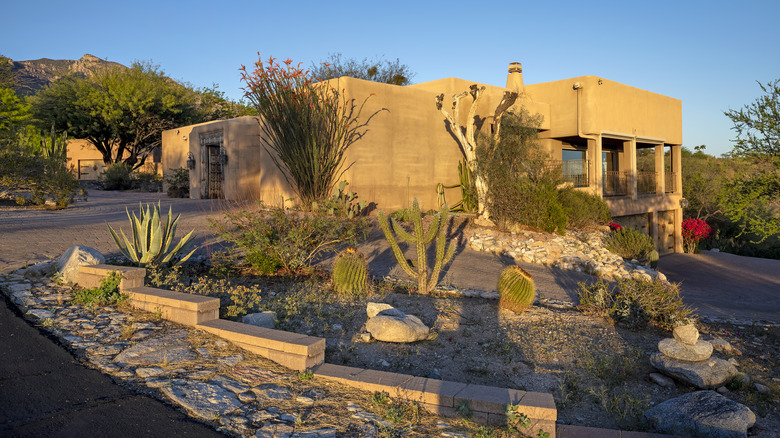
Since xeriscaping can happen on nearly any property, knowing how to do so successfully is key. The point of this popular garden trend is to promote smart water usage. To achieve it, you want to choose native plants that won't need additional water or tending and will thrive in your local environment. First, you'll want to plan and design how your xeriscaped lawn will look and operate. If you have kids or pets, you may need to consider avoiding certain plants that could be toxic to consume or opting for ground cover or soil that is hardy or more fit for play. You may also consider whether you want a fully xeriscaped lawn or if you wish to start with partial xeriscaping. Choosing the right soil for your environment and landscaping needs, creating an efficient irrigation system, if necessary, and understanding native plant zones will also be important considerations for xeriscaping your lawn.
Of course, there can be some downsides to consider before xeriscaping your lawn. While there are plenty of benefits to these lawns, such as requiring less maintenance or benefiting local wildlife and pollinators, drawbacks could sway whether xeriscaping is worth it for you. For example, depending on your location and the current condition of your lawn, xeriscaping can be a costly upfront investment. If you have to redo your entire landscape, demo and replanting can be pricey and time-intensive.