

Skip The Knot Fold: There's A Cuter Way To Hang Towels
We may receive a commission on purchases made from links.
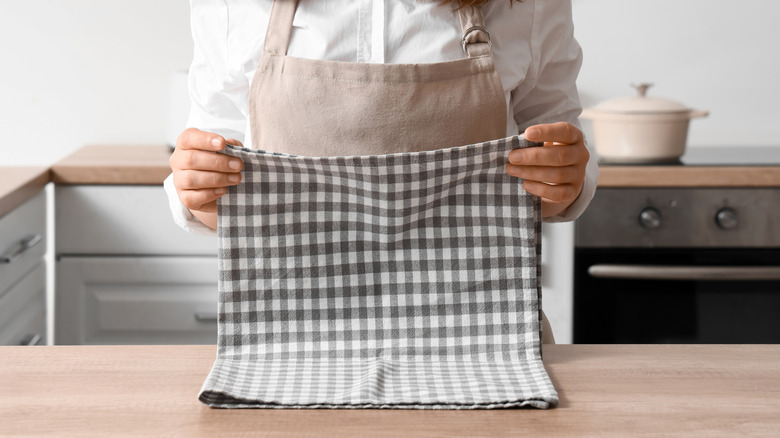
When it comes to kitchen towels, there are two camps: those who hang their towels on the fridge door for convenience, and those who feel like their seasonal decor isn't complete until their prettiest ones are styled across the oven door handle. Whatever side you fall on, there's one thing we can all agree on: tea towels can look messy fast. While the stylish knot fold (also beautiful for a spa-like effect with bathroom towels) feels like a good solution, you might not have the time to finesse the look into the perfect knot or you might want to show off more of the towel's pattern. Sound familiar? Don't throw in the towel yet (pun intended). Instead, take a cue from a clever YouTuber and sew a tie onto your towel for a clever way to keep kitchen towels neat and at the ready.
In her video, Notches Sewing cuts a slanted rectangle out of quilting cotton, sews it together, then inverts it to create the tie. She uses a gathering stitch to create a ruffled look, then stitches the tie along the top to complete the project. It's a fun project that advanced sewists can likely complete in an afternoon and those with beginning sewing skills may work on over a weekend.
Do the prep work first
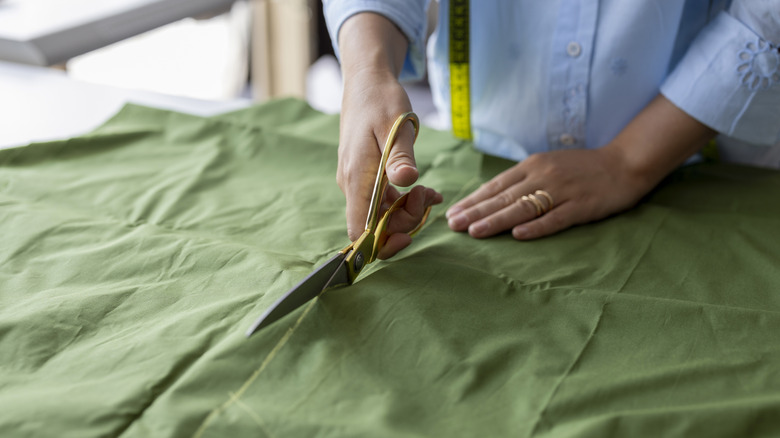
There are a few things that beginning and advanced sewists will want to tackle before sewing this cuter way to hang towels. First up, choosing the right fabric. Sewing Notches uses quilting cotton, which is a great choice to make the tie with, since it's both flexible and hardy. A linen-and-cotton blend is another good option that pairs well with everyday kitchen towels. For more lightweight or decorative towels, lawn cotton may be a better match. It doesn't have the same durability, but can add a polished touch.
Next, pre-wash your fabric and tea towel. Yes, it's an extra step, and yes, it adds to project time, but it's worth it to make sure your fabric won't unexpectedly shrink the first time you wash it. If you pre-wash in your washing machine, use the most delicate setting available and about a quarter of the detergent you normally do. To hand wash, soak the fabric completely in water for about an hour, then wring out and let dry.
Once the fabric is dry, cut out your pieces. For this project, Notches Sewing recommends cutting on the lengthwise grain. There are a few different tricks to find this, but our favorite by far is using the selvedge (the white strip of fabric along the side) as a gauge. After ironing and laying the fabric flat with the pretty side down, rotate it so the selvedge is closest to you. This way, when you fold the bottom edge of the fabric up to cut out the slanted rectangular pattern piece, you'll already be on the proper grain.
How to add ties to your kitchen towels
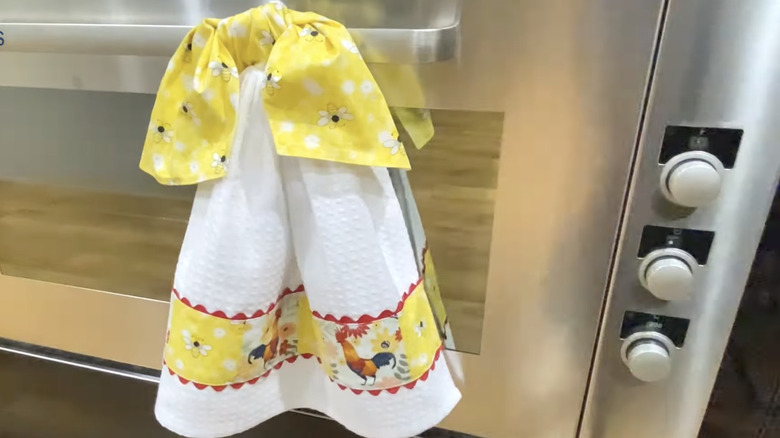
Sewing the tie itself is fairly straightforward: simply stitch a ¼ inch seam along the cut edges, leaving a one- to two-inch gap so you can invert the tie right side out. If your machine doesn't have the ¼ inch seam marked on the needle plate, measure ¼ inch from the needle and add a piece of bright tape (think painter's or washi tape) parallel to it to guide you as you sew. If you're handsewing, use a clear sewing ruler, like the Secai Quilting Ruler, to mark the seam before stitching. After you invert, add a ¹⁄₁₆ inch edgestitch along the whole piece and mark the halfway point in both the tie and the towel. Add a gathering stitch in the middle of the towel and pull together until the tie is the same width as the towel. Stitch them together along the middle, remove your gathering stitches, and voila! Simply tie it around the handle of your oven to keep your kitchen towels off the floor.
If you've ever dabbled in the kitchen, with a new recipe or a child's science project, you know how quickly tea towels can get dirty. Like most other towels, basic kitchen towels can be simply tossed in the washing machine on hot, but the fabric of your tie may not be as hot water-friendly. If you need to deep clean your DIY tea towels, consider washing the towel part in hot water by hand, and the tie in cooler water to protect the shape.