

Forget Boring Stainless Steel: The Kitchen Tool You Can Find At Thrift Stores For A Good Deal

Sometimes, the best kitchen tools are found secondhand — and all they need is a good clean and polish to bring them back to their former glory. All those rusty cast iron pan restoration videos you've watched probably motivated you to find one yourself; and while cast iron pans are major thrift store scores, you may be overlooking another kitchen tool worth taking home. Right on the shelves of reliable, long-lasting kitchenware are carbon steel knives, which are a favorite among professional chefs, cooking enthusiasts, and collectors since they're known to retain sharpness for far longer than stainless steel knives.
There is a downside to carbon steel knives, however. Because of their high carbon content, they require more care and maintenance. Unlike stainless steel, these knives are more prone to rust so they need to be cleaned, dried, and stored properly after every use. When stainless steel knives became more widely available, more people switched to this material because it's more affordable and far easier to maintain, despite its need to be sharpened more often. Today, brand-new carbon steel chef's knives sell for well over $100, depending on the brand and craftsmanship, making carbon steel knives found in thrift stores an excellent bargain for anyone willing to restore and maintain them.
How to spot carbon steel knives at the thrift store
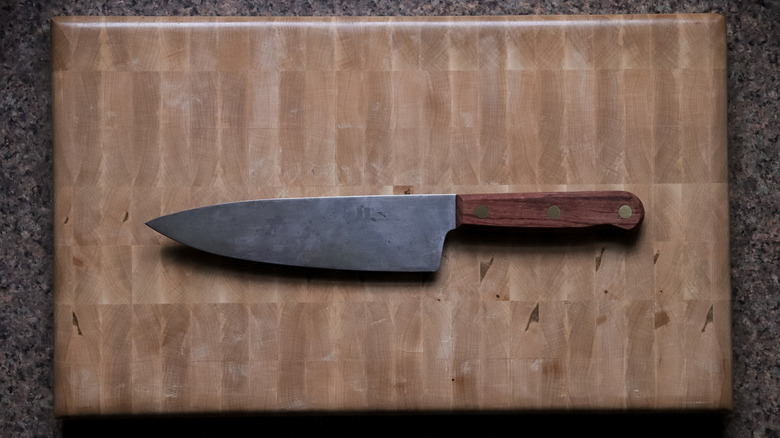
First of all, don't expect small thrift store finds like carbon steel knives to look shiny and new. They will probably look dull, dark, and potentially rusty, especially if they weren't stored or taken care of properly by the previous owner. Moreover, older carbon steel knives usually have a wooden blade, which is likely to have a darker patina. This happens when these knives get into contact with either air, moisture, or acidic foods over time.
It's also worth checking for stamped or engraved markings on the blade. Many reputable carbon steel knife makers hail from Germany and Japan, so if you spot logos or markings from brands like Wüsthof or Misono, then you've hit the jackpot. However, even if you spot a knife made by a distinguished brand, watch out for any bends and dark spots on the blade — these pre-owned knives may not be worth saving anymore.
How to maintain carbon steel knives
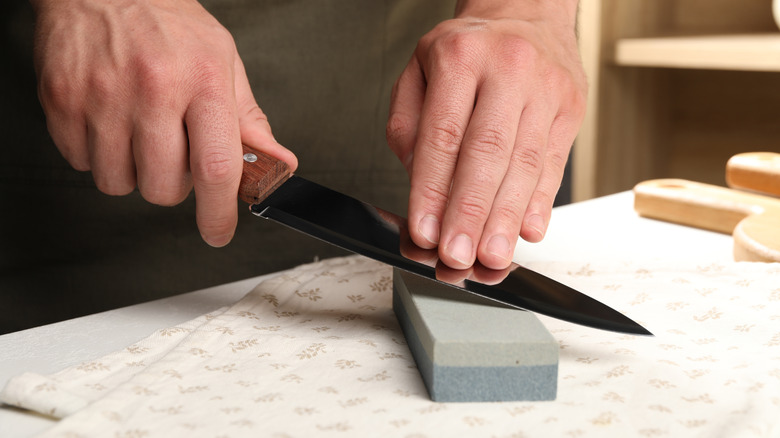
If your thrifted carbon steel knife is covered in rust, you can remove them by wiping the blade with a cloth generously doused in vinegar, or you can apply a coat of Barkeeper's Friend to the blade, spray a bit of water over the mix, then scrub the rust particles away with a piece of cork. To prevent rust from coming back, avoid leaving them wet or exposing them to steam and moisture (that means not storing your knives near sinks or stoves). When in use, always keep a dry cloth ready so you can wipe the knife in between food preps. Afterwards, always wash the knife by hand, using warm water and soap, then dry it immediately before putting it into safe knife storage.
For better care and maintenance, it is highly recommended by professionals to wipe a thin coat of oil on your carbon steel knives after use to prevent rust buildup. Knifemakers and enthusiasts recommend camellia oil or food-grade mineral oil since it's non-toxic and lightweight, unlike organic cooking oils such as olive or sunflower, which can develop a stench over time. If your knife develops a bend or curve, a professional may be able to use a honing rod to straighten it. Keeping your carbon steel knife sharp, on the other hand, requires either a pull-through sharpener or a whetstone to properly sharpen the blade.