

Deadhead Annual Plants During July For More Beautiful Blooms
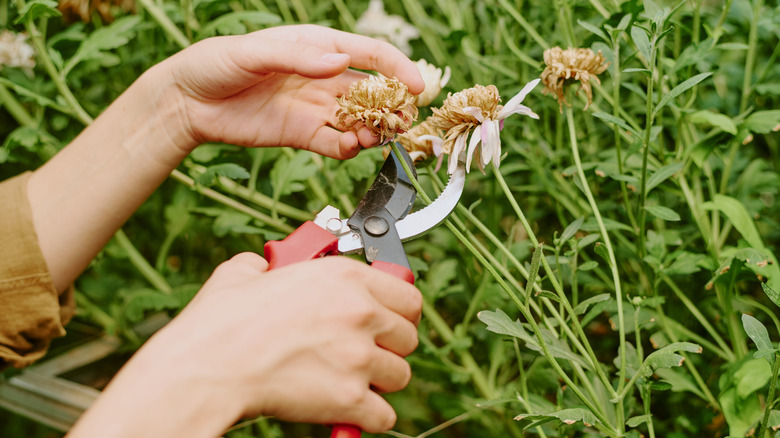
We all expect our ornamental beds and decorative patio pots to be spilling over with flowers all summer long, but if you compare your own blooms to those of your neighbor, you may be feeling some floral envy. Their secret is probably a simple one that you may be familiar with: deadheading. There are lots of annual flowers you should deadhead during July for more beautiful blooms and lasting color, and depending on the types of plants you're growing, this gardening task may not even require any tools.
Fresh blooms are easy to love, but once the flowers fade, they may lose their appeal. If your area has gotten some heavy rain, those spent flowers may be making your beds look especially bedraggled. This is where deadheading comes in — it's one of the July tasks that will keep your garden thriving and blooming all summer. Taking care of this task helps your plants redirect their energy away from seed production and can keep your annuals flowering and growing vigorously until your first frost.
Prune away faded blooms in July for color until fall
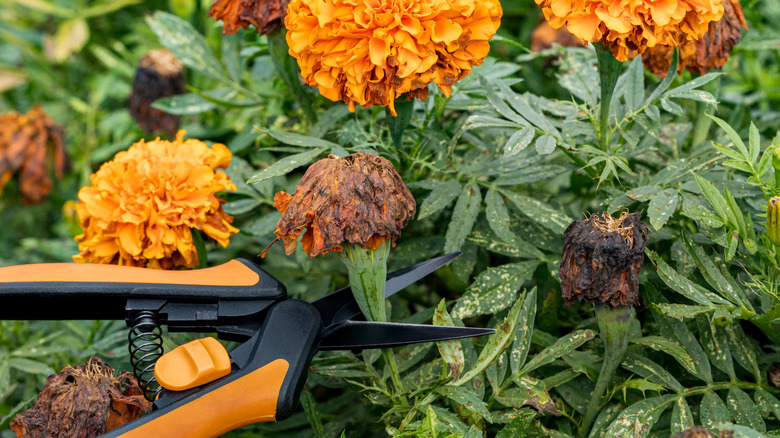
You may be wondering why this time of the summer is the right moment to start deadheading. Think about all those annuals you planted when the weather started to warm up — their blooms are probably starting to fade now, making July the perfect time for a rejuvenating prune. You don't always have to use a pair of sharp pruners or garden snips to deadhead. With some plants, you can just pinch off the faded blooms. Alternatively, use a pair of pruners or scissors to snip off dead flowers from annuals with thicker stems and cut them back to a set of leaves.
There are many flowering plants you should deadhead for maximum blooms. Some of the annuals you may have planted in your garden that might have started to fade, and which should be ready to prune back include poppies, cosmos, and zinnias. You can also give the same treatment to your marigolds, impatiens, and petunias for a continuing floral show. As you make your rounds with your pruners, don't forget to deadhead celosias, pentas, and salvias, too.
As the summer progresses, however, keep in mind that birds and other wildlife use seed heads as winter food. While deadheading during July is a great plan for more beautiful blooms, once fall approaches, you may want to leave some faded blooms to help winter wildlife.