

The Beautiful Look-Alike Plant To Grow If You Like Lavender

In our humble opinion, there aren't many things that are as pretty or romantic as a field full of lavender (Lavandula spp.) shrubs in full bloom. The sight of those tall purple flower stems swaying in unison in the breeze would make anyone swoon. You may as well have been transported into a cheesy romance novel from the 1980s. When you combine the good looks of lavender with its calming, spa-like aroma, it's hard to resist this woody, herbaceous perennial. However, while lavender is fragrant, heat-tolerant, and evergreen, it needs regular pruning and can be toxic to pets. Spanish sage (Salvia lavandulifolia) thrives in similar conditions to lavender and has strikingly similar blooms, but is easier to maintain and safer for your furry family members.
Just like lavender, Spanish sage is native to the Mediterranean. It prefers to grow in sunny spots that get at least six hours of sun a day and well-draining soil. While lavender has a light, floral scent, Spanish sage has a woodsy smell that's similar to rosemary. However, both plants can induce a sense of calm. If you let your lavender or your Spanish sage go to seed, they will provide a veritable smorgasbord for your avian visitors, despite not being native plants. Think about all the brilliant ways you can use lavender from the garden around your house, from drawer sachets and candles to wreaths and framed flower art. The dried flower stems and leaves of Spanish sage can be used in much the same way. Thanks to the strong fragrance of both plants, deer aren't likely to hang around your garden for long, much less take a nibble. In short, if you're a bit bored of lavender, why not try its lookalike Spanish sage?
How to grow Spanish sage in your yard in place of lavender
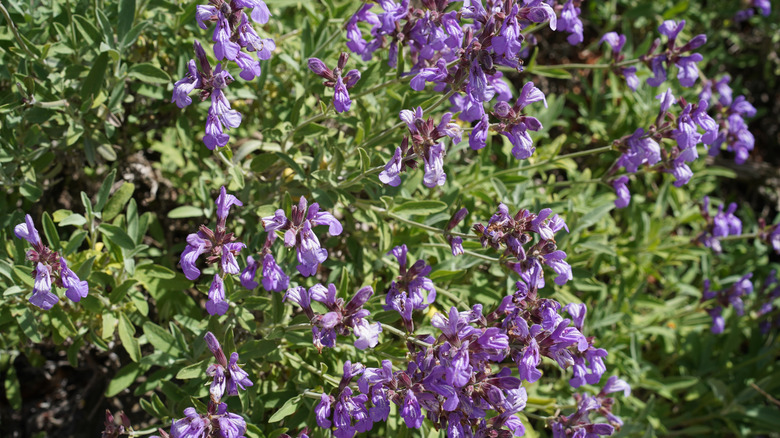
Spanish sage is one of those easy-to-grow herbs that can help keep pests away from your yard and garden while encouraging plenty of beneficial insects, like bees and butterflies, and a flurry of adorable tiny hummingbirds. Of course, lavender does this, too, so choose Spanish sage over lavender when you need to add height, movement, or late-season color to a garden. With its narrow, silvery leaves and vibrant, violet-blue blooms in June and August, this hardy perennial herb adds texture to any outdoor space year-round. Spanish sage grows to about 1½ feet tall and wide, but the flowering stems stand over 3 feet high. The blooms of lavender, by contrast, max out at 3 feet for the largest varieties.
Another big reason to fall in love with Spanish sage is that it's not finicky. Lavender, on the other hand, has a reputation for fussiness — though that may be somewhat undeserved. Once it's established, this pretty Salvia species is super low-maintenance. It doesn't just prefer dry soil — it needs it. In fact, don't be tempted to overwater this Spanish sage; you're more likely to kill it than help it thrive. Like lavender, it's a drought-tolerant pick for parts of the U.S. with little rainfall or xeriscape gardens — USDA Plant Hardiness Zones 4 through 10 with hot, dry climates. Use it to add pops of color on dry slopes and pathway borders. You could easily transform a sunny rock garden with this low-maintenance perennial or grow it in large planters in an exposed patio. Although Spanish sage could never outright replace lavender, it's a beautiful lookalike with similar features and perhaps a little easier maintenance.