

Not Copper Nor Coffee Grounds: The Delicious Fruit That Can Help Get Rid Of Slugs
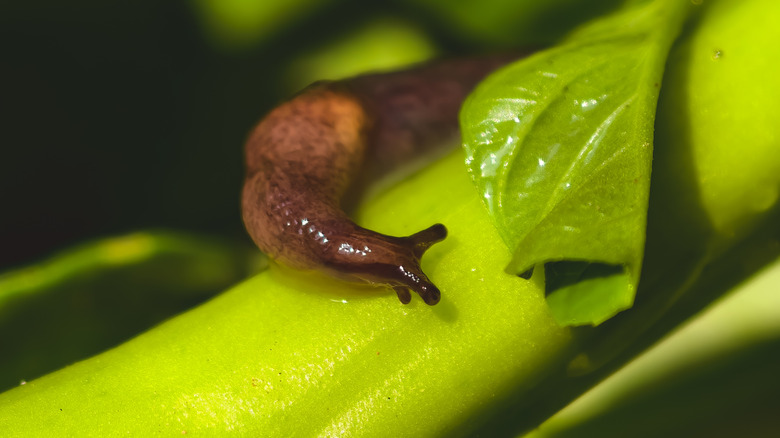
Without fail, just when your garden is looking its best is when the slugs decide to show up. You probably won't see them, but you'll see the nibble marks they leave on foliage and immature fruit, evidence of their late night feasting. While there are all kinds of tricks proclaiming to deter slugs, there is a surprisingly simple solution that could even be sitting in your fruit bowl right now. Yup, believe it or not, there's another kitchen scrap to trap slugs: an empty grapefruit peel. It's possibly the most inexpensive and easy-to-test method out there, particularly if you only have a small slug problem. When upturned in a garden bed, the peel — with its naturally bowl-like form — is an attractive daytime hiding spot for slugs. You can pick them off the trap before they emerge to feed for another night.
Since it isn't attracting slugs with food, an upturned, hollowed-out grapefruit peel isn't a bait trap. Instead, it's a refuge trap — it provides the slugs with somewhere cool, dark, and damp to hide during the day. Without the protection of a shell or hard exoskeleton, these slimy pests lose lots of moisture from their bodies quickly. As such, they spend the daylight hours hiding beneath shelters, such as rocks, wooden boards, and flower pots. Then, once the sun sets, they reemerge from their hideaway and start munching on your plants under the cover of darkness. The grapefruit peel simply recreates those same conditions. In fact, it isn't just grapefruit that works. You can create similar traps with limes, oranges, lemons, and even melons.
How to turn half a hollowed-out grapefruit into a slug trap
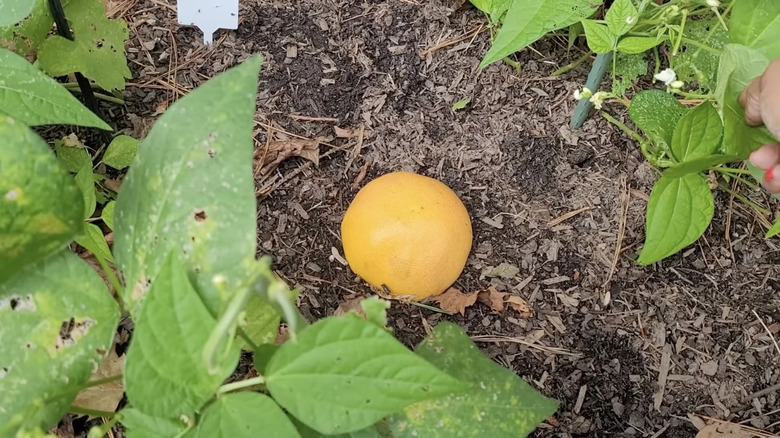
To use leftover citrus peels in your tomato garden or elsewhere in your yard as a slug trap, you need to either cut a grapefruit in half and scoop out the flesh or carefully save the skin the next time you're eating a grapefruit. Place a few of these empty halves upside down — directly on the soil — near the plants that you want to protect. The curved peel creates a cool, dark, damp cave that slugs will gravitate toward. You can cut a couple of entryways into the walls of your grapefruit bowl so the slugs can get inside easily. Set the empty peel out in the evening and check underneath it in late morning of the next day to see if you've nabbed any slugs.
If the peel stays empty for several mornings in a row, it's likely that the slugs in your garden are somewhere else they prefer to hole up in. You'll need to locate these hiding spots if you want to keep them from eating your plants. Also, once the grapefruit peel starts to dry out or break down (it's biodegradable, after all), swap it with a fresh one. The trap only works if the shelter stays moist. While this trick won't eliminate all of the slimy pests in your yard, particularly if you're plagued by them, it can help reduce the population around vulnerable plants. Plus, if you prefer to say goodbye to slugs in your yard with organic methods, it's hard to beat fruit peel.